USA Rare Earth Brings Colorado Demonstration Facility Online Amid Critical Minerals Push
The facility will process dysprosium, terbium and yttrium, three materials used in high-performance permanent magnets
 Joseph Morton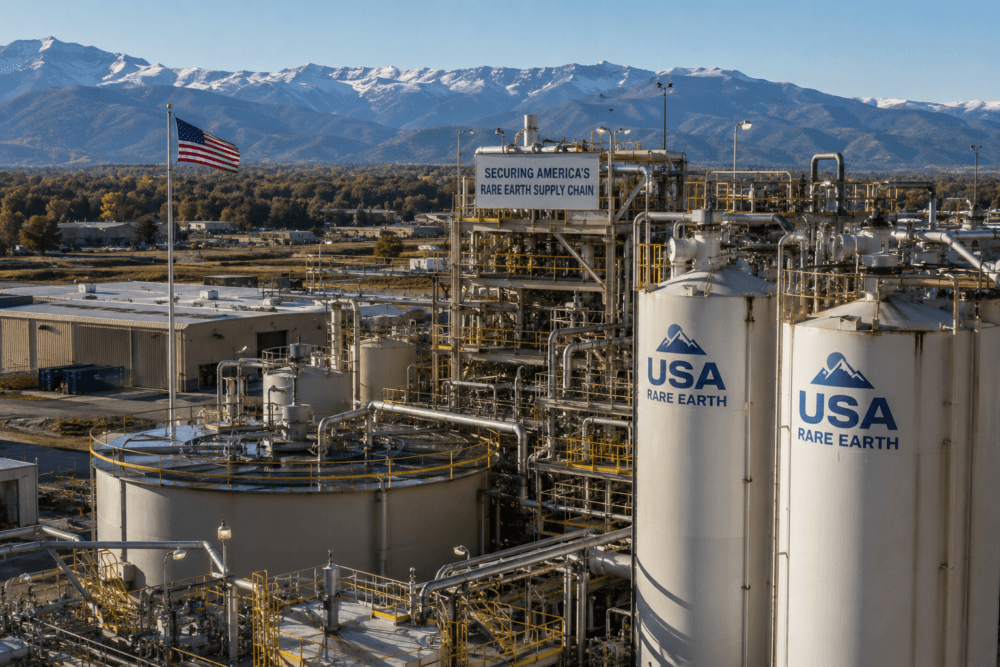
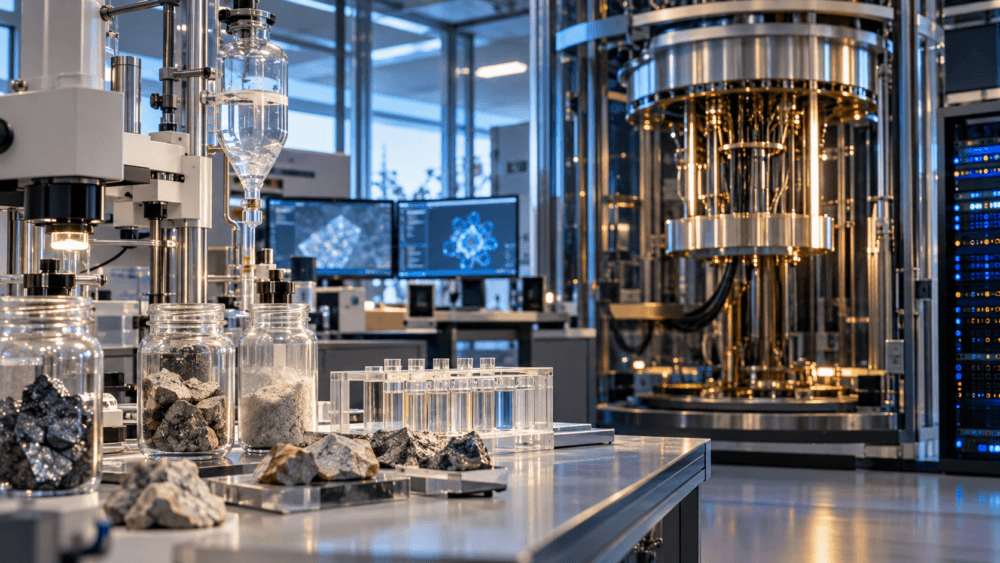
USA Rare Earth Inc. NASDAQUSAR has commissioned a hydrometallurgical demonstration facility in Colorado, marking a significant step toward establishing a fully integrated North American rare earth supply chain as geopolitical tensions continue reshaping critical minerals markets.
The company announced that its new facility in Wheat Ridge, Colorado, entered operation on June 15. Consequently, USA Rare Earth is targeting initial production of separated heavy rare earth oxides during the third quarter of 2026.
The facility will process dysprosium, terbium and yttrium, three materials used in high-performance permanent magnets. These magnets support industries ranging from electric vehicles and renewable energy systems to defence technologies and advanced electronics.
USA Rare Earth said the plant is among the few Western facilities producing commercial-quality heavy rare earth oxides. Additionally, the company plans to integrate the operation into its broader supply chain and provide material to subsidiary Less Common Metals for permanent magnet production.
The Wheat Ridge facility currently runs three parallel processing campaigns. The company is evaluating ore from its Round Top deposit in Texas, third-party mixed rare earth carbonates and recycled magnet swarf.
Furthermore, engineers will use operating data from those campaigns to support the Round Top Definitive Feasibility Study, which remains on track for completion in late 2026.
The company also intends to use the information to build a digital twin of the processing operation through a partnership with the U.S. Department of Energy.
Read more: NevGold raises up to CAD$25M to fast-track Limo Butte development
Read more: NevGold reports more positive drill results as gold-antimony resource estimate nears
China dominates the global rare earth supply chain
Chief executive officer Barbara Humpton described the facility as a key component of the company’s strategy to build a non-Chinese rare earth platform. She said the project will help establish control over the entire production chain, from raw material sourcing through finished magnet manufacturing.
China dominates the global rare earth supply chain, controlling most refining and processing capacity despite holding only a portion of the world’s mineral reserves.
Consequently, many countries remain dependent on Chinese facilities. Those plants convert rare earth ores into materials used in electric vehicles, wind turbines and military systems. Beijing has previously restricted exports of critical minerals, demonstrating its ability to influence global supply chains.
As governments seek greater economic and national security, reducing reliance on Chinese rare earth processing has become a major geopolitical priority across North America and Europe.
USA Rare Earth’s automated plant employs a team of 28 technical specialists towards this end. Additionally, management expects the facility to generate the operational data needed to support larger commercial-scale projects.
Consequently, investors have increasingly focused on companies attempting to establish domestic production networks.
USA Rare Earth has positioned itself among the primary beneficiaries of that trend. The company’s strategy extends beyond mining and processing into downstream magnet manufacturing.
Meanwhile, the company continues developing its flagship Round Top rare earth project in West Texas. Management views the deposit as a long-term source of feedstock for future processing operations.
Read more: NevGold Corp. reports antimony grades up to 53.7 per cent at Nevada project
Read more: NevGold launches 20,000-metre drill campaign at Nevada antimony-gold project
USA Rare Earth plans to invest USD$1.2B in a South Carolina complex
Building that infrastructure requires substantial capital investment. However, USA Rare Earth has secured significant federal support to advance its plans.
The company received a funding package valued at approximately USD$1.6 billion through programs associated with the CHIPS Act. The package includes up to USD$277 million in direct grants and roughly USD$1.3 billion in senior secured loan capacity.
Additionally, the U.S. government acquired a 10 per cent stake through a USD$300 million investment. The purchase price was USD$17.17 per share.
That backing has reduced some of the financing concerns that often affect early-stage mining and processing companies. Consequently, management has continued advancing multiple large-scale projects simultaneously.
Beyond Colorado, the company plans to invest approximately USD$1.2 billion in a manufacturing complex at Bailey Industrial Park in South Carolina.
Once operational, the facility aims to produce 10,000 tonnes of neodymium-iron-boron magnets annually. Furthermore, management expects the site to manufacture another 10,000 tonnes of strip-cast alloys each year.
The integrated strategy allows the company to participate in several stages of the supply chain. Rather than relying solely on mining revenue, USA Rare Earth intends to capture value through refining, alloy production and magnet manufacturing.
Securing reliable raw materials remains another priority. Although the company continues advancing Round Top, management has also pursued additional sources of feedstock.
Consequently, USA Rare Earth is seeking to reduce the risks associated with depending on a single future mining operation.
That effort includes a proposed USD$2.8 billion acquisition of Brazil-based Serra Verde Group. The transaction would provide access to mixed rare earth carbonate feedstocks that could support processing operations while Round Top progresses toward commercial production.
Read more: NevGold pushes toward potential 2027 antimony production at Limousine Butte
Read more: NevGold mobilizes drill on Limo Butte historical pads, eyes 2027 antimony production
Trump administration expanded list of materials
Meanwhile, competition within the domestic rare earth sector has intensified.
Earlier this year, MP Materials Corp. NYSEMP filed a lawsuit in Texas. The company alleges a former employee took proprietary permanent magnet technology to USA Rare Earth.
The legal dispute adds another layer to competition in the North American rare earth market. However, analysts note that the sector’s strategic importance continues attracting investment despite such challenges.
Further complicating matters, U.S. efforts to strengthen domestic supply chains extend beyond rare earth elements alone.
The Trump administration recently expanded the list of materials considered critical to national and economic security, adding minerals such as lithium and antimony alongside rare earths.
Consequently, federal agencies have broadened support for projects involving strategic resources. Those materials support batteries, defence systems, electronics and energy infrastructure. The policy shift reflects growing concern over foreign supply dependence and has increased investor interest across the broader critical minerals sector.
Some of the key players in the United States’ rush for a robust antimony supply chain include Perpetua Resources Corp TSEPPTA NASDAQPPTA.
“Perpetua has played a foundational role in establishing the framework for a U.S. antimony supply chain, and we congratulate their team on this important milestone,” said Brandon Bonifacio, CEO of NevGold Corp CVENAU OTCMKTSNAUFF FRA5E50 in a press release.
“The US$2.9 billion EXIM commitment underscores the strategic importance of antimony and the need for multiple domestic sources to close the large supply deficit in the United States.”
NevGold Corp is a sponsor of Mugglehead news coverage
.