HealthFinancing
Protagenic Therapeutics proposes up to US$5M placement for anxiety trial
Only US$1.5 million is upfront; the balance depends on warrants, with first U.S. patient dosing targeted for the second quarter of 2027.
Medical and pharmaceutical developments, psychedelics, and the research and safety questions around them.


Only US$1.5 million is upfront; the balance depends on warrants, with first U.S. patient dosing targeted for the second quarter of 2027.
New breast and lung cancer applications aim to inform therapy choices when conventional mutation markers leave gaps.

A US$15M partner payment arrived after quarter-end as research spending rose ahead of the Nov. 28 D-PLEX100 review goal.
Eight participants completed the placebo-controlled cohort; extension data are expected in January 2027 while a partial FDA hold remains.
The 86 per cent brain-response rate came from seven evaluable patients; lower-dose safety data are required before Phase 3.
Nine-month product revenue rose 92 per cent, while cash, equivalents and marketable securities stood at US$334.3 million at Sept. 30.
The submission draws on studies involving more than 1,000 participants, with a first-half 2027 launch still subject to FDA approval.
U.S. Briumvi sales grew approximately 52 per cent in the third quarter as TG increased its domestic sales forecast and kept spending guidance unchanged.
The 370-patient randomized trial supports a planned year-end FDA filing, but response rates and detailed safety data remain undisclosed.
Lorundrostat's extension study showed a 17.8 mmHg reduction from baseline as an FDA decision approaches on Dec. 22.
The delayed-treatment arm recorded no responses, while Vir plans an FDA submission in mid-2027 after two further pivotal readouts.
New Phase 1/2 data cover durability across three autoimmune diseases and safety in 71 patients treated after preconditioning.
At week 16, 58 per cent achieved the main joint response versus 41 per cent on placebo; the oral drug is not approved for psoriatic arthritis.
Nine-month CyPath Lung revenue rose 79 per cent, while quarterly company revenue fell and Sept. 30 cash stood at US$2.6 million.
MRI-measured muscle fat fraction replaces dynamometry in the 53-boy Duchenne study, with placebo-controlled data expected in Q1 2027.
International COVID-vaccine sales and lower research spending lift earnings, while convertible financing boosts cash and investments.
Armenia's conditional authorizations cover previously treated metastatic colorectal cancer; existing financing supports operations into 2027.
The 353-patient VOCAL study tested three-times-weekly vadadustat, a regimen that remains investigational despite Vafseo's daily-use approval.
Recorlev revenue grew 93 per cent as Xeris lifted its annual forecast and kept a pivotal thyroid study on track for year-end.
The neuroscience developer expects epilepsy safety data this quarter and FDA talks on its bipolar mania program in early 2027.
Third-quarter revenue reached US$393.1 million, while the medical-device maker kept its annual adjusted free-cash-flow target unchanged.
Cash and investments fell US$41.9 million over the quarter as the gene therapy developer prepared for a potential AMT-130 launch.
Collection succeeded in 94.7 per cent of patients, but the retrospective analysis measures feasibility rather than comparative cancer outcomes.
Quarter-end liquidity excludes a US$250 million loan draw and a US$70 million payment due under its amended licensing deal.
The psilocybin developer expects its final application submission within two weeks, with a launch targeted for the first half of 2027.
Genomic analysis volume reached a record 118,000 as the company narrowed its adjusted EBITDA loss and targeted the upper end of annual guidance.
Adjusted earnings guidance rises to US$2.95 to US$3.05 a share as non-COVID products grow and Pfizer appoints a permanent CFO.
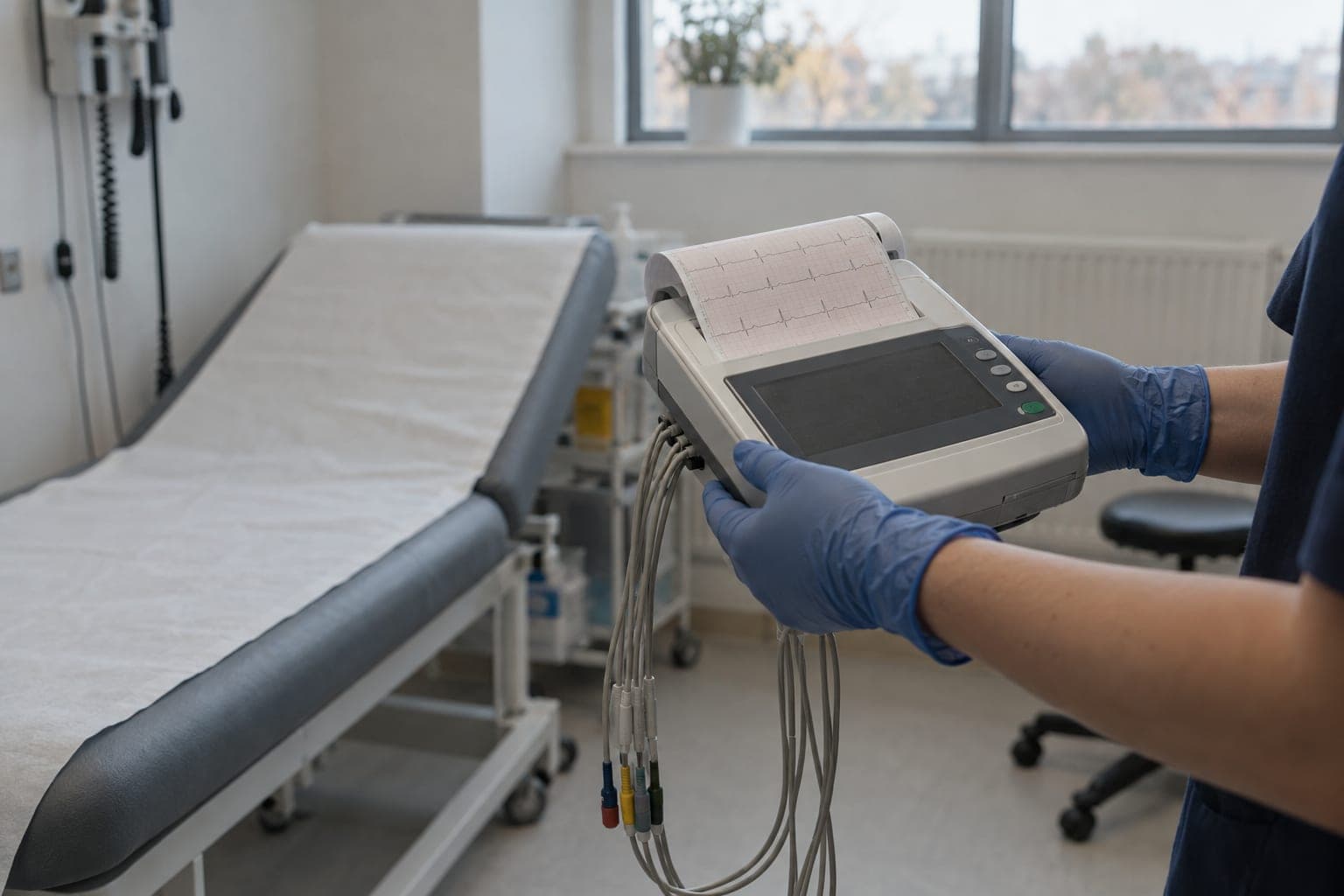
Sensitivity was slightly lower than standard ECGs; a U.S. pivotal study is planned for the first quarter of 2027.
The agency cited mouse toxicity and inadequate data for pediatric enrollment; the company is awaiting its full clinical hold letter.
The agency set a May 1, 2027 action target for AMT-130 and is tentatively planning an advisory committee meeting.
Adjusted earnings beat consensus, but quarterly profit declined and purchase timing boosted pharmaceutical sales by about US$550 million.
Quarterly sales rose 39 per cent as Mounjaro and Zepbound demand outweighed price declines, while acquisition charges weighed on earnings.
Opzelura and hematology sales drove the forecast increase, while a US$1.23 billion acquisition charge lifted research expense.
The combination beat pembrolizumab alone on survival and tumour response in first-line PD-L1-positive head-and-neck cancer.
The application draws on 168 participants, including a preliminary randomized trial using a significance threshold of 0.2.
QTORIN rapamycin could become the first approved treatment for microcystic lymphatic malformations, with a potential U.S. launch in early 2027.
Adjusted EPS guidance rises to US$18.30 to US$18.70 as stronger cash generation accompanies higher capital spending.