Hyundai bets on humanoid robots as Atlas heads to American factories
The machine can walk, bend, lift, balance and navigate spaces originally designed for workers
 Joseph Morton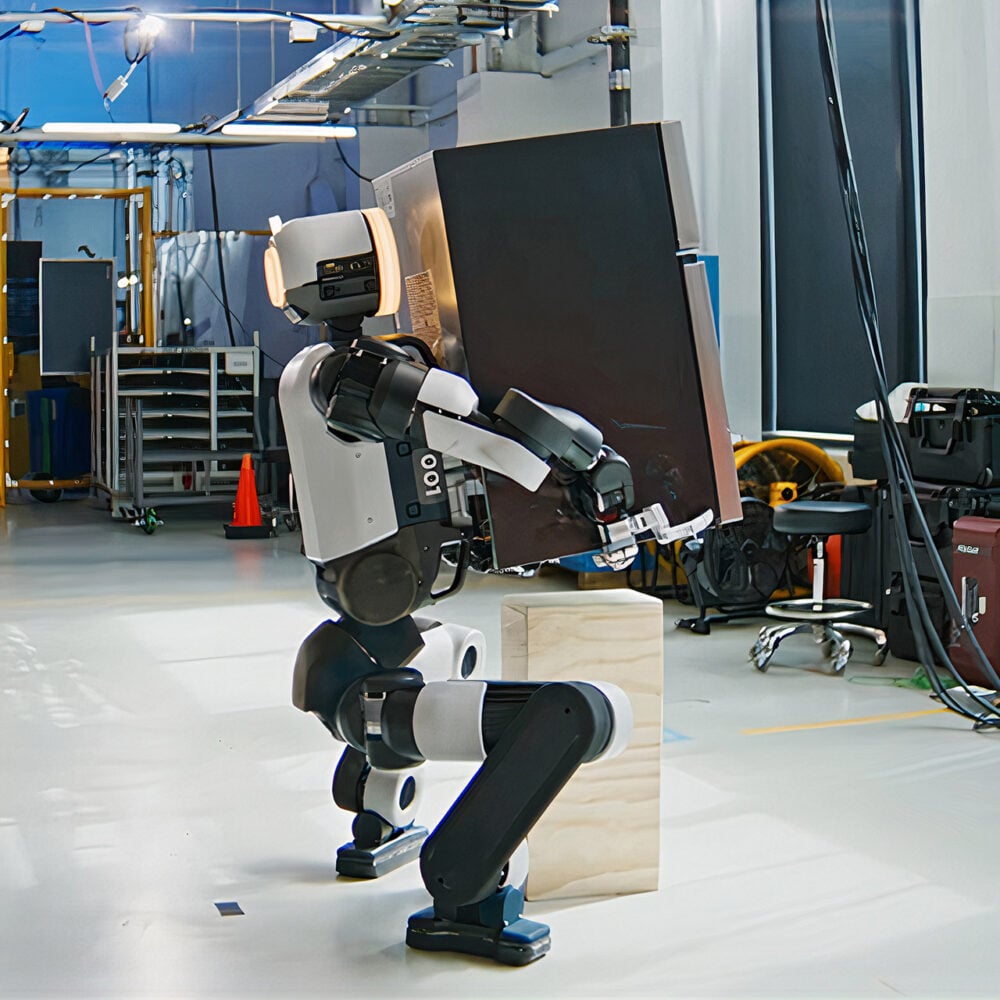
Humanoid robots could soon become a common sight inside American auto plants as Hyundai Motor Group prepares a large-scale deployment of Boston Dynamics’ Atlas platform across its manufacturing network.
The initiative would place thousands of human-shaped machines alongside workers in facilities designed for people, potentially reshaping how vehicles are assembled while intensifying debate over automation and factory employment.
According to investor materials presented during a session hosted by JPMorgan Chase, Hyundai plans to deploy more than 25,000 Atlas robots throughout Hyundai and Kia manufacturing operations. Additionally, the company intends to establish annual production capacity for 30,000 Atlas units by 2028.
The rollout would represent one of the largest commercial deployments of humanoid robots announced by an automaker. Furthermore, it signals Hyundai’s growing commitment to robotics as a core component of future manufacturing strategy.
Atlas differs from traditional industrial robots because it resembles the human form. The machine can walk, bend, lift, balance and navigate spaces originally designed for workers. Consequently, manufacturers may be able to introduce automation without extensively redesigning existing production lines.
Kia chief executive Song Ho-sung reportedly indicated that Atlas robots should begin operating at Hyundai Motor Group Metaplant America in Georgia during 2028. Subsequently, Kia’s Georgia manufacturing facility is expected to follow in 2029. Hyundai has not publicly released a detailed deployment schedule for every plant involved in the program.
The plan arrives as automakers face growing pressure to increase efficiency while managing labour shortages and rising production demands. Additionally, manufacturers continue searching for technologies that can improve flexibility without requiring costly factory redesigns.
Read more: TeraWulf stock jumps after Kentucky AI data campus acquisition
Read more: Quantinuum targets USD$1.05B Nasdaq IPO in major quantum computing debut
Flexibility could make bot useful for physical jobs
Humanoid robots offer a different approach than conventional industrial automation. Traditional robotic systems often remain fixed in place and perform repetitive tasks inside dedicated work cells. However, humanoid machines can move throughout facilities and interact with equipment designed around human workers.
That flexibility could make Atlas attractive for jobs involving lifting, carrying and transporting heavy components. Furthermore, automakers believe robots could assume physically demanding tasks that contribute to workplace injuries and long-term strain.
Boston Dynamics has recently demonstrated some of those capabilities. In a technical presentation, Atlas picked up and transported a mini-fridge while maintaining balance and adjusting its movements. The robot squatted, lifted the object, rotated its torso and carried the load across the demonstration area.
Engineers trained the system using reinforcement learning techniques and simulation environments. Consequently, Atlas practiced tasks repeatedly in virtual settings before performing them in the real world.
During training, developers altered conditions such as object weight, grip force, surface friction and item placement. Additionally, they exposed the robot to changing scenarios intended to mimic real manufacturing environments.
Factory floors rarely provide perfect conditions. Parts shift unexpectedly. Workers move around active work areas. Loads can feel different from one moment to the next. Therefore, robots must react quickly rather than relying on pre-programmed movements alone.
Atlas attempts to address that challenge through a combination of sensors and software. Unlike many robotic systems that depend heavily on cameras, Atlas also uses a concept known as proprioception.
Read more: Tether launches Georgian lari stablecoin as global digital payments market expands
Read more: South Carolina signs crypto bill protecting Bitcoin mining and self-custody
Labour organizations worry robots are coming for their jobs
In humans, proprioception refers to the body’s ability to sense movement and position. Similarly, Atlas monitors factors such as balance, grip pressure, resistance and body orientation while performing tasks. Consequently, the machine can adjust its actions when conditions change.
Boston Dynamics has also redesigned portions of the robot’s hardware architecture. The company says the new Atlas platform reduces differences between simulated training environments and real-world operation. Furthermore, engineers simplified the robot through symmetrical limb designs and a limited number of actuator types.
Actuators function as a robot’s equivalent of muscles and joints. They generate movement and control positioning. Hyundai reportedly plans to manufacture more than 300,000 actuator units annually at facilities in the United States. Additionally, that production target suggests the company wants greater control over critical robotic components.
The manufacturing initiative extends beyond robotics research. Instead, Hyundai appears to be building an integrated supply chain capable of supporting large-scale humanoid robot deployment. Consequently, the company could reduce reliance on external suppliers while accelerating future production.
The announcement also raises questions about employment. Labour organizations and workers have long scrutinized automation initiatives because advanced machines can replace certain repetitive jobs. However, companies frequently argue that automation creates new opportunities while improving workplace safety.
Hyundai has indicated that robots could perform dull, dirty or hazardous tasks. Additionally, supporters argue that removing workers from physically demanding positions may reduce injuries and improve long-term health outcomes.
At the same time, employees will likely seek greater clarity regarding staffing plans and retraining programs. Furthermore, questions remain about how many existing roles could change as humanoid robots become more capable.
Read more: BMW and Quantinuum deepen multi-year quantum computing alliance
Read more: Solana tests quantum-resistant crypto as early trials show major speed tradeoffs
Regulators and consumers will pay close attention
The transition could create new positions focused on robotics maintenance, software management and operational safety. Conversely, some traditional assembly-line responsibilities may require fewer workers if robots assume those functions.
Industry observers will closely monitor how Atlas performs alongside human employees. Safety remains a central concern because humanoid robots operate in shared environments rather than isolated cages. Consequently, manufacturers must ensure machines can stop safely and respond appropriately to unexpected situations.
Regulators and consumers may also pay close attention. As robotic systems become more common, public acceptance could influence adoption rates across multiple industries. Additionally, successful deployments may encourage competing automakers to accelerate their own humanoid robotics programs.
The impact could eventually extend beyond factory floors. If robots help manufacturers adjust production more efficiently, automakers may respond faster to shifts in consumer demand. Furthermore, automation could influence production costs, although any savings would not necessarily reach vehicle buyers immediately.
Consumers may eventually ask new questions about vehicle manufacturing. Some buyers could become interested in how much of a vehicle was assembled by humans versus robots. Meanwhile, automakers may use advanced robotics as a selling point if the technology improves consistency, safety or production speed.
Hyundai’s planned deployment marks one of the clearest indications that humanoid robots are moving beyond demonstrations and into industrial production environments. Additionally, the Georgia facilities will provide an early test of whether large numbers of human-shaped machines can operate effectively in complex manufacturing settings.
.