Tempus AI buys Personalis to strengthen AI‑driven cancer monitoring platform
The acquisition targets a cancer monitoring market that the companies estimate could reach USD$20 billion
 Joseph Morton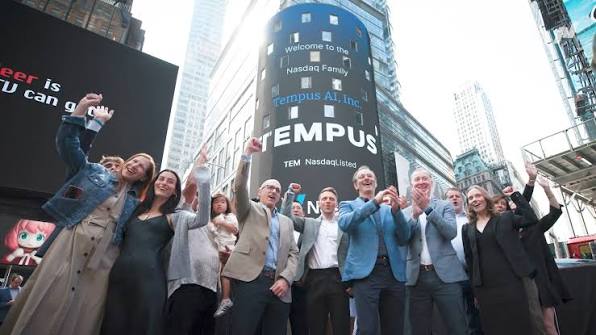
Tempus AI, Inc. (NASDAQ: TEM) agreed to acquire Personalis, Inc. (NASDAQ: PSNL) in a USD$1.5 billion deal.
Announced on Wednesday, the definitive agreement values Personalis at USD$16.25 per share, excluding Tempus’ existing ownership stake.
It brings the NeXT Personal tumor-informed minimal residual disease liquid biopsy platform into Tempus’ artificial intelligence-powered clinical data ecosystem.
Additionally, the acquisition targets a cancer monitoring market that the companies estimate could reach USD$20 billion.
The opportunity includes about 2.1 million newly diagnosed U.S. cancer patients who require long-term disease monitoring.
Tempus said the combination will unite Personalis’ whole-genome sequencing technology with its extensive collection of clinical records, pathology images and real-world patient outcomes, allowing researchers and physicians to identify disease signals and develop predictive biomarkers with greater accuracy.
Personalis reported preliminary second-quarter revenue of USD$22.4 million. Furthermore, the company completed 10,384 clinical tests during the quarter, representing a 33 per cent sequential increase.
The companies expect the transaction to close in late 2026 or early 2027.
The acquisition will proceed primarily as a stock transaction, although Personalis shareholders may elect to receive as much as 50 per cent of the consideration in cash. However, Tempus already works with Personalis through an existing commercial collaboration focused on expanding access to molecular testing.
Personalis designed its NeXT Personal platform to map each patient’s unique tumour signature using whole-genome sequencing.
The company said the test can detect circulating tumour DNA at single-digit parts per million, helping physicians identify returning cancer earlier.
Read more: Breath Diagnostics advances pre-op pneumonia screening with FDA breakthrough designation
Read more: Prestigious medtech intelligence firm recognizes Breath Diagnostics for innovation
Artificial intelligence is changing cancer diagnosis
Meanwhile, the NeXT Personal test already qualifies for Medicare reimbursement across three clinical indications, and Personalis continues pursuing broader coverage as adoption increases among healthcare providers and cancer specialists.
Chief executive Eric Lefkofsky said minimal residual disease testing could transform how doctors monitor cancer recurrence. Consequently, he said combining Personalis’ testing with Tempus’ commercial reach and AI platform should strengthen clinical adoption.
The companies expect the integrated platform to support both biopharmaceutical research and routine clinical care by combining blood-based testing with multimodal patient data.
Additionally, artificial intelligence is becoming an important tool in cancer care. It’s helping physicians detect patterns that can be difficult for humans to recognize. When combined with genetic sequencing, medical imaging and patient records, AI can identify early signs of disease, predict how cancers may respond to treatment and support more personalized care decisions.
Additionally, several healthcare companies are already applying artificial intelligence to improve cancer detection and diagnosis.
Breath Diagnostics is developing an AI-powered breath analysis platform that identifies patterns in exhaled breath associated with diseases, including lung cancer, offering a potential non-invasive alternative to traditional testing.
Meanwhile, TidalSense Ltd. uses AI to analyze normal breathing patterns rather than forceful lung function tests. This further demonstrates how machine learning can extract clinically useful information from routine patient data.
.