Viscount identifies antimony, tellurium anomalies at Nevada project
Antimony and tellurium appear on the 2025 U.S. Critical Minerals List
 Joseph Morton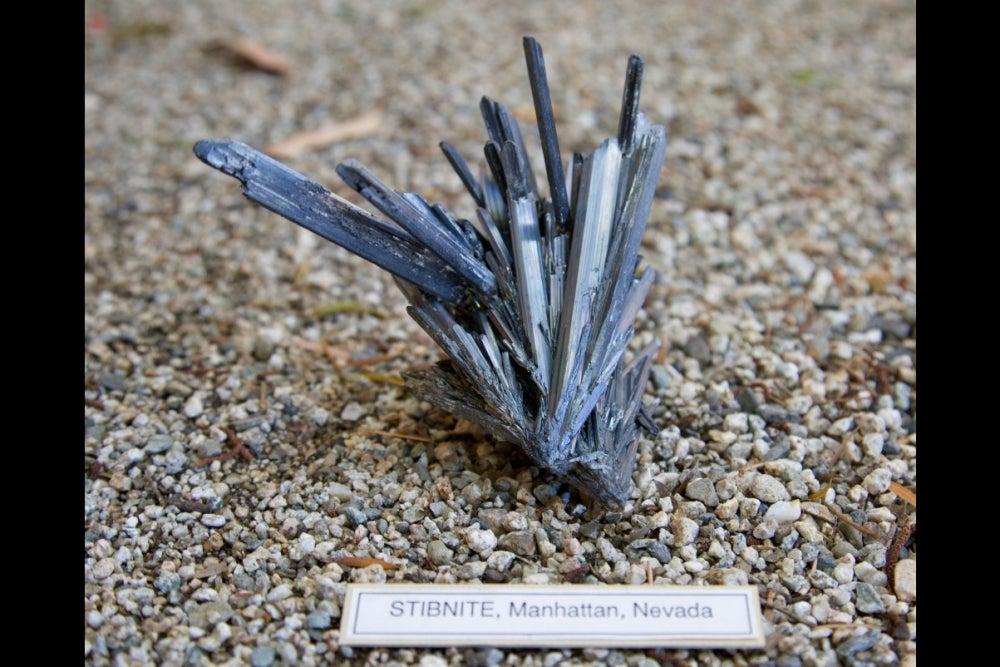
Viscount Mining Corp. (CVE: VML) (OTCMKTS: VLMGF) has identified broad antimony and tellurium anomalies at its Cherry Creek project in Nevada.
The company reported Thursday that a comprehensive geochemical review identified elevated concentrations of both critical minerals. The review covered thousands of rock, soil and stream sediment samples collected across the White Pine County property.
Viscount is now incorporating the results into its geological models and plans to use them for future exploration targeting. Additionally, the company identified separate structural corridors associated with elevated antimony, tellurium and gold values.
Antimony and tellurium appear on the 2025 U.S. Critical Minerals List. Both metals have attracted increased attention because China controls much of their global supply.
China has also imposed export restrictions affecting international supplies of the two commodities. Consequently, U.S. policymakers have sought additional domestic sources of critical minerals used in defense, energy and advanced technologies.
Antimony prices rose from about USD$5,500 per tonne in 2023 to USD$59,750 per tonne in July 2025. The U.S. government has committed nearly USD$400 million toward defense contracts and investments related to domestic antimony supplies.
However, Viscount said no new U.S. mine is currently expected to begin producing antimony before 2028. The company sees Cherry Creek’s geochemical results as an opportunity to investigate another potential domestic source.
The review incorporated results from more than 1,965 rock samples and 4,593 soil samples. Of those rock samples, 106 returned antimony concentrations ranging between 100 and 10,000 parts per million.
Viscount interprets those concentrations as potentially consistent with primary stibnite mineralization rather than only trace amounts of antimony. Stibnite is the principal mineral from which producers extract antimony.
Read more: NevGold Corp’s Limousine Butte drill program targets first Gold Antimony resource estimate
Read more: GoldMining chooses to retain its NevGold shares for next 18 months
Sample results indicate antimony enrichment
Additionally, another 534 rock samples contained between 15 and 100 parts per million antimony. The company said those samples form a broader geochemical halo around the stronger results.
Soil sampling returned another 42 results containing between 10 and 351 parts per million antimony. More than 1,800 additional soil samples returned concentrations above what the company considers background levels.
Meanwhile, stream sediment samples reached a maximum of 4.83 parts per million antimony. Viscount said the results indicate antimony enrichment across several drainage areas at Cherry Creek.
The distribution of the strongest results could prove more important for exploration than individual sample values. Viscount found that its highest antimony rock samples form a linear trend across the property’s main east west structural corridor.
The company interprets concentrations between 1,000 and 10,000 parts per million as potentially consistent with stibnite mineralization. Gold samples from the same structural corridor reached as much as 48.6 grams per tonne.
Furthermore, several multi-gram gold samples occurred alongside some of the higher antimony values. Viscount is evaluating the corridor as a possible stibnite gold vein exploration target.
The company also identified tellurium as a second critical mineral opportunity within its historical and recent geochemical data. Tellurium has applications in thermoelectric equipment, infrared optics, thin film solar panels and precision defense electronics.
Viscount incorporated a new tellurium dataset into its Cherry Creek geological review for the first time. The dataset identified 13 rock samples containing more than four parts per million tellurium.
The strongest sample returned 56.8 parts per million tellurium. Viscount compared those results with cited background concentrations typically below 0.1 parts per million in unmineralized terrain.
Read more: NevGold files technical report backing Limousine Butte gold antimony resource
Read more: Antimony recovery results from NevGold’s Limo Butte project exceed expectations
Soil distribution is evidence of possible bedrock source
In addition, 33 rock samples returned between one and four parts per million tellurium. Another 34 samples contained between 0.5 and one part per million.
Soil sampling also returned 13 samples above 0.26 parts per million tellurium. The strongest soil sample contained 1.4 parts per million.
Viscount interprets the soil distribution as evidence of a possible bedrock source rather than isolated mineralized outcrops. However, additional exploration will be necessary to determine the source and extent of the tellurium anomaly.
Tellurium can occur with gold, bismuth and telluride mineralization in certain geological systems. Known examples of these systems include Cripple Creek in Colorado and Goldfield in Nevada.
At Cherry Creek, elevated tellurium concentrations cluster around the northeast trending Exchequer Fault. The structure connects the central property with an eastern magnetic anomaly.
Viscount interprets that magnetic anomaly as a possible buried intrusive body. Such an intrusion could have supplied heat and mineral rich fluids to the surrounding geological system.
Additionally, bismuth concentrations are elevated along the same corridor and reach as much as 1,710 parts per million in rock. The company is examining the combination of gold, bismuth and tellurium as another exploration target.
Viscount’s geological consultants currently rank the Exchequer Fault target as the property’s third drilling priority. The newly compiled tellurium data contributed to that ranking.
Cherry Creek sits in an increasingly active antimony exploration district in White Pine County. NevGold Corp. CVENAU OTCMKTSNAUFF FRA5E50 is advancing its Limousine Butte antimony gold project roughly 10 kilometres southwest.
Read more: NevGold’s latest Nevada drill results show exceptional gold mineralization
Read more: NevGold adds new CFO ahead of Limousine Butte engineering study
Company is evaluating several possible mineral deposit styles
NevGold released the maiden gold antimony MRE for Limousine Butte on July 15, 2026. It subsequently filed the supporting NI 43-101 technical report on August 31 . Additionally, the company has targeted initial antimony production from Limousine Butte for 2027.
The two projects represent different geological systems despite their proximity. NevGold primarily describes Limousine Butte as an oxide antimony gold system.
Conversely, Viscount interprets Cherry Creek as a structurally controlled polymetallic hydrothermal system. That means mineral rich fluids may have deposited several different metals along faults and within favourable rocks.
Cherry Creek’s antimony and gold occur within a much broader group of elevated metals. Rock samples have returned silver concentrations reaching 8,710 parts per million and tungsten reaching 10,000 parts per million.
Furthermore, copper concentrations reached 33,900 parts per million, while antimony reached 10,000 parts per million. Tellurium reached 56.8 parts per million and gold reached 48.6 grams per tonne.
Viscount believes a buried granitic intrusion may have helped create the broader mineralized system. Heated fluids may have moved outward from the intrusion through faults and reactive carbonate rocks.
Consequently, the company is evaluating several possible mineral deposit styles across Cherry Creek rather than pursuing a single geological model. These include carbonate replacement and skarn systems containing tungsten, copper, silver, lead and zinc.
Viscount is also assessing epithermal and stibnite gold veins containing antimony, gold and silver. The newly reviewed data has added gold bismuth telluride mineralization to the company’s exploration models.
However, much of Cherry Creek remains largely untested using modern drilling techniques. The company is therefore combining its geochemical information with geological and geophysical datasets before selecting additional drilling locations.
.
NevGold Corp is a sponsor of Mugglehead news coverage
.