House passes DOMINANCE Act to reduce U.S. reliance on Chinese critical minerals
Critical minerals play a key role in defense systems, advanced manufacturing and emerging technologies
 Joseph Morton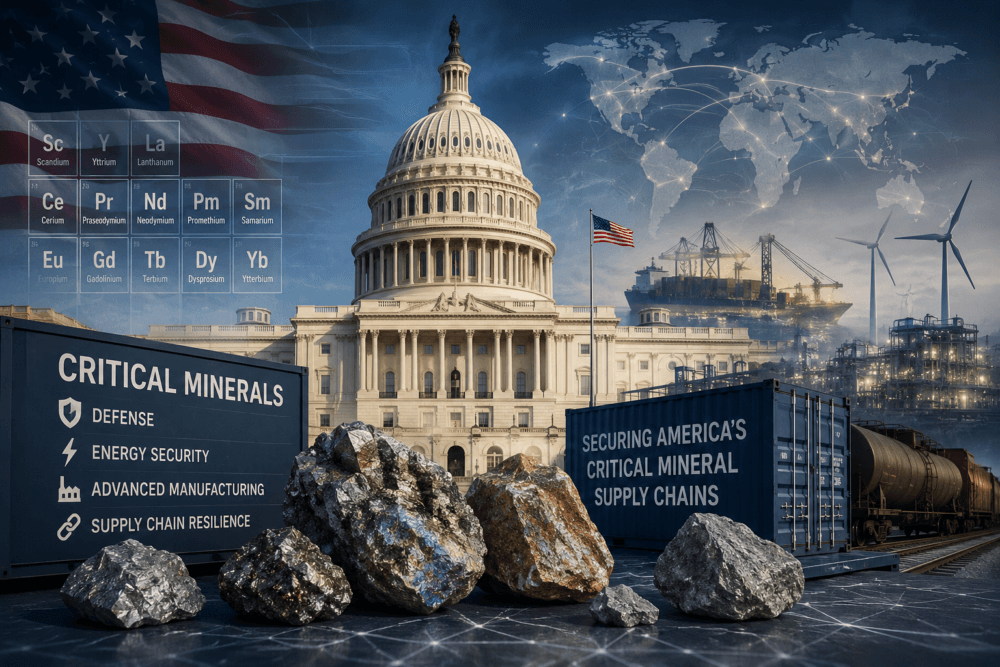
The U.S. House of Representatives has passed legislation aimed at reducing American dependence on China for critical minerals and strengthening supply chains with allied nations.
Lawmakers approved H.R. 7037, known as the Developing Overseas Mineral Investments and New Allied Networks for Critical Energies, or DOMINANCE, Act on Monday. Representatives Ami Bera of California and Young Kim of California introduced the bipartisan bill to boost energy security and expand cooperation on critical mineral development.
Critical minerals play a key role in defense systems, advanced manufacturing and emerging technologies. However, China continues to dominate global rare earth processing, creating concerns among U.S. policymakers and industry groups.
The legislation seeks to expand partnerships with allied countries and support strategic investments in mineral and energy projects. Additionally, it would strengthen U.S. energy diplomacy and help develop the workforce needed to build more resilient supply chains.
Bera said access to critical minerals represents a national security issue rather than a partisan one. He pointed to China’s control of roughly 90 per cent of global rare earth processing capacity and warned that Beijing has demonstrated a willingness to use export restrictions and economic pressure to advance its interests.
He argued that the United States must increase domestic mining, processing, refining and recycling capacity. However, he said the country cannot establish fully secure supply chains without working closely with trusted international partners.
Consequently, the DOMINANCE Act focuses on coordinating diplomatic, economic and investment tools to reduce exposure to vulnerable supply chains. The measure also encourages deeper collaboration with allied nations that possess mineral resources or processing capabilities.
Read more: NevGold pushes toward potential 2027 antimony production at Limousine Butte
Read more: NevGold reports more positive drill results as gold-antimony resource estimate nears
Bill has now advanced to the Senate
Supporters say the bill could help diversify sources of critical minerals used in electric vehicles, defense technologies and clean energy systems. Furthermore, advocates argue that broader international cooperation would reduce supply risks while strengthening economic ties with partner countries.
The legislation has attracted support from organizations spanning the manufacturing, technology, energy and policy sectors. Those groups include the National Association of Manufacturers, the Information Technology Industry Council, the Climate Leadership Council, the Bipartisan Policy Center Action, the Progressive Policy Institute, Third Way, the SAFE Center for Critical Minerals Strategy and the U.S.-ASEAN Business Council.
The bill now advances for consideration in the Senate.
The measure arrives amid a broader push by Washington to reshape supply chains for strategic resources and technologies. Additionally, U.S. policymakers have increasingly viewed access to critical minerals as a geopolitical issue rather than simply a trade concern. That shift has driven new investments, trade partnerships and industrial policies designed to reduce exposure to Chinese market influence in sectors considered vital to national security and economic competitiveness.
The legislation follows several recent U.S. efforts to secure supplies of critical minerals outside Chinese-controlled markets. Additionally, Washington has increasingly combined permitting reforms, direct investment and strategic partnerships to accelerate domestic resource development.
One example is the federal FAST-41 program, which aims to streamline environmental reviews and permitting for major infrastructure and resource projects.
Read more: NevGold Corp. reports antimony grades up to 53.7 per cent at Nevada project
Read more: NevGold launches 20,000-metre drill campaign at Nevada antimony-gold project
Multiple companies stand to benefit
The U.S. government has also supported projects viewed as strategically important, including the antimony and gold project being developed by Perpetua Resources Corp TSEPPTA NASDAQPPTA in Idaho. Antimony is a critical mineral used in defense applications, batteries and industrial products, and China currently dominates global supply.
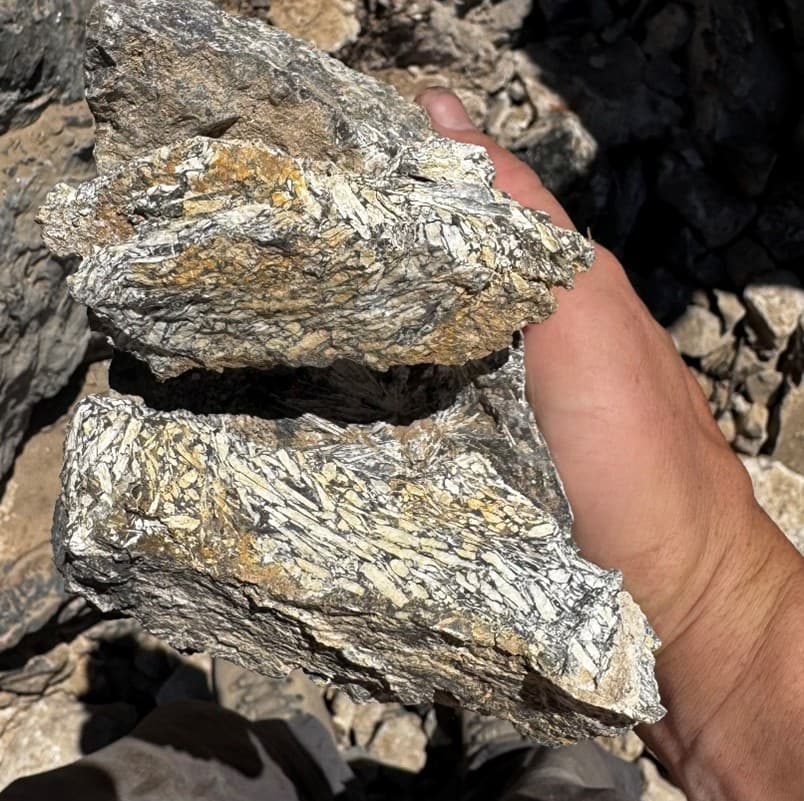
Meanwhile, emerging developers are advancing projects that could provide additional domestic sources of critical minerals. NevGold Corp CVENAU OTCMKTSNAUFF FRA5E50 has identified significant antimony mineralization at its Limousine Butte project in Nevada, a jurisdiction already supported by established mining infrastructure. Furthermore, the project could offer a potential future source of a mineral that U.S. policymakers increasingly view as strategically important.
Washington has also used targeted investments to strengthen supply chains. Consequently, federal agencies have backed selected mining and processing projects through loans, grants and equity-related arrangements. In some cases, policymakers have supported measures that improve access to lithium, rare earths and other minerals considered essential for energy security, advanced manufacturing and defense production.
NevGold Corp is a sponsor of Mugglehead news coverage
.