Deep Fission, NX Atomics tap partners to advance SMR deployment
Deep Fission says the compact design allows multiple reactors to operate on a single site
 Joseph Morton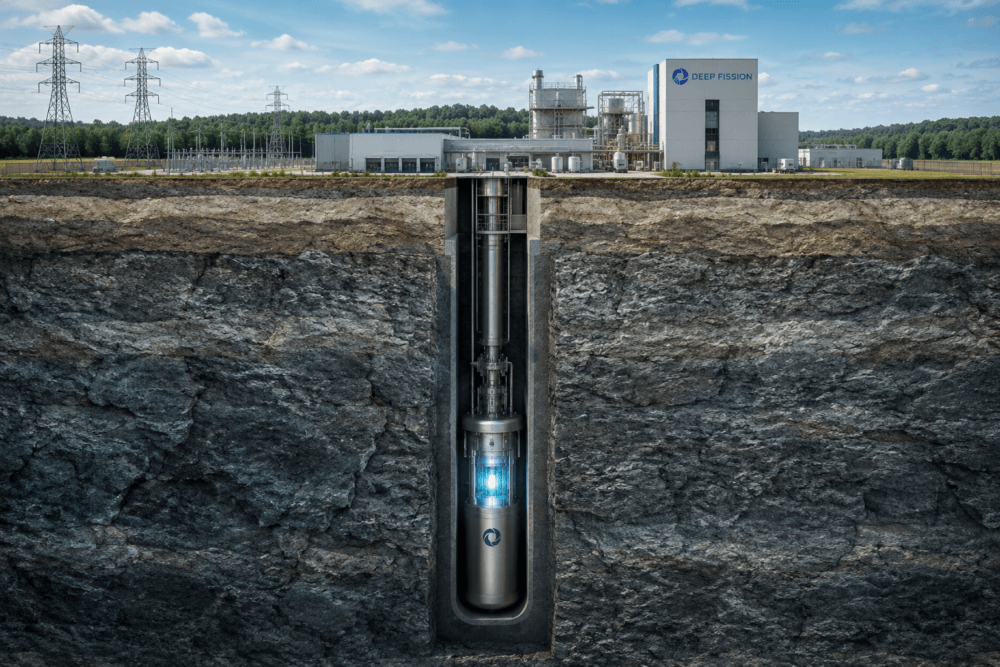
Two advanced nuclear developers have announced partnerships designed to accelerate deployment of next-generation reactor technologies in the United States.
On Thursday, Deep Fission selected Day & Zimmermann to help build its underground Gravity reactor, while NX Atomics teamed with Sciaky to produce small modular reactor components using industrial-scale metal 3D printing.
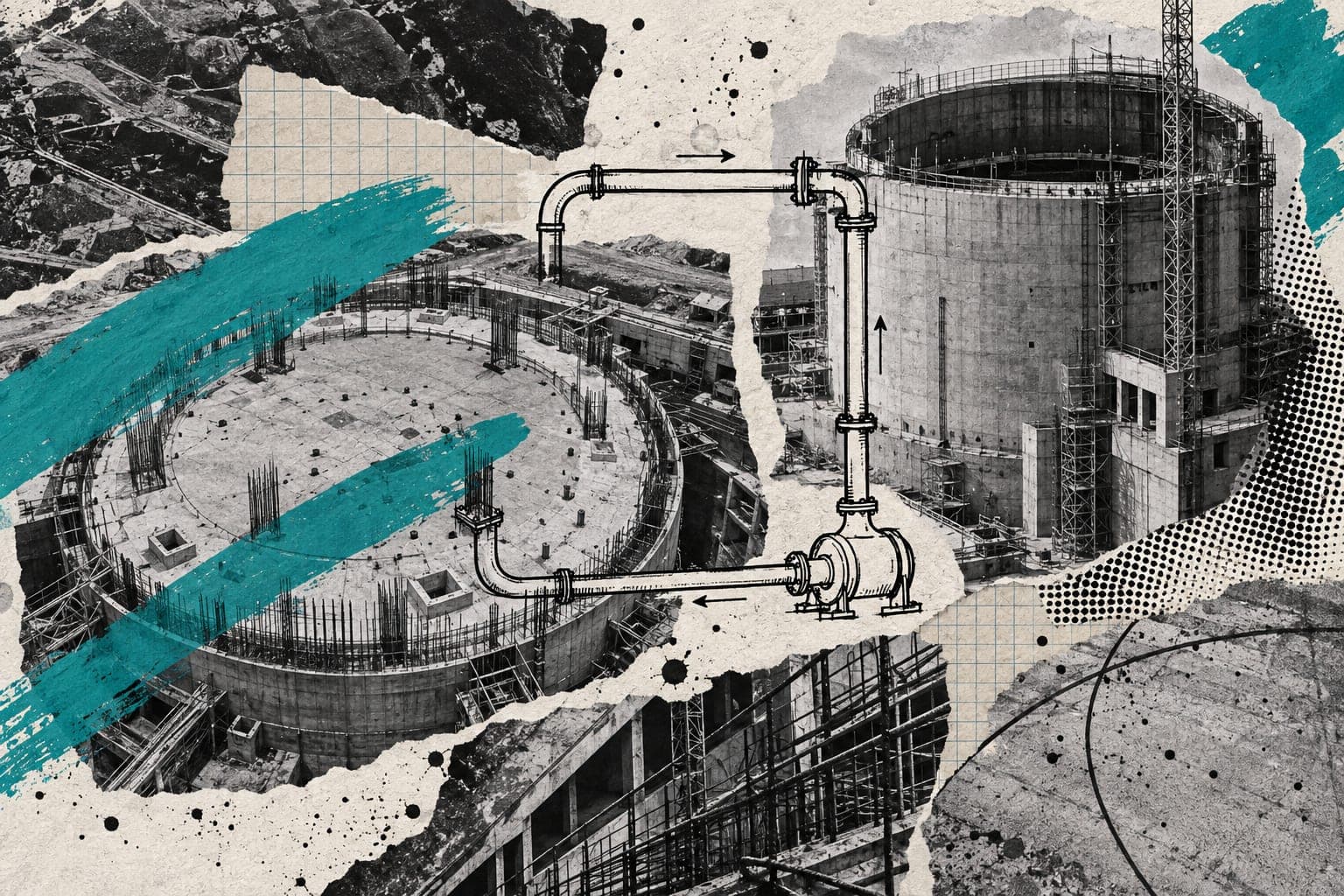
Deep Fission’s Gravity reactor differs from most small modular reactor designs because operators place it underground in a borehole about 1.6 kilometres deep. The company uses conventional pressurized water reactor technology and low-enriched uranium fuel to generate 15 megawatts of electricity per unit.
Additionally, Deep Fission says the compact design allows multiple reactors to operate on a single site. Ten reactors could produce 150 megawatts of electricity, while 100 units could generate 1.5 gigawatts.
The company believes surrounding geology can provide passive shielding and containment. Furthermore, it combines technologies from the nuclear, oil and gas, and geothermal sectors while relying on commercially available components and fuel.
Deep Fission broke ground on a pilot project in December at the Great Plains Industrial Park in Parsons, Kansas. Subsequently, the company plans to construct a full-scale commercial facility at the same location after completing its demonstration reactor.
The United States Department of Energy selected Deep Fission last August as one of 10 companies participating in its Nuclear Reactor Pilot Program. The initiative aims to bring at least three advanced reactor designs to criticality by July 4.
Day & Zimmermann will support construction planning and execution for the project. The company said its experience navigating Nuclear Regulatory Commission requirements and performing nuclear-grade construction work positions it to help advance the first-of-a-kind reactor.
Read more: X-Energy moves toward IPO as tech giants drive nuclear power demand
Read more: NuScale Power expands Framatome partnership to supply SMR fuel globally
Deep Fission founders launched the company in 2023
Chief Nuclear Officer Ross McConnell said the partnership combines Deep Fission’s reactor technology with Day & Zimmermann’s construction expertise. He added that the company intends to apply decades of experience in quality control, safety and project execution to the project.
Additionally, Day & Zimmermann noted that its background in natural gas power plant construction should support development of the reactor’s non-nuclear surface infrastructure, including turbine and generator systems.
Deep Fission Chief Operating Officer Mike Brasel said the partnership brings proven construction capabilities to the company’s deployment plans. He added that the goal remains to build a low-carbon power source that is simpler to construct, inherently safe and scalable.
Deep Fission founders Elizabeth Muller and Richard Muller launched the company in 2023. Previously, the pair co-founded Deep Isolation, which developed concepts for storing radioactive waste in deep underground boreholes.
Meanwhile, NX Atomics announced a separate agreement with Sciaky to manufacture reactor components using the company’s Electron Beam Additive Manufacturing process.
Sciaky, a division of Morphix Metals, produces fully dense metal parts from materials including titanium, tantalum, Inconel and stainless steel. The company supplies components to aerospace, defence and energy customers.
Under the agreement, NX Atomics will evaluate opportunities to use 3D printing for nuclear-qualified reactor parts. Consequently, the company expects the technology could shorten production timelines and reduce manufacturing costs.
Chief Executive Officer John Warden said additive manufacturing represents a practical way to modernize nuclear supply chains. He said the approach could lower the cost of individual reactors while allowing certain components to be replaced during operation.
Furthermore, the technology may help address manufacturing bottlenecks that have challenged nuclear developers seeking to scale production.
Read more: Europe’s first NuScale SMR advances with Romanian approval and AI push
Read more: X-Energy IPO raises USD$1.02B as SMRs gain traction in AI era
Small modular reactors could reach USD$900B by 2050
Sciaky CEO John Criso said the company’s manufacturing systems already support demanding applications in aviation, naval construction and space technology. He added that applying the technology to clean energy infrastructure represents a logical next step for the business.
The partnership joins two Midwestern companies focused on advanced nuclear technology and domestic manufacturing.
The partnerships also come as analysts project significant long-term growth for the small modular reactor sector. Estimates, however, vary widely because the technology remains in its early commercial stages.
According to the International Energy Agency (IEA), cumulative global investment in small modular reactors could reach USD$900 billion by 2050 under an accelerated deployment scenario. The agency also projects more than 1,000 SMRs could enter service worldwide by mid-century if governments maintain strong policy support and developers succeed in reducing costs.
Additionally, several market research firms estimate the global SMR market could grow from roughly USD$6 billion to USD$8 billion today to between USD$10 billion and USD$18 billion over the next decade. However, forecasts differ substantially because few commercial SMRs currently operate outside demonstration projects.
The IEA says SMR deployment could accelerate through standardized manufacturing instead of bespoke construction. Consequently, NX Atomics’ Sciaky partnership reflects efforts to industrialize reactor production through additive manufacturing.
.