United States Antimony expands across Alaska, Montana and Ontario to boost domestic antimony supply
Historical exploration programs collected more than 12,000 soil samples identifying antimony concentrations across 15 separate target areas
 Joseph Morton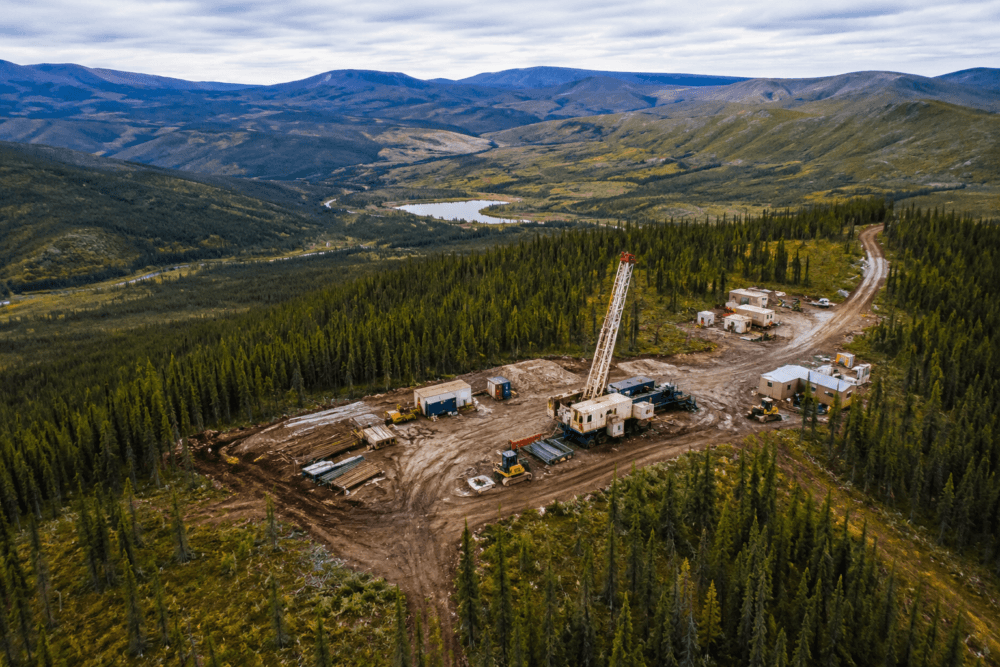
United States Antimony Corporation (NYSE: UAMY) said it has accelerated mining and exploration work across Alaska, Montana and Ontario as the company prepares to supply more of its own antimony ore for military and industrial customers.
The company said on Wednesday that active projects now span six properties in Alaska, one producing site in Montana and a tungsten development project in Ontario. Additionally, executives said 2026 will mark the first year that company-mined antimony ore contributes to customer deliveries after decades of relying on foreign sources.
US Antimony said Alaska now represents the largest part of its exploration portfolio. The company controls projects at Ester Dome, Stibnite Creek, the Maclaren River area, True North Claims, Dome Creek Placer and Nolan Creek.
Ester Dome remains the company’s largest antimony exploration project. The property covers more than 9,000 acres about seven miles from Fairbanks International Airport.
The company acquired the four claim groups during 2025. Historical exploration programs collected more than 12,000 soil samples that identified elevated antimony concentrations across 15 separate target areas.
Additionally, government geological reports dating from 1910 through 1933 documented stibnite occurrences in several underground gold mines. Operators largely ignored the mineral because antimony prices remained too low outside wartime demand.
US Antimony received exploration permits for Ester Dome in September 2025. Crews now use an air-track drill and excavators to investigate areas where historical gold veins coincide with soil anomalies and gravity targets.
So far, the company has evaluated only three of the 15 priority targets. However, management plans to drill as many as 50 exploration holes beginning this summer as work expands across the property.
Read more: NevGold launches 20,000-metre drill campaign at Nevada antimony-gold project
Read more: NevGold Corp. reports antimony grades up to 53.7 per cent at Nevada project
US Antimony has only evaluated three of 15 priority targets
The company also advanced plans for the Nolan Creek antimony and gold project. It acquired the property through a trustee’s sale in January 2026 after the previous owner ceased operations.
Historical underground development already provides access to mineralized veins through an existing adit large enough for modern mining equipment. Consequently, the company expects to move into underground development more quickly than many greenfield projects.
A technical report prepared by qualified person Tom Bundtzen estimated an inferred resource of 42,412 tons grading 28 per cent antimony and 0.408 ounces of gold per ton. At assumed prices of USD$4,000 per ounce of gold and USD$13 per pound of antimony, the report estimated an undiscounted gross metal value of roughly USD$377 million before mining, processing and transportation costs.
During the past week, US Antimony hosted underground inspections for two internationally recognized mining contractors. The visits formed part of a competitive tender process ahead of bids expected in mid-August.
Meanwhile, the company intends to truck ore from Nolan Creek to its Radersburg processing mill in Montana. The facility will recover both antimony and gold using gravity separation and flotation methods.
Management expects underground mining at Nolan Creek to begin before the end of 2026.
Montana operations also continue to expand. The company’s Stibnite Hill project resumed ore shipments after regulators approved additional environmental safeguards requested during the winter review process.
US Antimony acquired the Eliza patented claim and surrounding Bureau of Land Management claims during late 2025. Initial mining produced about 800 tons of ore averaging 10 per cent antimony, which the company hauled to the recently acquired Radersburg mill.
Read more: Strategic U.S. antimony resource emerges in NevGold’s Nevada MRE
Read more: NevGold appoints Nevada government affairs veteran Scott Bensing to board
Initial mining at Eliza produced 800 tons of ore
Additionally, metallurgical testing indicated flotation processing can produce material suitable for military ammunition primers while generating concentrate for antimony metal production. The company said those products meet specifications required under its supply agreement with the U.S. Defense Logistics Agency.
Following approval of additional environmental protection measures, excavation resumed in late July. The company has already delivered another 300 tons of ore to the Radersburg facility this year.
Mining will continue until winter conditions halt field operations, which management expects around November.
The company’s Canadian activities focus on the Fostung tungsten deposit in Ontario. Rather than beginning production immediately, US Antimony has invited contractors to submit bids for excavation, drilling and blasting work.
Furthermore, the company encouraged First Nation corporations to participate in the competitive bidding process. The initial program will expose bedrock, collect drill cuttings and provide samples for laboratory analysis in Montana.
The next stage calls for crushing, screening and gravity or ultraviolet upgrading of the material. Management plans to produce a bulk sample of at least 20,000 tons for additional processing studies and potential sales.
Meanwhile, metallurgical testing continues at research laboratories in Lakefield, Ontario, and at the company’s Radersburg laboratory.
Executive vice-president and chief mining engineer Joseph Bardswich said the projects have progressed rapidly despite remote locations and difficult weather conditions. He said the company completed permitting, equipment mobilization, staffing and mining preparations within an unusually short period for the industry.
Read more: NevGold pushes toward potential 2027 antimony production at Limousine Butte
Read more: NevGold reports more positive drill results as gold-antimony resource estimate nears
Company completed preparations in unusually short period
Additionally, Bardswich said field teams achieved those milestones while spending only USD$2.8 million in capital expenditures through June 30, 2026. He credited employees for advancing several mining regions at the same time while preparing material for company-owned processing plants and outside facilities.
He also said company-mined antimony should improve product consistency, simplify logistics and lower operating costs compared with imported feedstock. Those advantages, he said, should strengthen operating margins as more domestic ore enters the processing system.
Furthermore, Bardswich contrasted US Antimony’s production schedule with companies targeting antimony production several years from now. He said US Antimony began delivering military-grade antimony ingots in June and continues increasing monthly shipments under existing contracts.
The company currently supplements its own mined ore with imported antimony. However, management expects domestic production to play a growing role in supplying defence and industrial customers as mining ramps up across Alaska and Montana.
US Antimony is not the only company seeking to capitalize on growing U.S. demand for domestic antimony supplies. Perpetua Resources Corp TSEPPTA NASDAQPPTA continues advancing its Stibnite Gold Project in Idaho, which hosts the country’s only reported domestic antimony reserve.
The project received approval earlier this year for a USD$2.9 billion loan from the Export-Import Bank of the United States and is expected to become a significant long-term supplier of the critical mineral.
Meanwhile, NevGold Corp CVENAU OTCMKTSNAUFF FRA5E50 has expanded exploration at its Limousine Butte project in Nevada after identifying significant antimony mineralization alongside gold. The company has increasingly emphasized the property’s strategic importance as the United States works to reduce dependence on Chinese and Russian antimony supplies.
NevGold Corp is a sponsor of Mugglehead news coverage
.