USA Rare Earth taps quantum computing to improve rare earth separation
China currently dominates rare earth separation, particularly for heavy elements including dysprosium, terbium and yttrium
 Joseph Morton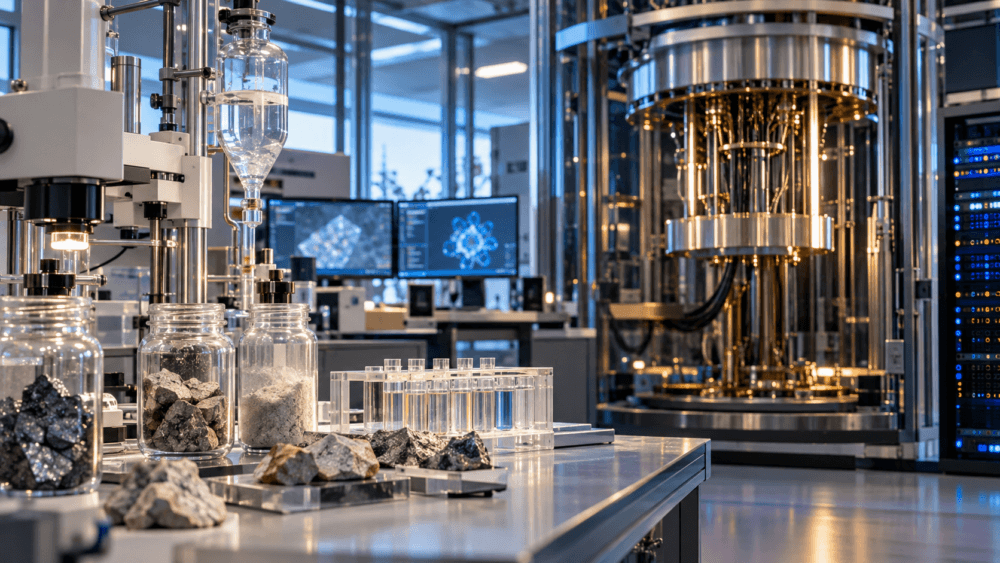
USA Rare Earth Inc. (NASDAQ: USAR) has partnered with Pasqal and Riven to use quantum machine learning to improve rare earth separation technology.
The companies aim to discover new chemical extractants that bind more effectively to rare earth elements than current alternatives. Additionally, better extractants could reduce the size, cost and energy requirements of rare earth processing facilities.
USA Rare Earth brings rare earth processing expertise to the partnership. Pasqal will provide quantum computing technology, while Riven will contribute its automated minerals separation laboratory.
The project will focus on separating mixed rare earth carbonate into individual rare earth oxides. This process remains one of the industry’s most difficult technical challenges outside Asia.
China currently dominates rare earth separation, particularly for heavy elements including dysprosium, terbium and yttrium. Consequently, Western producers have sought technologies that could establish more competitive domestic processing capacity.
Riven will conduct thousands of automated experiments to generate chemical data for the project. Its self-driving laboratory will test how different extractant molecules interact with individual rare earth elements.
Additionally, researchers will use those results to train machine learning models that predict which molecules perform best. Pasqal will then compare quantum machine learning models with conventional computing models trained on the same laboratory data.
The company’s neutral atom quantum processor uses individual atoms as quantum bits, or qubits, to perform calculations. However, the project must determine whether that approach can improve predictions compared with classical computing.
USA Rare Earth will use the results to optimize the extractants used in its processing flowsheets. A flowsheet describes the sequence of steps and equipment used to turn raw material into a finished product.
Read more: NevGold pushes toward potential 2027 antimony production at Limousine Butte
Read more: NevGold reports more positive drill results as gold-antimony resource estimate nears
Partnership will lean into automated tests and modelling
Furthermore, a more selective extractant could reduce the number of processing stages needed to separate rare earth elements. Fewer stages could also lower equipment requirements, chemical consumption and operating costs.
USA Rare Earth upstream senior vice-president Alex Moyes said the industry needs faster methods for discovering suitable separation chemistry. Traditional development can require years of experimentation before researchers identify an effective molecule.
The partnership intends to replace part of that trial-and-error process with automated experiments and computer modelling. In addition, promising molecules would undergo virtual evaluation before researchers move them into physical laboratory trials.
Moyes said the approach could help develop extractants specifically optimized for USA Rare Earth’s processing systems. Consequently, successful molecules could reduce capital costs and the environmental footprint of future facilities.
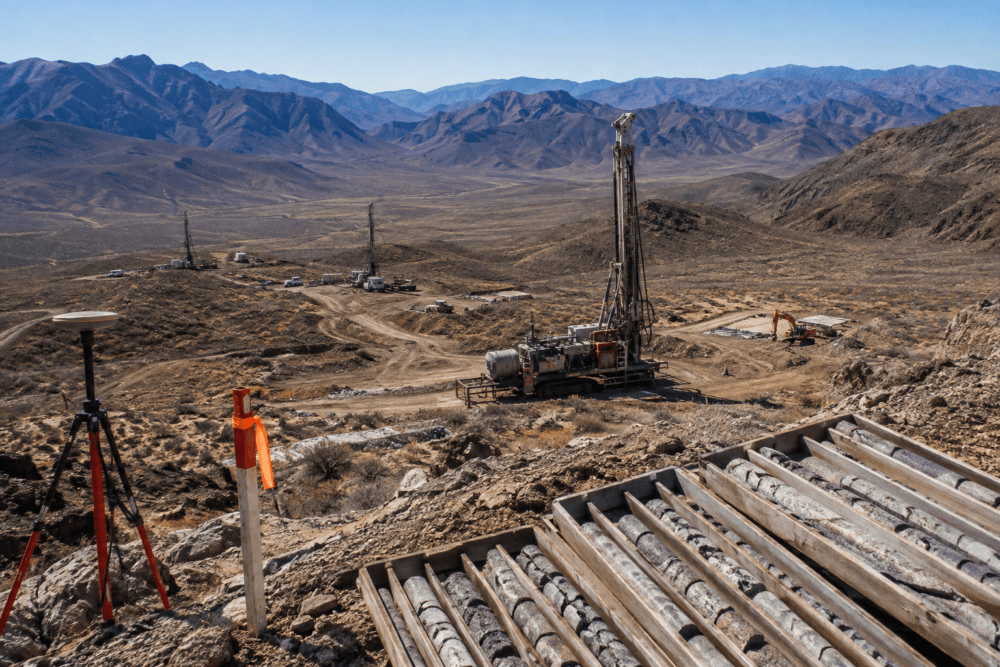
The partners will tailor the research to several materials that USA Rare Earth expects to process. These include feedstock from its Round Top project near Sierra Blanca, Texas.
The project contains a range of rare earth and critical mineral resources. Additionally, researchers will examine third-party mixed rare earth carbonate and recycled material from magnet manufacturing.
Manufacturers call those recycled magnet cuttings swarf. Testing several feedstocks could allow the research to support different parts of USA Rare Earth’s future processing operations.
Pasqal CEO Wasiq Bokhari said the partnership combines American and French expertise in strategically important technologies. He said improved processing could affect industrial competitiveness, economic growth and supply-chain resilience beyond the rare earth industry.
Meanwhile, the partners view the initial machine learning project as a possible starting point for a broader collaboration. Their longer-term concept would create an automated system for discovering and validating new extractants.
Read more: Strategic U.S. antimony resource emerges in NevGold’s Nevada MRE
Read more: NevGold appoints Nevada government affairs veteran Scott Bensing to board
USA Rare Earth is developing mine-to-magnet supply chain
Under that model, quantum machine learning would first identify molecules with strong potential. Riven’s automated laboratory would subsequently test those candidates using real chemical experiments.
The strongest candidates would then move to USA Rare Earth’s research and development facility in Wheat Ridge, Colorado. Researchers could validate the molecules there before incorporating successful candidates into commercial processing flowsheets.
Riven co-founder and chief technology officer Orion Archer Cohen said autonomous laboratories could accelerate critical mineral processing research. Furthermore, he argued that advanced computing could help Western producers improve older separation chemistry.
USA Rare Earth is developing a domestic mine-to-magnet supply chain for rare earth materials. The company’s plans include mining at Round Top and manufacturing permanent magnets in the United States.
Permanent magnets containing rare earth elements support electric vehicles, wind turbines, electronics and defense technologies. However, producing those magnets requires manufacturers to obtain separated rare earth materials with sufficient purity.
The partnership will initially concentrate on discovering the chemistry needed to improve that separation step.