Antimony Resources reports assays up to 44.2 per cent antimony at Bald Hill South Zone
The South Zone forms part of a group of recently discovered targets that the company calls its New Zones
 Joseph Morton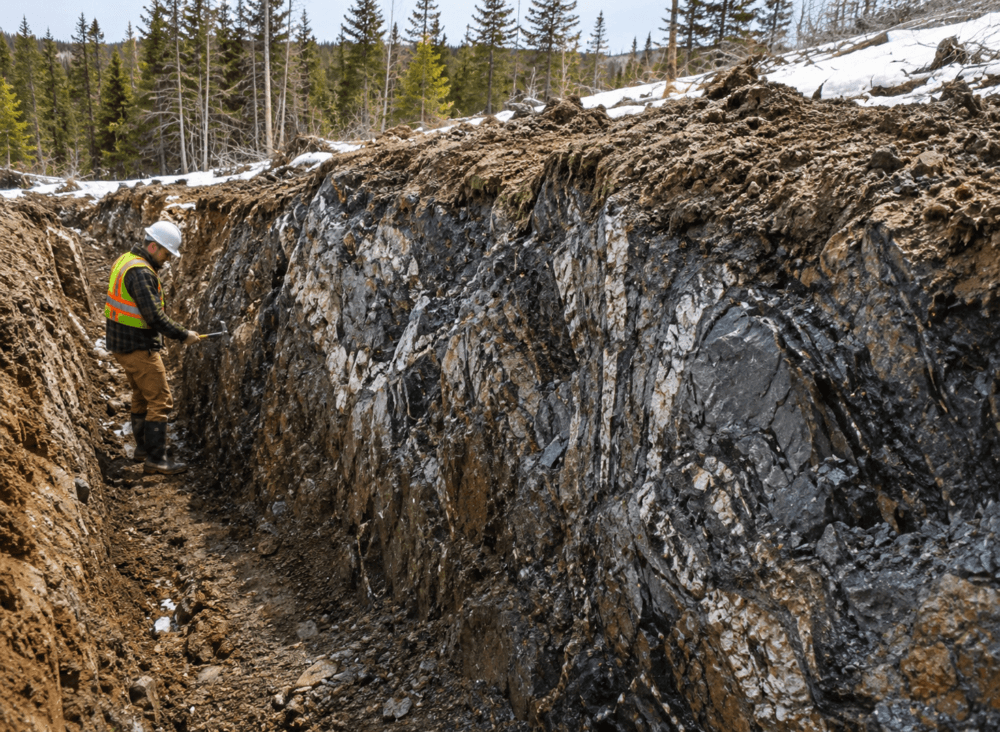
Antimony Resources Corp. CNSXATMY OTCMKTSATMYF FRAK8J0 reported high-grade antimony assays from its South Zone at the Bald Hill project in New Brunswick, adding another prospective mineralized area outside the company’s main deposit.
The company said in a Monday press release that assays from 38 rock samples collected during a winter trenching program averaged 19.5 per cent antimony across more than 200 metres of strike length. Additionally, several samples returned exceptionally high grades, including values as high as 44.2 per cent antimony.
The South Zone lies about 900 metres south of Bald Hill’s Main Zone. The area trends northwest-southeast, similar to the Main Zone. Furthermore, company geologists believe the South Zone may represent a parallel but offset mineralized structure.
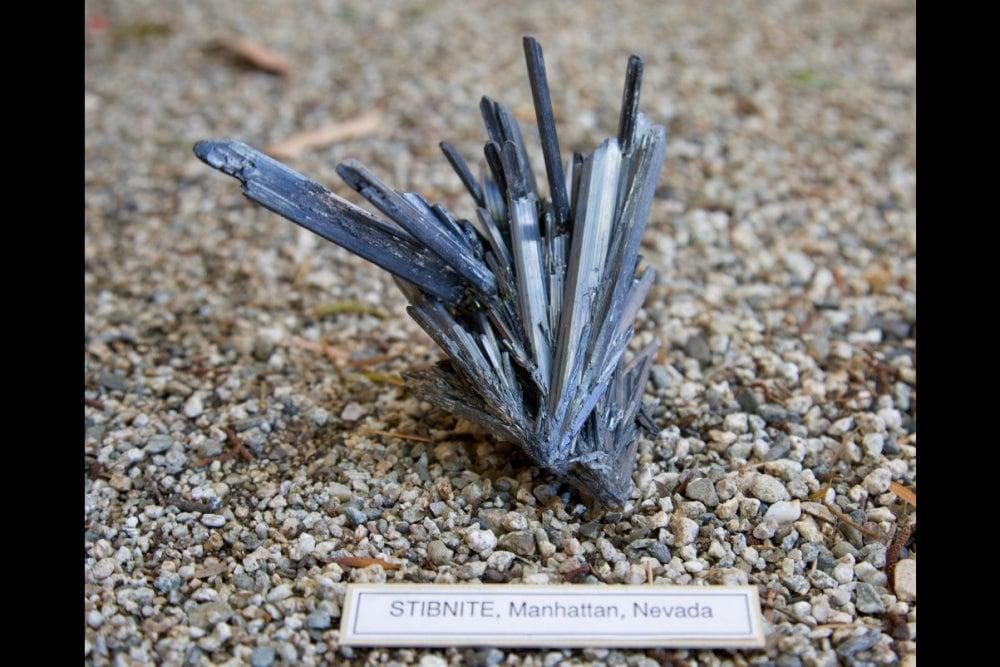
Antimony Resources collected the samples from trenches excavated last winter across the newly identified target area. The company described the mineralization as stibnite associated with brecciated sedimentary rocks.
Management cautioned that the reported values come from grab samples taken directly from exposed veins. However, grab samples do not necessarily represent the overall grade of the broader mineralized system.
The South Zone forms part of a group of recently discovered targets that the company calls its New Zones. Antimony Resources first identified the areas through recent field investigations and exploration work.
Chief executive officer James Atkinson said the winter trenching program returned very high-grade results and expanded the company’s understanding of the project’s mineral potential. He added that the newly identified zones demonstrate opportunities beyond the established Main Zone.
Atkinson also credited field crews for completing the trenching work during winter conditions and obtaining the samples that produced the latest assays.
Read more: NevGold pushes toward potential 2027 antimony production at Limousine Butte
Read more: NevGold reports more positive drill results as gold-antimony resource estimate nears
Antimony Resources plans to test the South Zone
The company noted that earlier work in the area returned 9.2 per cent antimony over 2.6 metres in 2024. However, the latest trenching program suggests the mineralized zone extends across a much larger area than previously recognized.
Meanwhile, Antimony Resources has already begun its next drilling campaign. The company plans to test the South Zone and other recently identified targets as part of its ongoing regional exploration program.
According to Atkinson, the new drilling program will focus on defining the extent of mineralization within the South Zone and evaluating additional discoveries elsewhere on the property.
The Bald Hill project covers more than 3,700 hectares in southern New Brunswick. Furthermore, large portions of the property remain largely unexplored.
The company included a project map showing the relationship between the Main Zone and several New Zones identified across the property. In addition, the map outlines other claim blocks that form part of the broader land package.
Antimony Resources intends to continue exploring the district through a combination of geophysical surveys and field programs. The next phase will include airborne magnetic and electromagnetic surveys, soil sampling, geological mapping and additional rock sampling.
The company also plans further trenching in areas that generate encouraging results from ongoing exploration.
Atkinson said a recent site visit by staff from New Brunswick’s Department of Natural Resources provided an opportunity to showcase the project and discuss its development potential. He added that follow-up discussions reflected provincial support for mining projects and recognition of Bald Hill’s importance as a domestic antimony asset.
Read more: NevGold Corp. reports antimony grades up to 53.7 per cent at Nevada project
Read more: NevGold positions Nevada project for near-term antimony output
Bald Hill best-known antimony deposits in Canada
Antimony remains a strategically important mineral because manufacturers use it in batteries, semiconductors, flame retardants and military applications. Consequently, governments in North America have increased their focus on securing reliable domestic sources of supply.
The Bald Hill project ranks among the best-known antimony deposits in Canada. The company states that drilling has outlined mineralization over a strike length exceeding 600 metres and to depths of at least 350 metres.
Furthermore, Antimony Resources said the deposit remains open in all directions. The company believes additional drilling could expand the known extent of mineralization.
According to the company, drilled widths at the Main Zone typically range from four to five metres. Grades generally average between 3 per cent and 4 per cent antimony.
A 2025 NI 43-101 technical report outlined an exploration target of approximately 2.7 million tonnes grading between 3 per cent and 4 per cent antimony. However, the company emphasized that the estimate remains conceptual.
Antimony Resources has not completed sufficient work to define a mineral resource. Additionally, it remains uncertain whether future exploration will convert the exploration target into a formal mineral resource estimate.
The company also sees expansion potential beyond the Main Zone. Recent exploration identified additional targets on newly acquired claims, including the Second Run property located roughly three kilometres south of Bald Hill’s Main Zone.
Meanwhile, soil sampling programs have outlined new zones of antimony mineralization across those southern claims. The company plans to evaluate those targets alongside the South Zone as exploration activities continue throughout the year.
.