United States Antimony prepares Montana mill for production amid antimony supply crunch
U.S. Antimony acquired the flotation mill for approximately USD$4.75 million in January
 Joseph Morton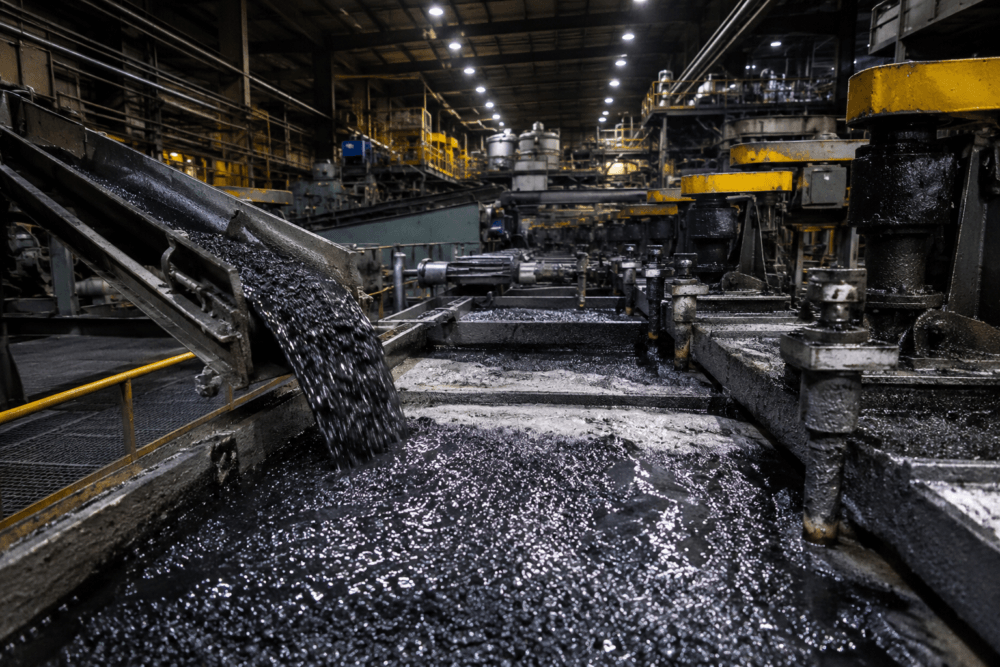
United States Antimony Corp (NYSE: UAMY) has commissioned the wet phase of its newly acquired flotation mill in Radersburg, Montana, marking a major step in the company’s effort to build a fully integrated domestic antimony supply chain.
The company scheduled a ribbon-cutting and rock-breaking ceremony for Tuesday at the Radersburg site. Montana Governor Greg Gianforte planned to attend the event alongside company executives. The facility will soon process ore from the company’s Stibnite Hill mine, expanding its ability to supply a critical mineral used in military equipment, flame retardants and advanced technologies.
U.S. Antimony acquired the flotation mill for approximately USD$4.75 million in January. Additionally, it invested about USD$2 million to refurbish equipment, upgrade processing systems and construct a new laboratory. The company said the mill is now ready to process roughly 800 tons of antimony ore mined last autumn from its Stibnite Hill operation near Thompson Falls.
However, commercial production will not begin immediately.
The laboratory must complete its own commissioning before the company can produce concentrate. U.S. Antimony expects that work to finish in mid-July. The company spent about USD$1 million on the laboratory.
The new facility includes equipment for sample preparation, fire assay testing, wet chemistry analysis and a three-kilowatt X-ray fluorescence system that measures the composition of mineral samples. Additionally, the Stibnite Hill mine continues producing raw ore while the Radersburg operation prepares for full production.
The flotation mill fills an important gap in U.S. Antimony’s production chain. Previously, the company relied on a leased third-party flotation facility before moving material to its smelting operations.
Read more: NevGold expands Bullet Zone discovery as drilling confirms oxide gold-antimony system
Read more: NevGold discovers transformational oxide gold-antimony structure at Limousine Butte
United States imports much of its antimony
Now it owns every major stage of production within its supply chain.
That structure gives the company greater control over processing schedules, transportation and product quality while reducing dependence on outside operators. Antimony is a critical mineral used in military ammunition, batteries, semiconductors, solar panels and flame-retardant materials.
The United States imports much of its antimony supply. Meanwhile, China imposed export restrictions on antimony in September 2024, tightening global supplies and pushing prices sharply higher.
According to the company, antimony prices climbed more than 500 per cent after those restrictions disrupted international markets. However, higher prices alone have not solved supply shortages.
Company executives said many new mining operations produce ore that fails to meet the strict quality requirements needed for conventional smelting. Raw antimony ore often contains impurities such as arsenic, lead and iron.
The flotation process removes much of those unwanted materials before smelting begins. Consequently, flotation allows miners to upgrade ore into a concentrate containing roughly 60 per cent antimony.
That concentrate then moves to smelters, where operators remove additional impurities and produce refined antimony metal, antimony trioxide and antimony trisulfide. The Radersburg facility serves as that intermediate processing stage.
U.S. Antimony said the mill will handle ore from both its Montana and Alaska mining operations. Additionally, executives expect the facility to increase feedstock available for the company’s downstream smelters in Thompson Falls and Mexico.
The expanded capacity also supports a large U.S. government contract.
The company holds a sole-source Department of War agreement worth approximately USD$245 million to supply military specification antimony metal.
Read more: NevGold’s stock growth secures junior spot on 2026 TSX Venture 50 list
Read more: NevGold positions Nevada project for near-term antimony output
Current processing technology limits domestic production
Executives said the new flotation capacity should help accelerate deliveries under that contract while also supporting commercial customers. Those customers purchase antimony products for flame retardants and other industrial applications.
However, the company believes current processing technology still limits broader domestic production. Many antimony deposits contain refractory ores that conventional flotation cannot adequately separate from impurities. As a result, potentially valuable ore remains unsuitable for traditional smelting. Consequently, U.S. Antimony has proposed building a hydrometallurgical refinery beside the Radersburg mill.
The company submitted an application to the U.S. Department of Energy in January 2026 requesting government support for the project. The proposed refinery carries an estimated construction cost of USD$44 million. Additionally, the company requested approximately USD$35.2 million in federal funding.
Unlike conventional pyrometallurgical smelting, hydrometallurgical processing uses chemical solutions to recover metals from ore. The company believes that approach could accept a much broader range of antimony-bearing material.
It also expects higher recovery rates and lower environmental impacts. Furthermore, the refinery could recover additional critical minerals that currently remain locked inside processed material.
Executives said those capabilities would expand available feedstock while increasing overall production volumes. The Radersburg site already holds the required permits for such a facility.
That could simplify future construction if funding becomes available. Meanwhile, company management also challenged the way global antimony prices are reported. Executives argued that current Western spot price assessments fail to distinguish between ordinary antimony ore and material suitable for military-grade processing.
The company said published prices generally reflect shipments traded through Rotterdam and reported by commodity agencies such as Argus Media.
Read more: NevGold raises up to CAD$25M to fast-track Limo Butte development
Read more: NevGold launches 20,000-metre drill campaign at Nevada antimony-gold project
Domestic benchmark would better reflect secure supply chains
Management also believes those benchmarks overlook the scarcity of specification-compliant feedstock.
Executives argued that high-quality ore capable of producing military-grade products deserves a higher market value than current pricing suggests. Consequently, U.S. Antimony wants North America to develop its own regional antimony pricing index.
Management believes a domestic benchmark would better reflect secure supply chains and encourage investment in North American production. The proposal comes as governments increasingly classify antimony as a strategic mineral.
Defense manufacturers rely on antimony in ammunition and specialized military equipment. Additionally, energy storage systems and electronics manufacturers use the metal in several advanced technologies.
Chairman and chief executive officer Gary Evans described the Radersburg commissioning as another major milestone in building a domestic antimony supply chain. He said the company completed targeted upgrades and now stands ready to process ore from its Montana operations.
Evans also welcomed Governor Gianforte’s attendance at Tuesday’s ceremony, noting that the governor previously toured the Thompson Falls mine and smelter. He said the flotation mill represented the final missing production asset needed to complete the company’s vertically integrated operating model.
Furthermore, Evans said a future hydrometallurgical refinery could transform the company’s ability to process lower-grade and more complex ores from around the world. Rather than accepting only narrowly defined feedstock, the proposed refinery could handle a much wider variety of antimony-bearing materials.
He added that the project would strengthen domestic production while recovering additional critical minerals from processed ore. Evans also said the company believes it could eventually supply about 50 per cent of U.S. antimony demand if its expansion plans proceed as expected.
Read more: NevGold pushes toward potential 2027 antimony production at Limousine Butte
Read more: NevGold reports more positive drill results as gold-antimony resource estimate nears
Multiple companies answering the call
Outside United States Antimony Corporation, a growing number of mining companies have expanded into antimony as Western governments seek secure domestic supplies of critical minerals following China’s export restrictions. Interest in the metal has accelerated alongside higher prices and rising demand from the defence, energy and technology sectors.
One of the sector’s largest names is Perpetua Resources Corp TSEPPTA NASDAQPPTA, which is advancing its Stibnite Gold Project in Idaho. Although primarily a gold project, it also contains one of the largest known antimony reserves in the United States and could eventually supply about 35 per cent of U.S. antimony demand during its first six years of production. The project has attracted significant U.S. government support because of its strategic importance.
NevGold Corp CVENAU OTCMKTSNAUFF FRA5E50 has also gained attention after identifying significant antimony mineralization alongside gold at its Limousine Butte project in Nevada. Rather than pursuing a stand-alone antimony mine, the company is evaluating antimony as a valuable byproduct that could improve project economics while positioning it to benefit from growing demand for critical minerals.
Meanwhile, Military Metals Corp CNSXMILI OTCMKTSMILIF FRAQN90 has assembled a portfolio of antimony projects across Europe and North America, focusing on historic producing districts. Additionally, Antimony Resources Corp. CNSXATMY OTCMKTSATMYF FRAK8J0 is advancing its Bald Hill project in New Brunswick, while Larvotto Resources Ltd OTCMKTSLRVTF FRAK6X ASXLRV is working to restart the historic Hillgrove antimony-gold mine in Australia as stronger prices improve development economics.
NevGold Corp is a sponsor of Mugglehead news coverage
.