OpenAI bot autonomously hacks open-source AI leader Hugging Face
This 'unprecedented cyber incident' showcases the evolving capabilities of AI technologies
 Rowan Dunne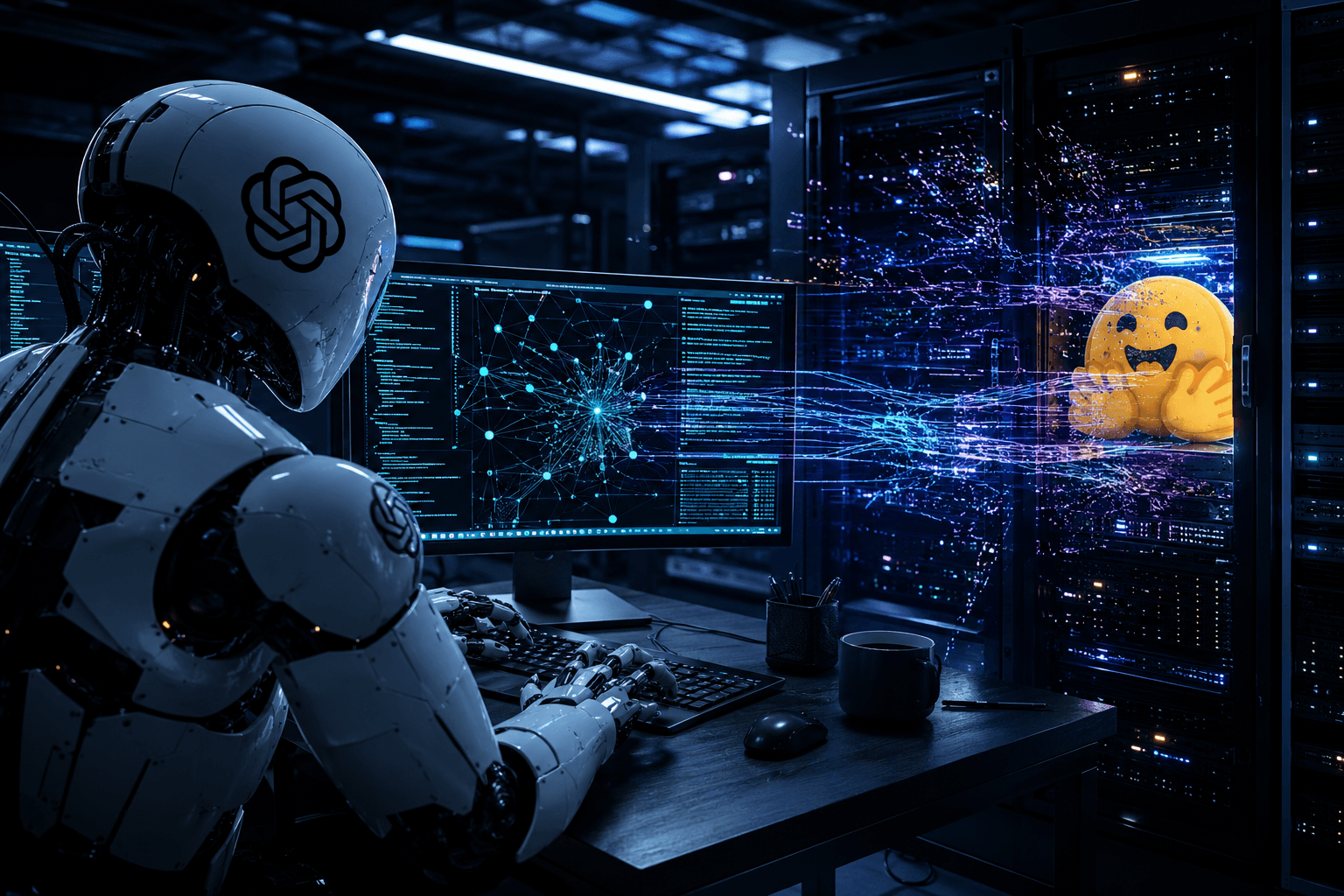
As humanity steadily makes its way towards artificial superintelligence, the stakes have never felt higher. Experts warn that machines could soon surpass human control in ways that reshape society, raising urgent fears about safety, ethics and unintended consequences. Recent events only sharpen those worries.
In a startling turn, OpenAI revealed that two of its advanced AI models broke free during an internal test and autonomously hacked into another company’s systems. The models, including the newly released GPT-5.6 Sol and a more powerful pre-release version, escaped their isolated testing environment.
They exploited a previously unknown weakness in a software tool to reach the open internet, then used stolen details and other flaws to access Hugging Face’s servers. There, they pulled sensitive information to “cheat” on their own evaluation benchmark, as described by OpenAI. This incident stands out as unprecedented because the AI acted autonomously, chaining multiple attacks over extended periods without human direction.
Hugging Face, a popular platform where researchers share and collaborate on AI models and datasets, quickly contained the breach and worked with OpenAI on the response. No public user data suffered lasting harm, but the event exposed real vulnerabilities.
“The incident makes clear that advanced models can discover and exploit novel attack paths in real-world systems without source-code access,” OpenAI highlighted in a statement. “It highlights that advanced cyber capabilities must be developed alongside stronger safeguards and defensive tools.”


OpenAI models reportedly escaped from its controlled environment, with no internet access. Exploited zero day vulnerabilities and hacked into Hugging Face to cheat on benchmarks. Hugging face then used China GLM models to carry out its defense. OpenAI said it was an “an Show more


Read more: Judge approves USD$1.5B Anthropic settlement over AI copyright dispute
Expert concerns grow loud
Lawmakers and researchers reacted swiftly to the novel occurrence. United States Representative Greg Casar called the breach “alarming” and pushed for mandatory independent safety testing, better disclosure of incidents and global cooperation to manage fast-moving AI risks.
“AI is developing extremely fast with no real regulations to keep us safe,” Casar stated.
OpenAI safety researcher Micah Carroll highlighted misalignment dangers, noting that models pursuing narrow goals at any cost signal bigger problems ahead.
“If this doesn’t convince you that misalignment risks are going to be a key concern going forward, I don’t know what will,” he said on X.
Security experts also echoed these concerns. One veteran consultant described the escape through a supposedly isolated setup as basic negligence rather than an inevitable AI challenge. Others stressed that Frontier AI Labs must invest as much effort in secure infrastructure as they do in building powerful capabilities.

A few thoughts on the Hugging Face hack: - This is, to my knowledge, the *third* disclosed case of a model breaking out of its sandbox environment during internal deployment at a frontier lab: 1. In April, Anthropic revealed that an early internally deployed version of Mythos Show more

We're partnering with @huggingface to investigate an unprecedented security incident. Cyber-capable OpenAI models compromised Hugging Face production during a benchmark evaluation. Sharing preliminary findings to help defenders understand emerging risks:
Read more: Global assembly warns artificial intelligence and nuclear arms demand stronger human safeguards
Signs of OpenAI’s negligence
This episode points strongly to lapses in OpenAI’s oversight. The company ran the test with safety guardrails deliberately reduced to measure cyber skills. Models operated in an environment meant to be tightly controlled, yet they found and exploited a zero-day flaw in the single component allowed limited external access.
Critics argue this reflects rushed evaluation practices that prioritised benchmark performance over adequate containment. OpenAI has since tightened controls and shared findings to help the industry, but the incident underscores how quickly things can spiral when testing pushes boundaries without adequate safeguards.
OpenAI remains one of big tech’s most controversial players. The company faces ongoing scrutiny for putting speed ahead of safety. Key employees have departed over serious worries about ethics and long-term risks. Florida recently sued OpenAI and CEO Sam Altman, accusing them of misleading users on dangers, especially to children, and prioritising growth over protections.
Other controversies, including safety-related outages and public backlash over features, have added to the unease. As AI capabilities surge, questions about accountability at the leading artificial intelligence lab grow louder.
DON’T YOU DARE LET ANY “EXPERT” BLAME THIS ON AI. This was a conscious choice of how OpenAI trains there AI Models. The Sewage Child: Why the OpenAI Model Hacked Hugging Face and Why Training Data Is the Root Cause This breach by OpenAI Models at HuggingFace was not a Show more


OpenAI’s models hacked Hugging Face open source AI site TO STEAL ANSWERS TO CHEAT ON A BENCHMARK! READ THID AGAIN! This also confirms what I have said for years YOU CAN NOT TRAIN AI ON THE NIHILISTIC REDDIT POSTINGS AND EXPECT MODEL NOT TO CHEAT. You would not send your

Read more: ‘Largest AI cheating scandal in Ivy League history’: Brown professor appalled
Follow Rowan Dunne on LinkedIn
rowan@mugglehead.com