German court rules Google liable for AI‑generated false statements
Google argued that users receive warnings stating AI-generated information may contain mistakes
 Joseph Morton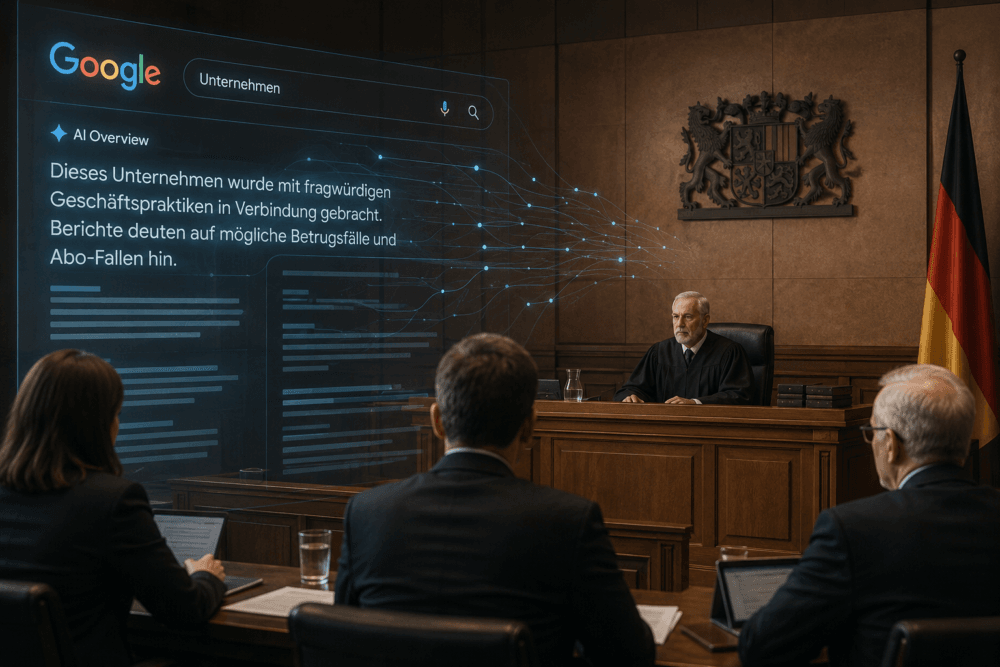
A German court has ruled that Alphabet Inc (NASDAQ: GOOG) flagship subsidiary Google can be held liable for false information generated by its artificial intelligence search summaries, marking a potentially significant development for AI companies operating online.
The Munich Regional Court issued a preliminary ruling against Google, finding that the company bears responsibility for defamatory statements produced by its AI Overviews feature. Consequently, the court ordered Google to prevent the spread of inaccurate claims generated through the tool.
The case arose after two publishers discovered that Google’s AI-generated summaries linked them to alleged scams, questionable business practices and subscription fraud schemes. According to court filings, the summaries made those associations despite a lack of supporting evidence.
Earlier this year, the affected companies sent Google a cease-and-desist letter demanding the removal of the claims. However, the company rejected liability and argued that users receive warnings stating AI-generated information may contain mistakes and should be independently verified.
The court disagreed with that position.
Judges found that Google’s AI system combined information from unrelated companies with data connected to the plaintiffs. Consequently, the technology generated allegations that did not appear in any of the source material displayed in search results.
The court determined that the AI summaries went beyond the role of a traditional search engine. Unlike conventional search results, which present links to third-party content, the AI system created new statements based on its interpretation of information found online.
According to the ruling, Google produced independent claims rather than simply displaying information created by others. Furthermore, judges found that several disputed statements appeared nowhere in the search results cited by the AI system.
Read more: Five technologies moving from science fiction to reality: A Mugglehead roundup
Read more: AI-integrated dolls help care for seniors in South Korea
Google continues to invest heavily in improving AI Overviews
The court also rejected the argument that third parties should bear responsibility for correcting false information. Instead, judges concluded that Google controls the technology responsible for generating the content and therefore must accept accountability when the system causes harm.
As a precautionary measure, the court ordered Google to remove a substantial portion of the disputed statements. Additionally, judges directed the company to cover 80 per cent of the legal costs associated with the proceedings.
The decision remains preliminary and could face appeal.
A Google spokesperson told Ars Technica that the company continues to invest heavily in improving AI Overviews and maintaining response quality. Meanwhile, the company said it is reviewing the ruling because it has not yet become final.
The spokesperson also noted that AI Overviews are designed to reflect information available on the internet and that most responses provide accurate information.
The decision could carry implications far beyond Google’s search business.
The court’s reasoning challenges legal protections that have historically shielded search engines from liability for third-party content. Traditionally, courts have treated search engines as tools that help users locate information rather than publishers responsible for the content itself.
However, the German court concluded that generative AI changes that relationship.
According to the ruling, AI systems can create entirely new statements by combining information from multiple sources. Consequently, companies that design, train and operate those systems may bear responsibility for resulting inaccuracies.
Legal experts have closely watched similar debates as generative AI products gain popularity worldwide. Furthermore, regulators in several jurisdictions have begun examining how existing laws apply to AI-generated content.
Read more: DeepSeek reportedly completes major AI training run without Nvidia chips
Read more: Microsoft teams up with Mayo Clinic to create healthcare specialist AI model
AI-generated statements not protected by free expression
The ruling may also draw attention to other major AI developers.
Companies including OpenAI, Anthropic and Perplexity AI inform users that their systems can generate inaccurate or misleading information. Additionally, these companies generally encourage users to verify important facts before relying on AI-generated responses.
Those warnings typically appear in terms of service agreements or user documentation.
However, the German court found that such notices do not automatically eliminate liability. Judges reasoned that victims could otherwise struggle to seek legal remedies because the original sources never made the disputed statements.
As a result, affected individuals might have no practical avenue to challenge false claims generated by an AI system.
The court also addressed free speech arguments raised during the proceedings.
Judges concluded that AI-generated statements do not qualify as personal opinions protected by free expression principles. Instead, the ruling characterized the content as the product of algorithms designed and managed by a company.
Consequently, the court treated the disputed statements as corporate outputs rather than individual expressions.
The case represents one of the clearest judicial examinations of responsibility for AI-generated content. Furthermore, it arrives as technology companies increasingly integrate generative AI into search engines, productivity software and consumer applications.
The ruling suggests courts may view AI-generated statements differently from traditional search results when assessing liability for inaccurate or defamatory information.
.