Microsoft teams up with Mayo Clinic to create healthcare specialist AI model
The announcement comes amid a surge in medical LLM development
 Rowan Dunne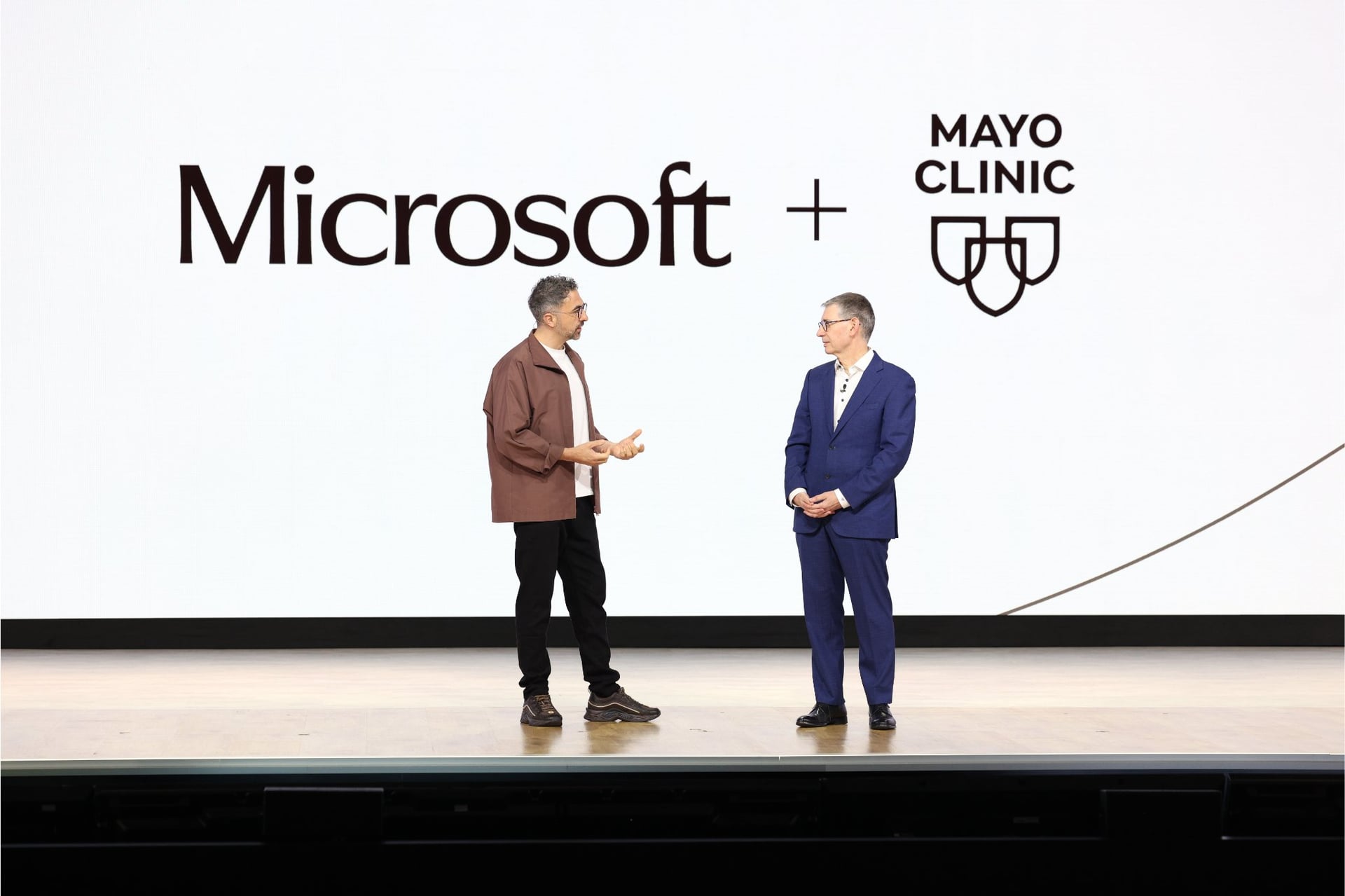
Healthcare providers and patients are increasingly turning to AI models for answers and support. People ask chatbots about symptoms and treatments while doctors use them to speed up diagnostics and review records. This surge is driving major tech and medical organisations to build special AI tools.
Amid these trends, Microsoft Corp NASDAQMSFT FRAMSF and Mayo Clinic have announced a collaboration to develop a frontier AI model built specifically for healthcare. Revealed on Jun. 2, the project pairs Mayo Clinic’s vast clinical expertise, patient data and insights with Microsoft’s advanced AI, cloud and engineering power.
The resulting model is intended to help with a wide range of clinical reasoning tasks. It aims to support earlier diagnoses, more personalised treatments and improved patient outcomes for multiple indications. Mayo Clinic will own the model and Microsoft plans to offer it through its Azure AI Foundry cloud so others can use it.
Unlike general AI chatbots, this model will be receiving deep clinical context and rigorous validation for safety and accuracy.
“Frontier medical intelligence is around the corner,” said Microsoft AI chief executive Mustafa Suleyman. “This is the best collaboration imaginable to help us accelerate towards that future.”
Read more: Breath Diagnostics advances pre-op pneumonia screening with FDA breakthrough designation
Medical AI bots: a modern-day focus
The Microsoft-Mayo effort joins a growing wave of healthcare-tailored AI models. Developers create these tools to overcome limits of general-purpose systems that often give unreliable medical advice.
Google DeepMind is advancing similar work with its AI co-clinician research. This system acts as a supportive teammate for doctors. It handles evidence synthesis, medication questions and even telehealth interactions using audio and video. In tests, it has performed well on many tasks but still falls short of expert physicians in spotting critical issues.
In addition, tech giant NVIDIA Corp NASDAQNVDA ETRNVD has taken a different approach with its BioNeMo platform. This suite of open models and tools focuses on drug discovery, protein structure prediction and biomedical research. Researchers and pharma companies use it to design new molecules, accelerate virtual screening and examine complex biological data.
Human oversight remains essential
Even with these powerful tools, human doctors and experts must stay in control. AI can make mistakes or reflect biases in its training data, especially when data does not represent all patient groups fairly.
A University of California Davis-led study published in Social Science & Medicine last month highlighted this exact point. Researchers there stress that human review helps catch errors, reduce bias and add real-world context that algorithms miss.
The study shows that AI combined with sound human judgment leads to more trustworthy results in areas like medical imaging and risk prediction. It underscores a critical truth: the most effective medical AI will augment, not replace, human expertise.
Read more: Prestigious medtech intelligence firm recognizes Breath Diagnostics for innovation
Follow Rowan Dunne on LinkedIn
rowan@mugglehead.com