B.C. court orders renewed consultation on Seabridge's KSM mine
The ruling sends the determination back to B.C.’s minister of environment and parks for reconsideration
 Joseph Morton
A British Columbia court has ruled the province failed to properly consult a First Nation before granting a key regulatory designation that allowed one of Canada’s largest undeveloped mining projects to preserve its environmental approvals indefinitely.
In a decision released Monday, B.C. Supreme Court Justice Emily Burke found the province did not meet its duty to consult the Tsetsaut Skii km Lax Ha Nation before declaring the KSM project “substantially started” in 2024. The designation allowed Seabridge Gold Inc. (TSE: SEA) to keep the project’s environmental assessment certificate from expiring and avoid restarting a lengthy regulatory review process.
The ruling sends the substantially started determination back to B.C.’s minister of environment and parks for reconsideration. However, the court did not halt work at the project and did not overturn the broader environmental approvals already in place.
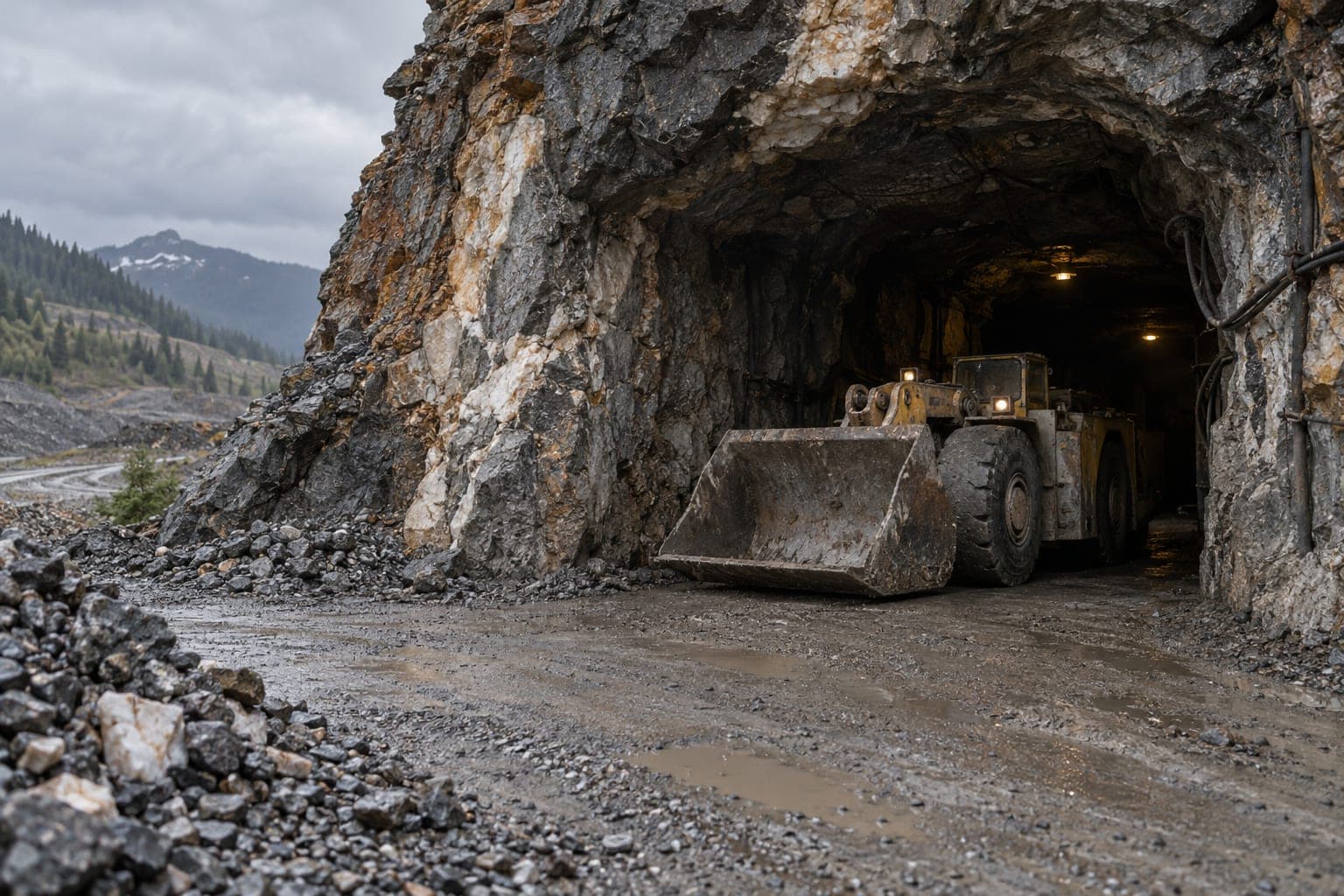
Located roughly 65 kilometres from Stewart in northwestern British Columbia’s Golden Triangle region, KSM ranks among the world’s largest undeveloped gold and copper deposits. The project also contains significant silver and molybdenum resources. Additionally, both the federal and provincial governments have designated KSM as a critical minerals project.
Seabridge estimates the mine could contribute approximately CAD$47.9 billion to British Columbia’s economy over a 52-year operating life. The proposed development carries a price tag of about USD$8 billion and includes four open pits, two underground mines and twin 23-kilometre tunnels beneath a mountain range.
Those tunnels would transport ore, electricity, fuel and personnel between the mine site and a large tailings storage facility. Furthermore, Burke noted in her decision that the proposed tailings reservoir would rank among the largest in North America.
Read more: NevGold launches 20,000-metre drill campaign at Nevada antimony-gold project
Read more: NevGold pushes toward potential 2027 antimony production at Limousine Butte
The nation spent decades seeking territorial claim recognition
The dispute centres on Indigenous consultation rather than the project’s economic merits.
The Tsetsaut Skii km Lax Ha Nation argued the province ignored evidence showing part of the proposed mine waste facility sits within its traditional territory. Consequently, the nation sought judicial review after the province approved the substantially started designation in July 2024.
Chief Darlene Simpson said the nation has spent decades seeking recognition of its territorial claims. She argued reconciliation requires governments to acknowledge historical realities and engage meaningfully with Indigenous communities affected by major developments.
The nation has only 56 members. However, it maintains longstanding claims over a large area of northwestern British Columbia that includes the proposed tailings facility.
According to court records, the province commissioned an updated ethnographic study that was delivered in 2021. The 425-page report examined archaeological evidence, oral histories, colonial records and previous court decisions. Additionally, the study mapped traditional land use across a broad region known as Awiijii.
The report concluded the Tsetsaut historically hunted, trapped and fished throughout the area. It also documented cabins, smokehouses and fishing sites located downstream from the proposed tailings pond.
Meanwhile, overlapping territorial claims exist in the region.
The Tahltan Nation and Nisga’a Nation have established partnerships tied to potential economic opportunities from KSM. Additionally, draft mine permits already include consultation requirements involving those nations.
The Tsetsaut Skii km Lax Ha Nation challenged those arrangements. The nation argued governments and industry relied on an inaccurate understanding of regional history that diminished its territorial interests.
Read more: NevGold reports more positive drill results as gold-antimony resource estimate nears
Read more: NevGold positions Nevada project for near-term antimony output
Evidence suggests mine waste facility occupied traditional territory
Court documents indicate the 2021 ethnographic report examined a historical peace agreement reached at Treaty Creek in 1898. According to the report, that agreement transferred exclusive hunting, trapping and fishing rights in the area to the Tsetsaut people. Furthermore, the report stated the Nisga’a and Tahltan did not possess a comparable treaty covering the same territory.
The Tsetsaut also argued the province has recognized its distinct identity for decades. Additionally, the nation said it has consistently asserted its cultural and territorial claims since at least 2003.
A key piece of evidence emerged in 2023.
That year, a senior provincial official wrote that available evidence suggested the proposed mine waste facility occupied Tsetsaut traditional territory. Consequently, the nation believed it had finally secured meaningful participation in discussions surrounding the project.
Those expectations changed after Seabridge applied for a substantially started determination in January 2024. About a month later, senior government officials sent correspondence that downplayed earlier acknowledgements regarding territorial claims.
The nation responded by requesting a formal assessment of its territorial interests. However, the province moved forward with the regulatory process.
On July 19, 2024, government officials informed the nation that its views would be presented to decision-makers. Subsequently, the province declared the project substantially started six days later.
Simpson later filed a petition asking the court to overturn the decision. She maintained the issue was not support or opposition to mining but rather participation in discussions affecting the nation’s traditional territory.
During the proceedings, provincial lawyers argued consultation had been extensive. They also maintained the substantially started determination rested on both physical construction and significant financial investment.
Read more: NevGold discovers transformational oxide gold-antimony structure at Limousine Butte
Read more: NevGold’s stock growth secures junior spot on 2026 TSX Venture 50 li****st
Expenses demonstrated progress at the site
Seabridge and its subsidiary have spent nearly CAD$1.2 billion developing KSM. Additionally, approximately CAD$444 million went toward construction activities between 2021 and 2023, including road building, land clearing and electrical infrastructure.
The province argued those expenditures demonstrated substantial progress at the site. Furthermore, officials pointed to ongoing Indigenous partnerships supporting the project.
Burke disagreed with the province’s consultation record.
In her ruling, she found government decision-makers relied on incomplete information because meaningful discussions with the Tsetsaut Skii km Lax Ha Nation did not occur. Additionally, she concluded the province disregarded its own earlier findings regarding the likely location of the tailings facility.
Burke wrote that the nation had engaged with provincial officials in good faith over many years. However, she found the consultation process ultimately fell short of constitutional requirements.
The judge ordered the province to reopen the process and provide the nation with 90 days to make submissions regarding the 2024 application. Consequently, the government must reconsider whether KSM qualifies as substantially started after completing further consultation.
Burke did not decide whether the substantially started determination itself was unreasonable. Instead, she focused her ruling on the province’s duty to consult and accommodate Indigenous interests.
That distinction allowed both supporters and critics of the project to claim partial victories.
Environmental organization SkeenaWild argued the court left unresolved questions about whether enough work had actually occurred at the site. Meanwhile, Seabridge maintained the decision validated important aspects of the original determination.
Read more: NevGold expands Bullet Zone discovery as drilling confirms oxide gold-antimony system
Read more: NevGold reports over 93 per cent gold recovery after antimony processing at Limousine Butte
Work will continue as province conducts consultations
Seabridge chairman and chief executive officer Rudi Fronk said the company remains satisfied with portions of the ruling. He stated that work at KSM will continue while the province conducts consultations and reconsiders the designation. Additionally, he said physical improvements at the project have advanced significantly since the 2024 decision.
The project’s environmental assessment certificate currently expires on July 29, 2026. Consequently, the province faces a limited timeframe to complete consultations and issue a new determination.
Officials with B.C.’s Environmental Assessment Office said they are reviewing the judgment and evaluating next steps. However, the province has not indicated whether it plans to appeal the ruling or how it intends to address the approaching regulatory deadline.
.