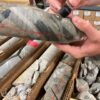

Manitoba’s homes harbour a silent threat that few residents can detect without deliberate effort. Elevated radon levels seeping from the prairie soil turn ordinary living spaces into long-term risk zones for lung cancer. This public-health challenge demands new tools, not just awareness campaigns.
The Manitoba Lung Association has now joined forces with BioMark Diagnostics Inc (OTCMKTS: BMKDF) (CNSX: BUX) (FRA: 2OB) and St. Boniface Hospital Research to help confront this concern. Their collaboration centres on planning a feasibility study of BioMark’s blood-based test, which analyses metabolic biomarkers and applies AI algorithms to flag early-stage lung cancer risk.
The partners intend to recruit roughly 750 to 1,000 participants, beginning with people exposed to high residential radon. Leaders from each organisation stress that prevention remains the priority, but earlier detection could give Manitobans at elevated radon risk the chance of diagnosis while the disease remains localised, enabling better treatment options.
The initiative carries promise for shaping future screening pathways, but it still remains at the planning stage. Any actual research awaits scientific review, ethics approval, funding and broader community partnerships. Results and real-world impact will not be observable until at least H2 of 2027.
“Hopefully by this time next year we will have some great outcomes to show Manitobans,” said Manitoba Lung Association CEO Juliette Mucha.
Read more: Breath Diagnostics advances pre-op pneumonia screening with FDA breakthrough designation
Radon burden across Manitoba
Manitoba records among the highest residential radon concentrations in Canada. Roughly one in four tested homes exceeds Health Canada’s guidelines, with rates climbing near 43 per cent in certain regions.
Radon accounts for approximately 16 per cent of lung cancer cases in Canada and more than 3,000 deaths each year, ranking as the leading cause of the disease among never-smokers. In Manitoba the gas contributes to an estimated 235 lung cancer cases and around 165 deaths annually.
Recently, the province has responded with practical measures. Winnipeg libraries began lending digital radon meters in late 2025 so families can test living areas and bedrooms for three weeks, and in 2020 Manitoba formally established November as Radon Action Month to drive testing, education and mitigation awareness.
Initiative comes amid broader blood test push
This Manitoba partnership arrives amid a wider drive for effective early-detection tools that move beyond low-dose CT scanning.
Companies such as Guardant Health Inc (NASDAQ: GH) (FRA: 5GH), Cizzle Bio and Personalis Inc (NASDAQ: PSNL) (FRA: 04X) have advanced blood-based assays that identify protein variants, circulating tumour DNA or molecular residual disease with encouraging sensitivity for early-stage malignancies.
It also comes amid other exciting developments in the field. One particular North American company, Breath Diagnostics, is in the advanced stages of progressing an even less invasive breath test that captures volatile organic compounds in a single exhale. Clinical studies of its OneBreath platform have reported sensitivity near 94 per cent and specificity around 85 per cent across multiple sites and disease stages, underscoring the growing potential of completely non-invasive screening approaches.
Read more: Prestigious medtech intelligence firm recognizes Breath Diagnostics for innovation
Follow Rowan Dunne on LinkedIn
rowan@mugglehead.com