
A police raid in Malaysia has drawn fresh attention to the growing connection between cryptocurrency mining, electricity theft and organized crime across Southeast Asia.
Reported on Thursday, this comes as governments struggle to stop operators from draining public power grids while generating millions of dollars in digital assets.
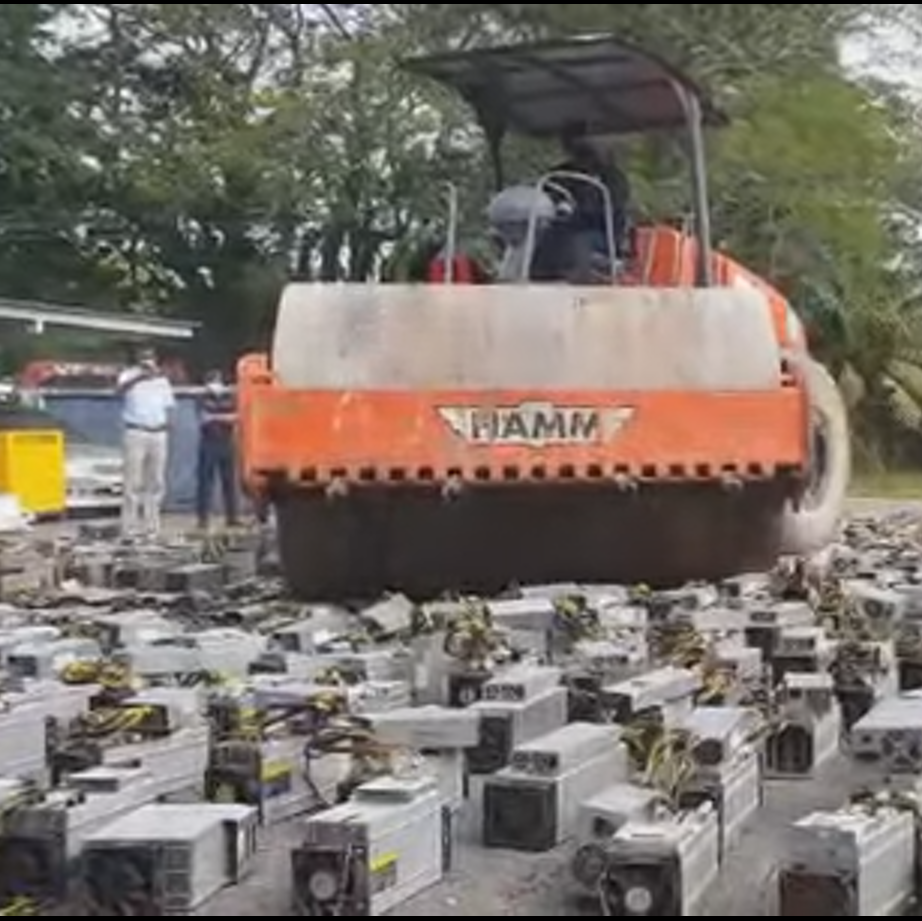
Police in Malaysia’s southern state of Johor raided four rented properties on July 22 and 23. Officers arrested three suspects and seized 71 cryptocurrency mining machines, along with computers, routers and vehicles. Authorities alleged the group had mined Bitcoin continuously for about a month using stolen electricity. Investigators said the operation bypassed electricity meters to avoid paying for power.
Johor police chief Ab Rahaman Arsad estimated the stolen electricity caused losses of about EUR€14,500, or approximately USD$16,600, during the month. Local media reported the mining equipment could generate between EUR€17,200 and EUR€21,500 in monthly revenue.
However, the Johor case represents only a small fraction of Malaysia’s broader problem. Between 2020 and 2025, Malaysia’s largest electricity utility identified nearly 14,000 properties linked to electricity theft involving cryptocurrency mining. The national utility estimated cumulative losses at roughly EUR€1.1 billion during that period.
Malaysia’s Energy Ministry also reported that detected cases climbed from 610 in 2018 to 2,397 in 2024.
Officials have described illegal mining as a growing threat to public safety, economic stability and the country’s electricity network. Sonny Zulhuda, an associate professor at the International Islamic University Malaysia, said thousands of illegal cryptocurrency mining incidents have forced authorities to launch investigations across the country.
Additionally, Zulhuda said electricity theft weakens energy security, reduces government revenue and creates unfair competition for legitimate businesses.
Read more: TeraWulf lands USD$19B Anthropic lease while selling Texas AI data centre stake
Read more: OpenAI bot autonomously hacks open-source AI leader Hugging Face
Investigators note a link between illegal mining and broad criminality
He also argued enforcement has struggled to keep pace because existing laws and investigative resources have not evolved as quickly as cryptocurrency mining operations. That gap is particularly concerning as Malaysia continues expanding its digital infrastructure, he said.
Cryptocurrency mining itself remains legal in many jurisdictions. Mining allows specialized computers to verify blockchain transactions and earn newly created digital coins as rewards. The process consumes large amounts of electricity, making power costs one of the industry’s biggest operating expenses.
However, investigators across Southeast Asia increasingly link illegal mining operations with broader criminal activity.
Authorities have connected some operations to online gambling, money laundering and industrial-scale cyber scam networks that move criminal proceeds through cryptocurrency. Last October, the United States and the United Kingdom imposed sanctions on Cambodia-based Prince Group and associated companies. Authorities alleged the network operated forced-labour scam compounds while laundering proceeds through cryptocurrency and other financial assets.
US investigators also seized Bitcoin valued at roughly USD$15 billion whose private keys were reportedly controlled by Prince Group chairman Chen Zhi. Authorities described the cryptocurrency as both proceeds and instruments of fraud and money laundering.
Meanwhile, Thailand has recorded some of the region’s largest electricity theft cases involving cryptocurrency mining. Thailand’s Department of Special Investigation dismantled three major illegal mining networks in 2025.
Authorities seized more than 6,390 mining machines and estimated losses to the Provincial Electricity Authority exceeded EUR€24.9 million.
In one investigation, officers discovered approximately 1,900 mining machines operating inside warehouse facilities. The electricity authority estimated those sites consumed about EUR€575,000 worth of electricity each month while paying only a small portion of the actual cost.
Read more: Tempus AI buys Personalis to strengthen AI-driven cancer monitoring platform
Read more: Artificial Intelligence and the invisible revolution: A Mugglehead roundup
Mining equipment relocates quickly between rented buildings
Indonesia has faced similar challenges.
Police in North Sumatra raided 10 illegal mining locations in December 2023 and confiscated more than 1,100 Bitcoin mining machines. Additionally, state utility PLN estimated electricity theft at those sites caused losses exceeding EUR€700,000 over six months.
Governments throughout Southeast Asia have responded with larger enforcement campaigns.
Malaysia has established a multi-agency committee that brings together police, regulators, utilities and other government agencies to investigate electricity theft linked to cryptocurrency mining. Authorities have also installed smart meters at substations to identify unusual electricity consumption that may indicate illegal mining operations.
However, investigators continue facing significant obstacles.
Mining equipment can be relocated quickly between rented buildings. Operators often lease properties through intermediaries, making ownership harder to trace. Authorities also suspect some electricity meter tampering involves organized criminal networks or insider assistance.
Saaidal Razalli Azzuhri, a telecommunications expert at the University of Malaya, said governments should combine police raids with stronger monitoring of local electricity transformers. Furthermore, he recommended licensing requirements for cryptocurrency mining companies, greater transparency around beneficial ownership and financial investigations tracking bank transfers and cryptocurrency wallets.
Rather than banning blockchain technology outright, authorities should ensure mining companies pay the full cost of electricity instead of shifting infrastructure expenses onto the public, he said.
Zulhuda also argued governments must enforce regulations consistently to avoid discouraging legitimate technology companies from investing across Southeast Asia’s expanding digital economy. Malaysia already has several laws addressing cyber-related offences, including the Cyber Security Act 2024, which protects critical national information infrastructure.
Read more: Chipmaker CXMT becomes Mainland China’s top stock in explosive IPO
Read more: South Korea’s AI bubble bursts, stock market plunges with US$2T lost
Mining generates economic value from surplus electricity
The country’s Cybercrimes Act 2026 also targets misuse and abuse of digital systems, providing authorities with additional enforcement tools.
Laos offers a different example of the challenges facing cryptocurrency mining. Instead of illegal electricity theft, the country initially embraced cryptocurrency mining through government approval.
The Lao government authorized six companies to mine and trade cryptocurrencies in mid-2021.
Officials believed abundant hydropower could support the industry because electricity production sometimes exceeded domestic demand. Mining appeared to provide a way to generate additional economic value from surplus electricity.
At its peak during 2021 and 2022, cryptocurrency mining consumed roughly 500 megawatts of electricity.
However, the anticipated long-term benefits failed to materialize. Some operators accumulated unpaid electricity bills while contributing relatively few jobs or domestic supply-chain opportunities.
Manufacturing and other industrial sectors ultimately promised greater economic returns.
Consequently, Deputy Energy Minister Chanthaboun Soukaloun announced last October that Laos planned to end electricity supplies to cryptocurrency miners. The government instead intends to redirect available electricity toward metals processing, electric vehicle manufacturing, artificial intelligence data centres and expanded electricity exports to neighbouring countries.