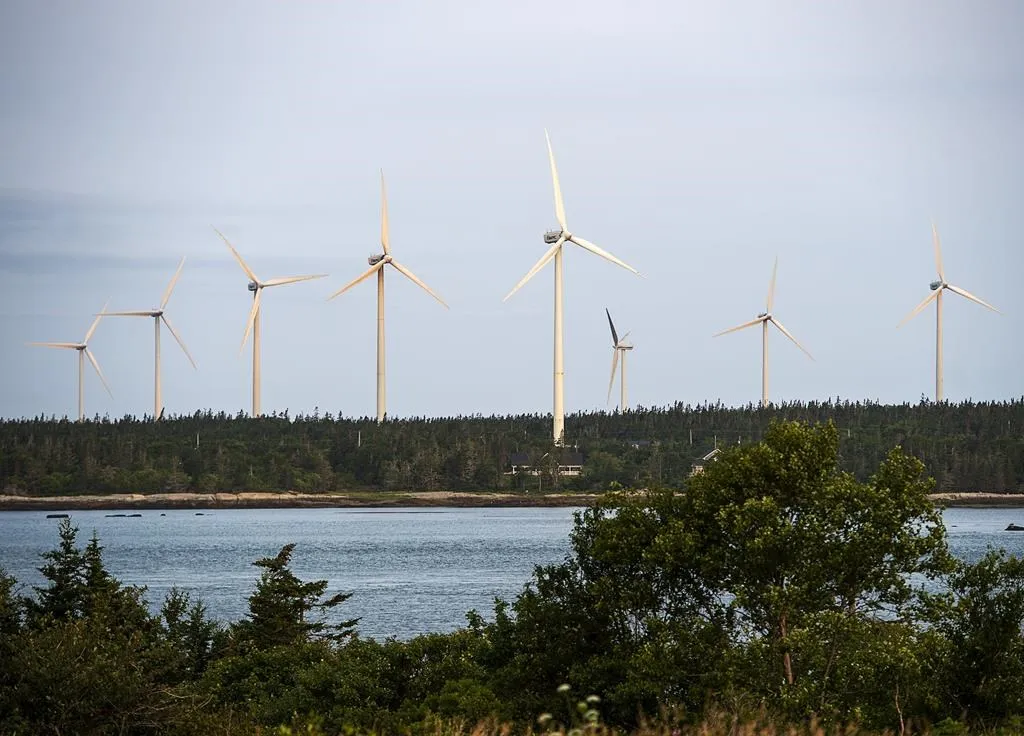

Nova Scotia has conditionally approved the largest wind energy project in the province’s history, clearing the way for a massive onshore wind farm that will supply renewable electricity to a planned green hydrogen and ammonia production hub in Cape Breton.
On July 2, Nova Scotia Environment and Climate Change Minister Timothy Halman approved the Ocean Lake Wind Project after the province completed its environmental assessment. He said the project’s environmental impacts could be managed if developers comply with a detailed list of provincial conditions.
EverWind Fuels and Membertou Development Corp., the economic development arm of the Membertou First Nation, intend to develop The Ocean Lake project. It will feature up to 158 wind turbines capable of generating about 1,264 megawatts of electricity.
Construction is expected to begin in 2029. The buildout will take about five years, and the facility is expected to operate for roughly 35 years.
Additionally, the province attached 61 conditions to the approval before construction can proceed. Those requirements cover noise limits, shadow flicker, water protection, wildlife conservation, archaeological resources and continued engagement with the public and the Mi’kmaq of Nova Scotia.
Provincial officials estimate the project will generate enough electricity to power the equivalent of about 404,000 homes. They also project it could reduce Nova Scotia’s annual greenhouse gas emissions by roughly 1.94 million tonnes.
Meanwhile, the electricity will feed EverWind’s Point Tupper energy hub in Cape Breton. The company plans to use the renewable power to produce green hydrogen and green ammonia while supporting future industrial development at the site.
Read more: Quebec enacts Bill 17 To advance natural hydrogen pilot projects
Read more: University of Birmingham develops low-temperature hydrogen production method
Buyers can convert ammonia back to green hydrogen
The province will develop the Point Tupper facility in two phases with the first phase starting in 2028.
That initial stage carries an estimated cost of about USD$2 billion. It aims to produce roughly 200,000 tonnes of green ammonia each year.
Subsequently, a second expansion phase would increase annual production by another 800,000 tonnes. Electricity from Ocean Lake and additional proposed wind farms would power that larger expansion.
Membertou Development Corp. currently holds a 51 per cent ownership stake in the wind projects supporting the first phase, and developers expect a similar ownership structure for the second phase, although they have not finalized the details.
Companies producing green ammonia at Point Tupper primarily intend to export it European markets. Buyers can convert the ammonia back into green hydrogen for industrial and energy applications.
Additionally, the export strategy aligns with a 2022 non-binding agreement between Canada and Germany. The agreement outlined plans for Germany to import Canadian green ammonia as it works to reduce its dependence on Russian energy supplies.
However, the Point Tupper facility has not yet started producing green hydrogen. Project financing remains tied to securing long-term customers.
Earlier this year, EverWind’s chief financial officer said binding purchase agreements with European buyers remain essential before construction of the hydrogen facility can move ahead. The company has already completed some preliminary work at proposed wind farm sites but plans to delay major construction until customers commit to buying the finished product.
Read more: Plug Power delivers electrolyzer system for major European hydrogen project
Read more: Duke Energy Florida uses solar-made hydrogen to reinvent gas power
Green hydrogen has logistical hurdles
Rather than shipping hydrogen directly, many developers plan to export green ammonia.
According to the International Energy Agency, hydrogen is difficult and expensive to transport because it requires either extremely low temperatures or high-pressure storage. The agency said many developers instead plan to ship green ammonia using existing global infrastructure before converting it back into hydrogen at its destination or using it directly as a low-carbon fuel and industrial feedstock.
Furthermore, the agency said the industry’s biggest challenge has shifted from building projects to finding customers willing to sign long-term purchase agreements.
Global hydrogen demand reached almost 100 million tonnes in 2024. Demand remains concentrated in traditional industries such as oil refining, ammonia and chemical production. New applications account for less than one per cent of total hydrogen demand.
The IEA also said export-oriented hydrogen projects have struggled to reach final investment decisions because many still lack committed buyers. Nearly 45 per cent of announced low-emissions hydrogen production is intended for export. However, only about five per cent of those projects have reached the investment stage. According to the agency, securing reliable off-take agreements remains one of the sector’s biggest commercial hurdles.
.