University of Birmingham develops low‑temperature hydrogen production method
The approach may allow factories to produce hydrogen using industrial waste heat
 Joseph Morton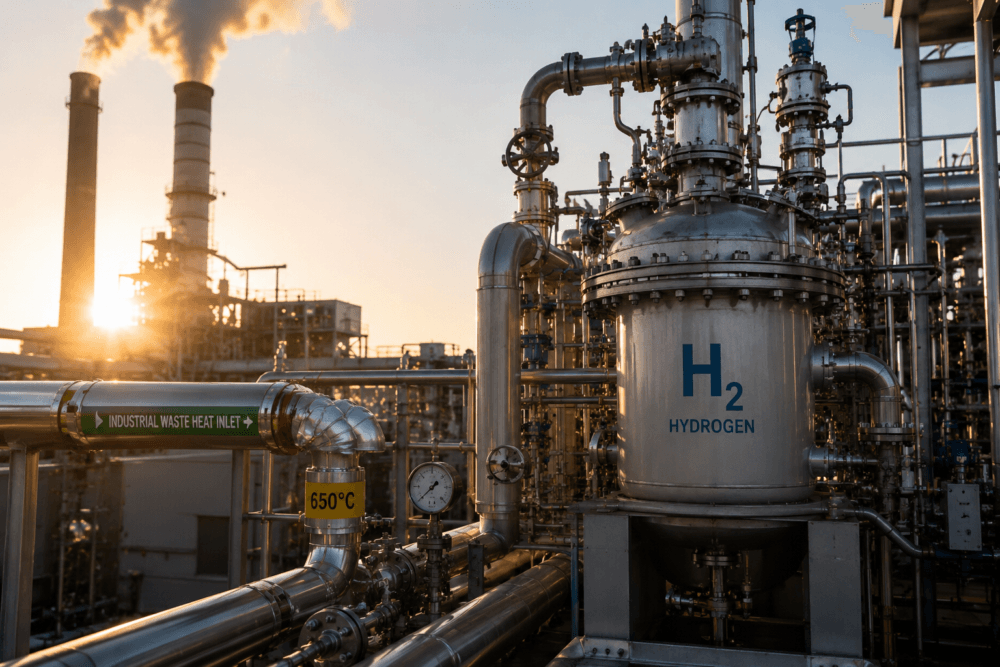
Researchers at the University of Birmingham have developed a new hydrogen production method that could significantly reduce the cost and energy demands associated with generating the clean burning fuel.
The team said on Sunday that the approach may allow factories to produce hydrogen using industrial waste heat instead of relying on extremely high temperatures or fossil fuels.
Hydrogen has long occupied a central role in plans for a lower carbon economy because it can power vehicles, industrial equipment and manufacturing processes without releasing carbon emissions during use. However, nearly 95 per cent of global hydrogen production still depends on fossil fuels, primarily through methane reforming methods that generate substantial carbon dioxide emissions.
The Birmingham researchers believe their new process could help address that contradiction. Additionally, the method operates at temperatures hundreds of degrees lower than conventional thermochemical water splitting systems.
The research team used a perovskite catalyst to separate water into hydrogen and oxygen at temperatures ranging from 150 to 500 °C. Existing thermochemical systems generally require temperatures between 700 and 1000 °C for water splitting. Furthermore, many current catalysts require regeneration temperatures as high as 1300 to 1500 °C between operating cycles.
Professor Yulong Ding from the university’s School of Chemical Engineering led the project. He explained that the lower operating temperatures could allow hydrogen production facilities to sit closer to renewable energy sites and heavy industrial operations.
Steel mills, cement plants, chemical facilities and glass manufacturers generate large amounts of excess heat during normal operations. Consequently, those industries could potentially supply the thermal energy required for hydrogen production without building entirely new infrastructure.
Read more: Bill Gates-backed hydrogen startup cuts workforce as commercial plans stall
Read more: Duke Energy Florida uses solar-made hydrogen to reinvent gas power
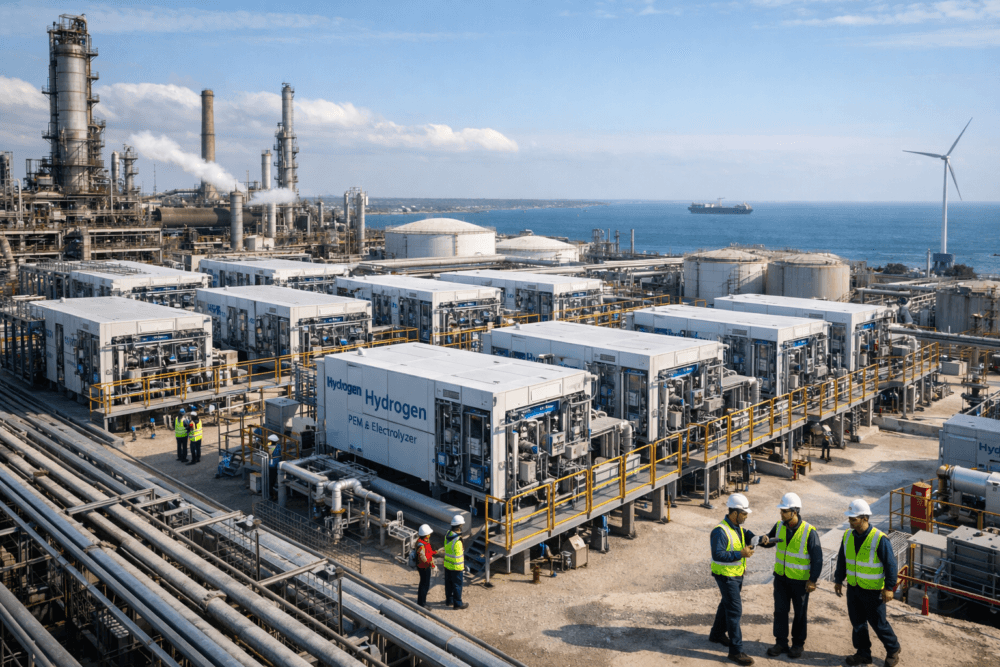
Green hydrogen splits hydrogen and oxygen using renewable sources
Ding also suggested local hydrogen production could reduce transportation and storage problems that currently limit broader adoption of hydrogen fuel technologies. Transporting hydrogen remains expensive because the gas requires specialized storage systems and infrastructure.
The researchers published their findings in the International Journal of Hydrogen Energy on April 30. Additionally, the project involved collaboration with the University of Science and Technology Beijing.
According to the study, the catalyst produced substantial hydrogen yields at temperatures far below those required by current thermochemical systems. Meanwhile, the catalyst regenerated successfully between 700 and 1000 °C, reducing overall energy demands by roughly 500 °C compared to existing methods.
The researchers also conducted an early techno-economic analysis comparing the process against blue and green hydrogen production pathways. The study found the perovskite based method could potentially produce hydrogen more cheaply in regions with low renewable energy prices, including Australia.
Green hydrogen typically uses electrolysis to split water into hydrogen and oxygen using electricity from renewable energy sources. However, electrolysis systems remain expensive and currently account for only about 4 per cent of global hydrogen production.
Blue hydrogen generally relies on methane reforming combined with carbon capture and storage systems. Although blue hydrogen reduces emissions compared to traditional methods, the process still depends heavily on fossil fuels.
The Birmingham team focused specifically on a class of materials called perovskites. These materials possess lattice like structures that absorb oxygen molecules and split oxygen containing compounds into separate elements.
Researchers tested perovskites composed of barium, niobium, calcium and iron, known collectively as BNCF perovskites. Additionally, the materials do not contain toxic ingredients and do not require highly complex manufacturing techniques.
Read more: Plug Power brings green hydrogen production to Namibia
Read more: Plug Power delivers electrolyzer system for major European hydrogen project
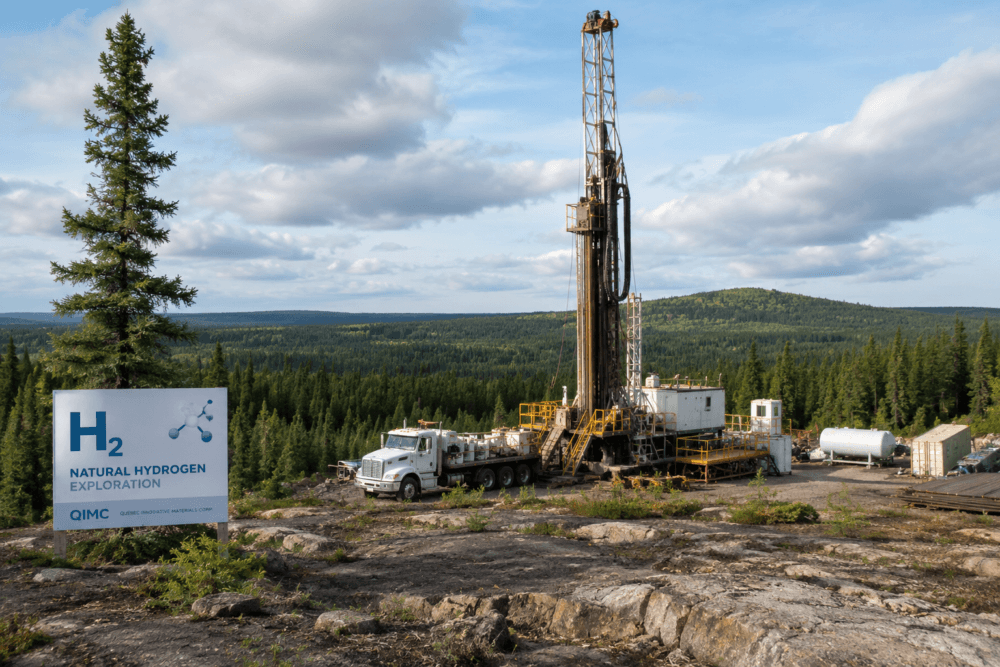
Hydrogen rarely exists naturally as a gas on earth
The study identified a specific formulation called BNCF100 as the strongest performer during testing. Furthermore, laboratory analysis showed the catalyst maintained structural stability during repeated production cycles.
Researchers used X-ray diffraction analysis to monitor changes inside the material during hydrogen production. The tests found little evidence of structural degradation after 10 production cycles.
Thermochemical water splitting has attracted increasing interest because it avoids direct dependence on fossil fuels. In these systems, catalysts repeatedly absorb and release oxygen while splitting water molecules into hydrogen and oxygen gas.
Hydrogen itself rarely exists naturally as a pure gas on Earth. Instead, it usually remains chemically bound inside water, methane and other hydrocarbons. Consequently, hydrogen production depends on energy intensive processes that separate those molecules into their component parts.
Steam methane reforming currently dominates the global hydrogen industry. The process produces nearly half of the world’s hydrogen supply, but it also generates large amounts of carbon dioxide as a byproduct.
Researchers have also explored photonic hydrogen production systems that use light to split water molecules. However, those technologies remain in early development stages and still face major efficiency and scalability challenges.
The University of Birmingham has already begun commercializing the new catalyst technology across the United Kingdom and Europe. Additionally, the university’s enterprise division filed a patent application covering the use of BNCF catalysts for low temperature water splitting.
The institution is now seeking development partners to help scale the technology for industrial applications. Meanwhile, researchers continue evaluating how the process could integrate with renewable energy systems and industrial waste heat sources.
.