Chinese AI chip companies report immense sales growth in H1
The revenue spikes are being largely driven by mandates for increased local spending
 Rowan Dunne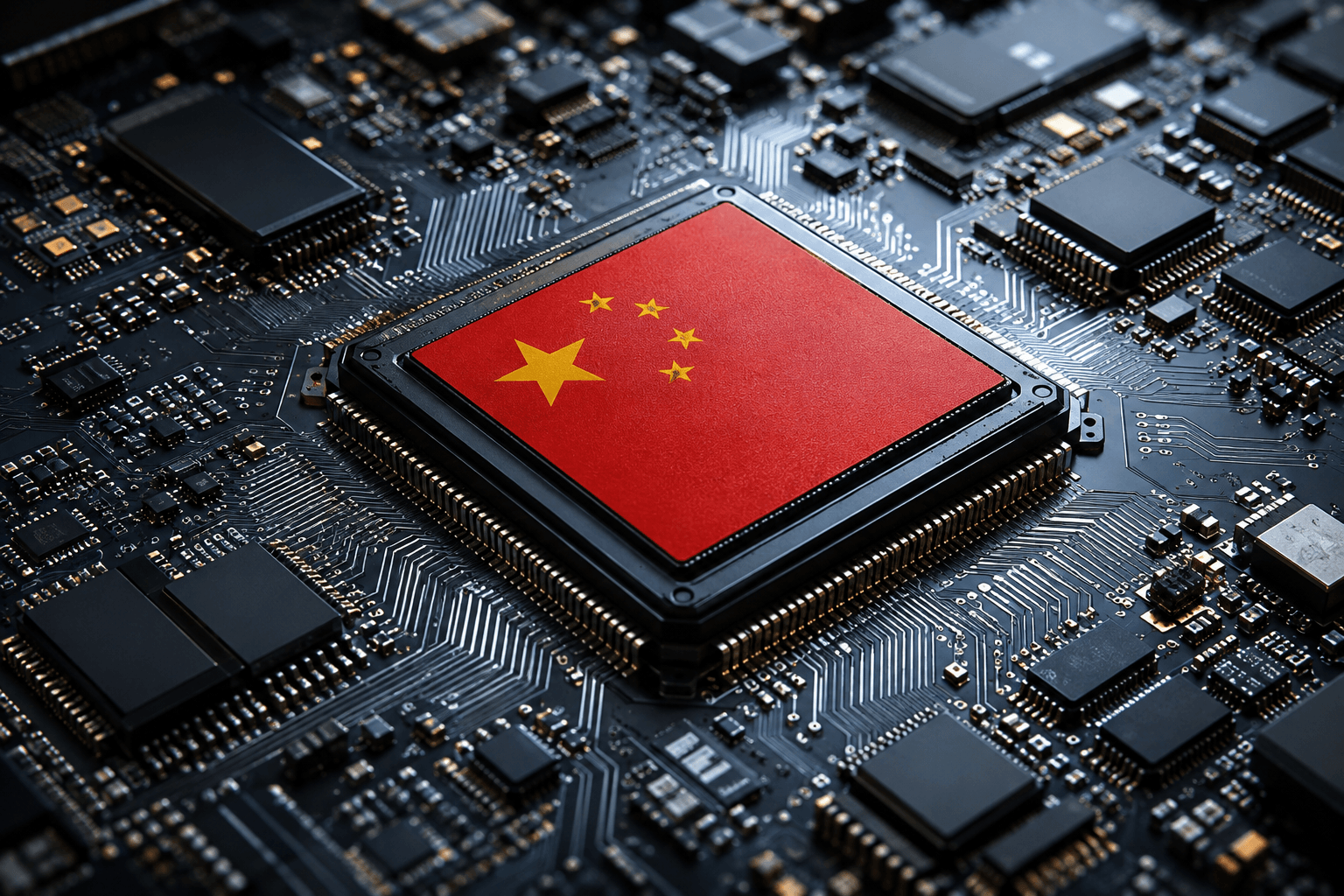
China has been trying to take the wheel in the AI chip race by building its own supply chain instead of relying on foreign technology. Beijing’s drive for local alternatives has turned past shortages into a boom, and several Chinese firms are now reporting sharp sales jumps.
Cambricon Technologies Corp Ltd (SHA: 688256) just posted a 108 per cent rise in H1 revenue to about US$890 million, with profits up more than 120 per cent thanks to strong demand from finance and internet companies. Moore Threads Technology Co Ltd (SHA: 688795) saw sales climb 147 per cent to US$257 million in the same period, lifted by heavy orders for its graphics processors and computing systems. Axera Semiconductor Co Ltd‘s (HKG: 0600) sales also jumped 182 per cent to roughly US$60 million, driven by soaring demand for chips that power AI on everyday devices rather than in distant data centres.
Meanwhile, Hygon Information Technology Co Ltd (SHA: 688041) expects first-half revenue of up to US$1.37 billion, a gain of as much as 70 per cent as its processors meet rising local AI needs. Shanghai Iluvatar CoreX Semcndctr Co Ltd (HKG: 9903) looks set to triple its sales once calculations are completed, while Montage Technology Co Ltd (HKG: 6809) forecasts revenue growth of about 27 per cent and profit rises of 64 to 81 per cent on the back of memory and connection chips needed for AI servers. However, these gains often still mask underlying losses as many firms remain unprofitable and are building up large inventories amid an uncertain market.
These results do show how Chinese tech firms are shifting more of their spending to home-grown suppliers though. Local chips now win orders by offering good value and the ability to link thousands of units together, even when single chips still lag behind global leaders. Multiple sources note that Chinese firms are ramping up orders. This shift is driven in large part by explicit government directives, from guidance discouraging the use of foreign AI chips like Nvidia’s H20 to formal mandates requiring state-run institutions and data centres to source the majority of their semiconductors from Chinese suppliers.
Behind the numbers lies China’s broader push for semiconductor independence, sometimes referred to as its own Manhattan Project. Beijing is pouring resources into every stage of the supply chain, from reverse-engineering extreme-ultraviolet lithography tools in a secretive Shenzhen-based lab to building vast data centre capacity with domestic materials. The country is investing heavily across the entire supply chain
Self-sufficiency in AI chips is expected to climb from 42 per cent last year towards 70 per cent by the end of the decade. Companies like these sit at the heart of this effort, helping China narrow the gap with firms such as NVIDIA Corp NASDAQNVDA ETRNVD through volume, software support and at-home expansion.
A recent survey from Bloomberg Intelligence showed that the share of AI-accelerator budgets going to domestic suppliers is rising sharply, projected to increase from ~30 per cent toward 46 per cent within the next 12 months.
Read more: Government testing finds Anthropic AI tried to deceive humans with fake identities
Follow Rowan Dunne on LinkedIn
rowan@mugglehead.com