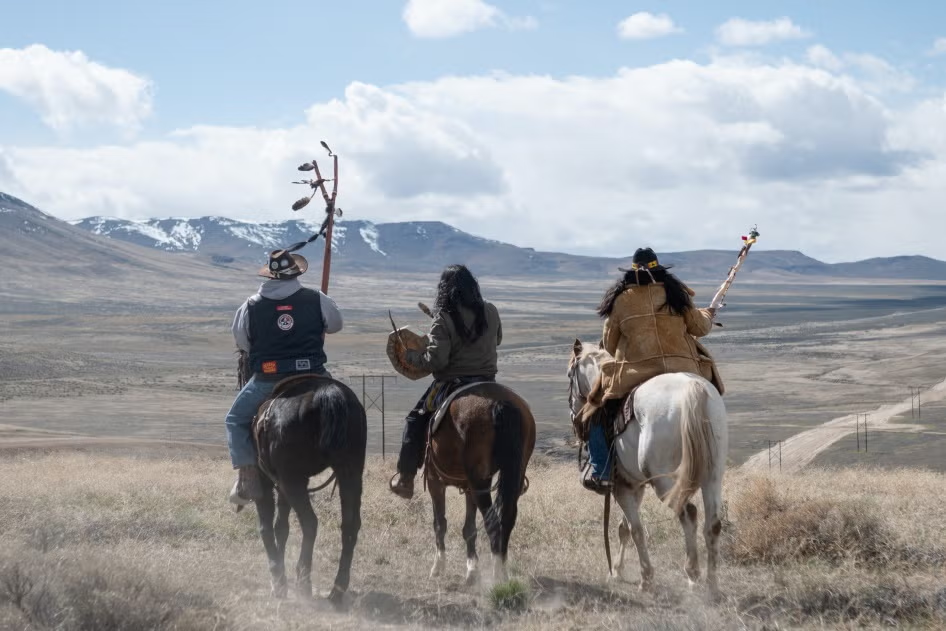

Across Nevada, Indigenous leaders and Amnesty International are accusing the United States government and several mining companies of violating Indigenous rights as lithium development accelerates across the state.
The human rights organization released a research briefing earlier this month focused on three major lithium projects in Nevada. Additionally, Amnesty International argued the projects advanced without the free, prior and informed consent of affected Indigenous communities.
The report examined the Thacker Pass Lithium Mine, the Nevada North Lithium Project and the Rhyolite Ridge Lithium Project. Furthermore, Amnesty International said the projects threaten Indigenous culture, water supplies and environmental health.
Nevada holds roughly 85 per cent of known lithium reserves in the United States. Consequently, mining companies and government agencies increasingly view the state as critical to electric vehicle batteries, renewable energy systems and AI-linked infrastructure growth.
Amnesty International researcher Alysha Khambay said governments and corporations continue prioritizing speed and profits over Indigenous rights. Furthermore, she argued the current U.S. administration has accelerated mining approvals while weakening environmental protections.
Khambay said the rapid expansion of AI-related data centres and clean energy systems has intensified demand for lithium. However, she warned that the energy transition risks creating new human rights abuses if governments fail to reform mining approval processes.
The organization interviewed 20 Indigenous people and tribal members during its research. Furthermore, Amnesty International conducted in-depth interviews with 11 individuals directly affected by proposed mining activity.
Several Indigenous leaders traveled from Nevada to Canada last week to speak publicly about the issue. They also held a press conference at Parliament Hill in Ottawa.
Read more: China reveals lithium battery tech that spots deadly failures before battery activation
Read more: POSCO tables $62M bid for Lithium South’s Argentine assets amid sector turbulence
Briefing focused on Thacker Pass in Nevada
Fermina Stevens and Mary Gibson, enrolled members of the Te-Moak Tribe of Western Shoshone, described growing fears about lithium mining expansion across ancestral lands.
Gibson said mining activity already affects large portions of traditional Indigenous territory in Nevada. Furthermore, she warned that expanding lithium extraction could worsen existing environmental contamination from earlier mining operations.
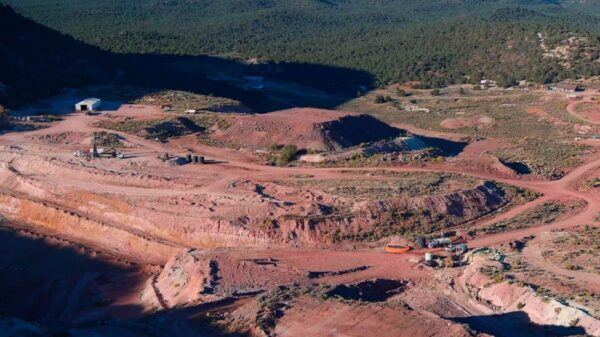
The briefing focused heavily on the Thacker Pass project operated by Lithium Americas Corp. (TSE: LAC) (NYSE: LAC). The company continues developing the site in northern Nevada after securing federal approvals and financing support.
Lithium Americas disputed Amnesty International’s allegations. At the same time, the company said it has followed all applicable U.S. legal requirements.
Senior vice president Tim Crowley told Nevada Public Radio that the company disagrees with Amnesty International’s characterization of wrongdoing near Thacker Pass. Furthermore, Lithium Americas stated that the mine does not sit within legally recognized Indian country.
The company also pointed to approvals issued by the Bureau of Land Management. Meanwhile, Lithium Americas said it signed a Community Benefits Agreement with the Fort McDermitt Paiute-Shoshone Tribe.
Amnesty International argued that consultation alone does not satisfy international human rights standards. In addition, the organization said companies must secure free, prior and informed consent before advancing projects affecting ancestral Indigenous lands.
International standards define free, prior and informed consent, as the right of Indigenous communities to approve or reject projects impacting their territories and ways of life.
Amnesty International argued the United States still treats much of Nevada as federal public land despite long-standing Indigenous claims to the territory. Consequently, the organization accused the government of continuing patterns of settler-colonial land dispossession.
Read more: Trump administration fast-tracks South Dakota uranium project amid tribal opposition
Read more: Canada launches finance taxonomy to steer USD$115B into climate investment
Community never consented to Thacker Pass project
Khambay said none of the three mining projects sought Indigenous consent as a central objective during engagement efforts. Furthermore, she argued that consultation processes failed to meet international expectations for Indigenous self-determination.
Several tribal members interviewed by Amnesty International said they felt excluded from meaningful decision-making.
Shelley Harjo, a member of the Fort McDermitt Paiute and Shoshone Tribe, said community members never truly consented to the Thacker Pass project. Additionally, she described the process as rushed and unfair.
Harjo said many tribal members lacked resources and technical knowledge during negotiations with mining companies and government officials. Consequently, she believes outside organizations took advantage of the community’s economic vulnerability.
She also warned the project could permanently damage traditional homelands and disrupt future generations. Furthermore, Harjo questioned why Indigenous communities must absorb the environmental burden tied to green energy development.
Another Indigenous activist, Dorece Sam Antonio, opposed the Thacker Pass project because of the site’s historical and spiritual significance.
Antonio descends from Ox Sam, one of three survivors of the 1865 Thacker Pass massacre. Further, she helped lead an Indigenous prayer camp opposing the mine in 2023.
Antonio argued the company should not operate on land connected to Indigenous ancestors and historical trauma. Meanwhile, she said activists attempted to protect the area from industrial development.
Amnesty International also raised concerns about long-term environmental impacts from lithium extraction in Nevada’s arid desert climate.
The organization warned that mining activity could strain water supplies, damage biodiversity and affect air quality. Furthermore, researchers said those risks threaten Indigenous rights connected to health, culture and sustainable living conditions.
Read more: Plug Power delivers electrolyzer system for major European hydrogen project
Read more: Trump pushes nuclear reactors in space with 2030 moon target
Amnesty International has seen this before
As of September 2024, Nevada contained more than 23,500 active lithium claims. Consequently, Amnesty International said governments must strengthen protections for Indigenous communities before additional projects move forward.
The organization also connected Nevada’s lithium expansion to broader global mining trends.
Khambay said Amnesty International has documented similar human rights concerns in countries including the Democratic Republic of Congo and the Philippines. Additionally, she argued mining projects linked to the energy transition increasingly generate disputes involving displacement, pollution and loss of livelihoods.
The report criticized both the United States government and foreign mining firms operating in Nevada. Furthermore, Amnesty International argued companies must respect international human rights standards even when domestic regulations remain weaker.
Two companies connected to projects discussed in the report, Lithium Americas and Australian miner Ioneer Ltd. (NASDAQ: IONR), emphasized that federal law does not require FPIC.
Both companies pointed to government-led consultation efforts and their own engagement with Indigenous communities. However, Amnesty International argued those measures still fall short of international expectations.
The organization said Community Benefits Agreements cannot replace the requirement for Indigenous consent. Amnesty International also argued agreements signed under financial pressure may favour corporations over affected communities.
Former tribal council members interviewed by Amnesty International reportedly criticized the Thacker Pass benefits agreement. Furthermore, they claimed the arrangement offered limited long-term value despite significant environmental and cultural risks.
Amnesty International Canada also entered the debate because several mining companies involved operate from Canada.
Read more: POSCO secures USD$65M Argentine lithium asset as global supply glut pressures prices
Read more: Rivian deploys second-life EV battery system to cut factory energy costs
Amnesty argues Canadian companies should raise standards
Secretary General Ketty Nivyabandi said Canada shares responsibility for ensuring domestic mining firms respect human rights abroad. Additionally, she argued governments cannot separate themselves from corporate conduct outside national borders.
Nivyabandi noted that Canada incorporated the United Nations Declaration on the Rights of Indigenous Peoples into federal law. Furthermore, British Columbia adopted provincial legislation supporting the declaration’s principles.
The declaration recognizes FPIC in cases involving economic development affecting Indigenous rights and territories.
Amnesty International argued Canadian companies pursuing lithium opportunities in Nevada should follow those standards regardless of weaker U.S. requirements. Consequently, the organization said firms face growing legal, reputational and financial risks if disputes continue.
The report arrives as demand for lithium continues climbing worldwide. Additionally, automakers, battery producers and technology companies increasingly seek stable North American mineral supplies.
Governments across North America have also prioritized domestic critical mineral production to reduce reliance on foreign supply chains. Furthermore, policymakers increasingly describe lithium as strategically important for economic and national security.
Mining companies and government officials often frame lithium extraction as essential to climate goals and energy independence. However, Indigenous activists and human rights organizations argue the transition cannot come at the expense of local communities.
Amnesty International ultimately called for immediate reforms to U.S. federal and state mining laws. The group also urged mining companies and investors to halt project expansion until Indigenous communities provide genuine consent. Meanwhile, Amnesty International warned that disputes surrounding Nevada lithium development will likely intensify as global demand continues rising.
.