
Chinese robotaxi operator Pony AI Inc. (NASDAQ: PONY) has begun commercial production of a fully driverless vehicle with backing from Toyota Motor Corp. (NYSE: TM), marking a key scaling step for autonomous transport in China.
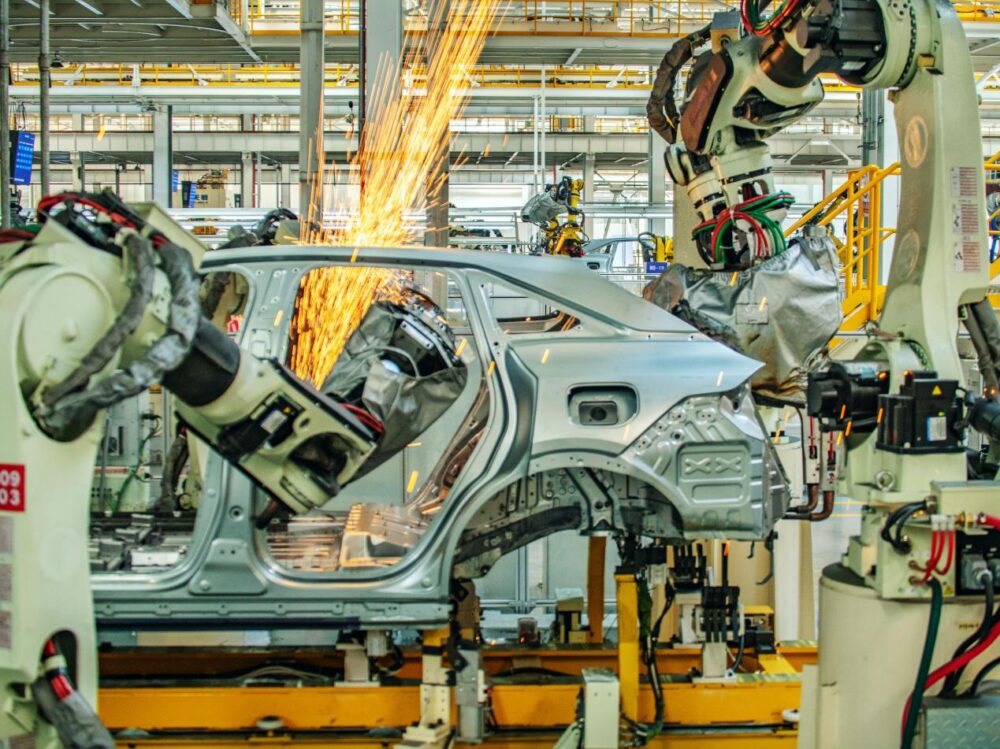
The first of 1,000 all-electric Toyota bZ4X compact crossovers rolled off an assembly line operated with Guangzhou Automobile Group Co. (HKEX: 2238), the company said Monday.
The vehicles will enter Pony AI’s robotaxi fleet across several major Chinese cities using its latest self-driving system. Consequently, the production push supports Pony AI’s target to grow its fleet beyond 3,000 robotaxis by year-end.
The bZ4X model is one of three vehicle types Pony AI is deploying under its current expansion plan. Additionally, the cars run updated autonomous software designed for dense urban traffic and mixed road conditions.
Pony AI’s American depositary receipts rose 4.4 per cent by mid-afternoon trading in New York. The company operates within a crowded domestic robotaxi market that continues to scale rapidly.
Meanwhile, rivals such as Baidu Inc. (NASDAQ: BIDU) and WeRide Inc. are expanding commercial services at home and overseas.
Several Chinese operators are further testing or running fleets in parts of Europe and the Middle East.
In addition, those firms are developing systems similar to US-based competitors.
These include Alphabet Inc. (NASDAQ: GOOGL) unit Waymo, Amazon.com Inc. (NASDAQ: AMZN) subsidiary Zoox, and Tesla Inc. (NASDAQ: TSLA).
Pony AI said its platform can complete trips without a human driver inside the vehicle. However, remote human staff still monitor operations and intervene when edge cases arise. Currently, one human operator supports roughly 30 autonomous vehicles.
Read more: CATL to launch sodium-ion EV batteries this year as cold weather breakthrough nears
Read more: Nio and CATL deepen battery swap alliance as sodium-ion EV rollout nears
Pony AI works with city authorities to expand service zones
Pony AI views that ratio as sufficient for commercial rollout under existing regulations. Furthermore, the Toyota partnership gives Pony AI access to large-scale automotive manufacturing. Toyota remains one of Pony AI’s long-term investors and technology partners.
The joint venture production line allows faster deployment than pilot-scale builds. Consequently, Pony AI can standardize hardware while focusing engineering efforts on software refinement. The company has not disclosed pricing or revenue expectations tied to the new vehicles.
Additionally, Pony AI continues to work with city authorities to expand approved service zones. The firm said broader fleet availability will improve ride coverage and reduce passenger wait times. However, the company acknowledged that full autonomy still requires layered human oversight during complex scenarios.
The global robotaxi market is also expected to grow into one of the largest segments of urban mobility over the next decade. Analysts broadly agree that the sector is moving from pilot projects into large-scale commercial deployment.
Research firm Grand View Research estimates the global robotaxi market could expand at close to a 99 per cent compound annual growth rate through the early 2030s. Consequently, that pace would make robotaxis one of the fastest-growing transportation technologies ever recorded.
The firm expects demand to rise as autonomous systems reduce labour costs and improve vehicle utilisation. Additionally, MarketsandMarkets projects the global robotaxi industry could reach roughly USD$105 billion by 2035.
The research group forecasts fleet sizes approaching one million autonomous vehicles worldwide. In China, growth expectations are even more aggressive. Several analysts estimate the domestic robotaxi market could exceed USD$120 billion annually by the end of the decade. Meanwhile, dense urban populations and supportive regulation continue to accelerate adoption.
.