AI spots breast cancer risk years before diagnosis using routine mammograms
The model evaluated the entire mammogram instead of focusing on a single characteristic such as breast density
 Joseph Morton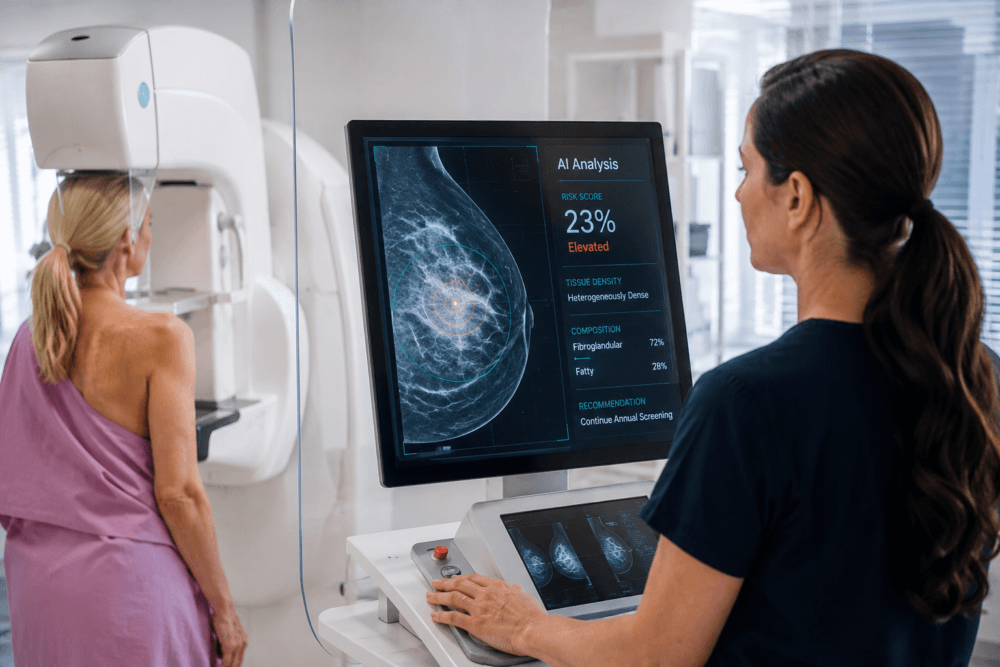
Artificial intelligence can detect subtle changes in routine mammograms that signal breast cancer risk years before diagnosis, potentially allowing doctors to tailor screening and preventive care long before tumours become visible.
Researchers found that AI-generated risk scores steadily increased among women who later developed breast cancer while remaining largely unchanged among women who stayed cancer-free. Additionally, the differences appeared as early as six years before diagnosis and accelerated sharply during the final two years.
The study was led by Professor Constance Lehman of Harvard Medical School and healthcare technology company Clairity. Researchers analysed screening mammograms collected between 2009 and 2019 to examine how AI-based breast cancer risk scores changed over time.
They used a validated open-source deep learning model to calculate each woman’s five-year breast cancer risk using mammogram images alone. Deep learning is a form of artificial intelligence trained to recognize complex patterns within large amounts of data.
Unlike traditional approaches, the model evaluated the entire mammogram instead of focusing on a single characteristic such as breast density. Consequently, researchers said the system captured imaging signals that remain invisible to radiologists during routine screening.
Previous studies have already shown that AI image-based models estimate five-year breast cancer risk more accurately than conventional risk calculators or breast density alone.
The researchers initially reviewed 239,703 consecutive two-dimensional screening mammograms from 89,882 patients across six imaging centres. The facilities included urban tertiary hospitals, community clinics and rural imaging sites.
Each examination included standard bilateral digital mammography with or without digital breast tomosynthesis. Digital breast tomosynthesis creates a three-dimensional breast image by combining multiple low-dose X-ray images.
Read more: Breath Diagnostics tech achieves pneumonia prediction breakthrough in peer-reviewed study
Read more: Breath Diagnostics leader speaks at lung cancer education event in Louisville
AI model calculated every risk score
After applying exclusion criteria, the team analysed 54,014 women with a median age of 61 years. Furthermore, the final dataset contained 158,807 mammograms collected over several years.
Each participant contributed one index mammogram and as many as six earlier annual screening examinations. Women underwent a median of three mammograms during the study period.
For women who later developed breast cancer, the index examination represented their final screening mammogram within one year before diagnosis. Meanwhile, researchers selected the final mammogram during the five-year study period for women who remained cancer-free.
The AI model calculated every risk score without using demographic information, medical histories or previous imaging studies. Instead, it relied entirely on information contained within each mammogram.
Among all participants, 817 women, representing one per cent of the study population, developed breast cancer within 365 days of their index examination.
Researchers identified invasive breast cancer in 451 women, accounting for 55 per cent of cancer cases. Additionally, 118 women, or 14 per cent, developed ductal carcinoma in situ, commonly known as DCIS.
DCIS occurs when abnormal cells remain confined inside a milk duct and have not spread into surrounding breast tissue.
Researchers could not determine the cancer type for the remaining 248 patients, representing 30 per cent of the cancer group.
Screening mammograms detected 682 cancers, or 83 per cent of cases. However, doctors diagnosed another 135 cancers between scheduled mammograms after symptoms appeared or follow-up testing occurred.
The remaining 53,197 women did not develop breast cancer during follow-up and served as the comparison group.
Read more: Prestigious medtech intelligence firm recognizes Breath Diagnostics for innovation
Read more: Breath Diagnostics completes install of advanced mass spectrometry system
Most breast cancers develop sporadically rather than genetic changes
Researchers observed clear differences between the two groups years before diagnosis.
Among women who eventually developed breast cancer, the median AI risk score increased from 2.1 roughly five to six years before diagnosis to 6.6 at the index examination. Conversely, women who remained cancer-free maintained relatively stable scores ranging between 1.8 and 2.2 throughout the study.
The increase became especially steep during the final two years before diagnosis.
Lehman said the research revealed meaningful differences in how risk scores changed over time. She explained that AI detected measurable imaging signals years before breast cancer became clinically apparent, with those signals strengthening as diagnosis approached.
She also said the findings demonstrate that mammograms contain predictive information invisible to the human eye. That matters because about 85 per cent of women diagnosed with breast cancer have neither a significant family history nor known inherited genetic mutations associated with the disease.
Most breast cancers develop sporadically rather than through inherited genetic changes.
Traditional breast cancer risk models often combine factors such as age, family history and breast density. However, those approaches generally struggle to distinguish accurately between women who will and will not develop breast cancer across large screening populations.
Researchers believe tracking changing AI scores over several years could provide more useful information than calculating a single risk score during one appointment.
Lehman said image-based AI risk scores identify women who appear predisposed to developing breast cancer even without obvious clinical risk factors. Furthermore, she said monitoring how those scores evolve may improve future risk assessment.
Read more: Breath Diagnostics leaders promote their mission at Miami investment conference
Read more: Breath Diagnostics advances pre-op pneumonia screening with FDA breakthrough designation
Researchers found similar trends regardless of age or breast density
Breast density describes the amount of fibrous and glandular tissue within the breast. Dense tissue increases breast cancer risk and also makes tumours more difficult to detect on conventional mammograms.
The researchers suggested AI-based imaging scores could support more personalized screening programs without depending heavily on patient questionnaires or incomplete medical records.
Lehman said the consistent results across age groups and breast density suggest the approach could work for diverse patient populations. Additionally, she said imaging-based biomarkers may reduce disparities by providing objective risk assessments without relying on self-reported information.
A biomarker is a measurable biological sign that helps doctors estimate disease risk or monitor health.
Researchers said changing AI risk scores could eventually help physicians identify women who would benefit from additional imaging, preventive medications or other risk-reduction strategies before cancer develops.
Lehman compared the approach with monitoring cholesterol or blood pressure over time. She said AI allows clinicians to use medical imaging not only to detect disease but also to estimate future risk and intervene earlier when preventive treatment may prove most effective.
AI image-based breast cancer risk scores now appear in the 2026 National Comprehensive Cancer Network guidelines. The recommendations advise women aged 35 and older with a five-year breast cancer risk exceeding 1.7 per cent to consider annual breast MRI alongside routine mammography.
An AI image-based breast cancer risk model cleared by the U.S. Food and Drug Administration is already calculating five-year breast cancer risk at selected healthcare institutions across the United States.