Marathon Digital shifts beyond Bitcoin mining with AI data centre strategy
That shift gave Marathon control over valuable infrastructure assets, including land, power connections and data centres
 Joseph Morton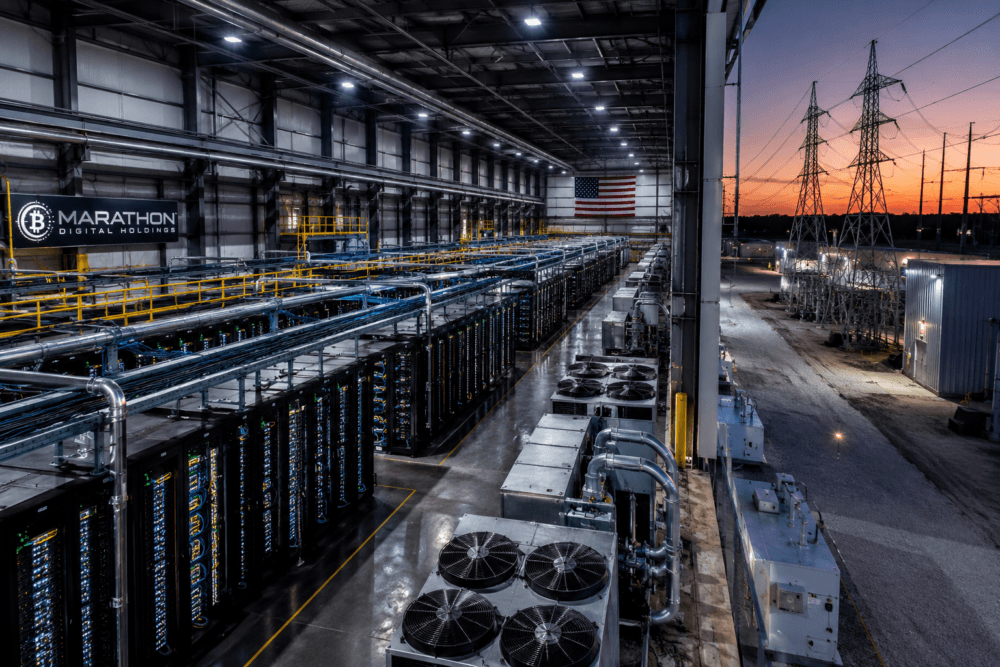
Marathon Digital Holdings (NASDAQ: MARA) is positioning itself as an artificial intelligence and high-performance computing infrastructure provider, leveraging more than 1.1 gigawatts of energized power and a growing portfolio of land and data centre assets as demand for AI computing capacity accelerates.
Chief executive officer Fred Thiel said on Saturday the strategy has been developing for more than two years and builds on infrastructure originally assembled for bitcoin mining.
Speaking at TD Cowen’s 54th Annual CMT Conference, Thiel explained that Marathon’s business evolved significantly after the downturn in the bitcoin mining sector. The company moved away from an asset-light operating model and acquired ownership stakes in many of the facilities where it previously mined bitcoin.
That shift gave Marathon control over valuable infrastructure assets, including land, power connections and data centres. Consequently, the company found itself well positioned to pursue opportunities emerging from the rapid growth of artificial intelligence.
Thiel said Marathon initially focused on deploying computing equipment at third-party sites. That approach allowed the company to direct more capital toward mining machines rather than infrastructure ownership. However, changing market conditions created opportunities to acquire assets at attractive prices.
According to Thiel, Marathon acquired roughly 70 per cent of the capacity where it operated for less than replacement cost during the industry downturn. Additionally, the company expanded into energy ownership through assets such as a wind farm and flare gas-powered mining operations in oil fields.
Read more: Pope Leo releases 42,000-word manifesto about AI dangers
Read more: South Carolina signs crypto bill protecting Bitcoin mining and self-custody
The company controls over 1.1 gigawatts of power
The company also completed a major international project in the United Arab Emirates. Marathon developed two immersion-cooled data centres in Abu Dhabi as part of a 250-megawatt venture. Furthermore, the facilities operate without conventional air conditioning, utilizing technologies increasingly associated with next-generation AI infrastructure.
Thiel said Marathon began seriously evaluating AI opportunities throughout 2023 and 2024. Management recognized that hyperscale cloud operators require specialized facilities and extensive customer relationships. Consequently, Marathon concluded that partnerships would offer a more practical path into the market.
The company hired an outside adviser to assess its portfolio and determine which sites could attract hyperscale customers. The review examined infrastructure quality, available power and expansion potential. According to Thiel, the assessment found that most Marathon locations held strong appeal for potential AI tenants.
Marathon subsequently worked with Starwood to establish a partnership structure focused on developing AI-oriented data centre projects. Thiel described the arrangement as the culmination of a lengthy process that included testing customer demand and evaluating commercial opportunities. The companies finalized the framework earlier this year.
The company currently controls more than 1.1 gigawatts of energized power across its portfolio. Additionally, management believes expansion projects and the proposed Long Ridge acquisition could increase capacity beyond 2 gigawatts.
Thiel said larger sites attract attention from hyperscale cloud providers. Meanwhile, smaller facilities may appeal to neocloud operators and businesses focused on AI inference workloads. The company sees opportunities across several customer categories rather than relying on a single segment.
Marathon currently favours a real estate development and leasing model over providing GPU-as-a-service offerings. Thiel said that strategy requires less capital and offers more attractive economics in the current market.
Read more: TeraWulf stock jumps after Kentucky AI data campus acquisition
Read more: U.S. lawmakers clash over stablecoins, CBDCs and ethics in crypto bill fight
Demand remains constrained by access to power
He explained that developing a 100-megawatt AI facility could require approximately USD$100 million in infrastructure spending and another USD$300 million for computing equipment. Consequently, directly owning and operating the hardware would create substantially higher capital requirements.
Instead, Marathon intends to contribute sites into joint ventures and receive value credit for those assets before committing significant cash. Furthermore, management believes the model allows the company to participate in AI growth while maintaining financial flexibility.
Thiel indicated that Marathon remains open to additional partnership structures in the future. For example, the company could collaborate with semiconductor manufacturers that provide chips while Marathon supplies infrastructure and operational expertise.
Management envisions future campuses that accommodate multiple customer types. These developments could include hyperscalers, neocloud operators and facilities partially owned by Marathon itself. Additionally, the company expects customer requirements to vary considerably depending on workload and business model.
Demand remains constrained by access to power, according to Thiel. He said many organizations are competing for limited infrastructure resources as AI adoption expands globally. Consequently, powered sites have become increasingly valuable strategic assets.
The company has engaged in discussions with several groups across the AI ecosystem. These include semiconductor companies, AI model developers, hyperscale cloud providers, neocloud operators and enterprise customers. Furthermore, Thiel said computing capacity often determines how quickly AI firms can expand market share.
Read more: Bit Digital expands Ethereum treasury while funding AI infrastructure growth
Read more: Texas appoints crypto experts to guide strategic Bitcoin reserve
Enterprise AI requires small power footprints
He noted that model developers such as OpenAI and Anthropic continue competing aggressively for computing resources. Meanwhile, chip manufacturers increasingly seek access to powered sites that can support customer deployments.
Enterprise customers represent another potential growth area. Thiel said many organizations may eventually favour private AI infrastructure rather than relying entirely on public cloud providers. In addition, companies handling sensitive information may value greater control over data storage and processing.
He pointed to Marathon’s investment in Exaion as an example of this opportunity. Exaion provides private cloud infrastructure in France, and management believes growing concerns around data sovereignty could create demand for alternatives to large American cloud platforms.
According to Thiel, enterprise AI projects generally require smaller power footprints than hyperscale developments. Most deployments fall between five and 25 megawatts, although some financial institutions may eventually seek larger facilities.
Marathon’s immediate priorities include securing tenant leases across its portfolio and completing the Long Ridge transaction. Additionally, management views Long Ridge as a potentially significant contributor to shareholder value if the company successfully leases the available capacity.
Financing also remains a key consideration. Thiel said credit quality matters because lower financing costs can significantly improve project economics. Consequently, the Starwood partnership provides benefits by strengthening the credit profile associated with developments.
The structure also reduces balance sheet exposure. Under the arrangement, Marathon contributes sites only after securing tenants. Furthermore, Starwood absorbs cost overruns rather than placing those expenses on Marathon’s balance sheet, according to management.
.