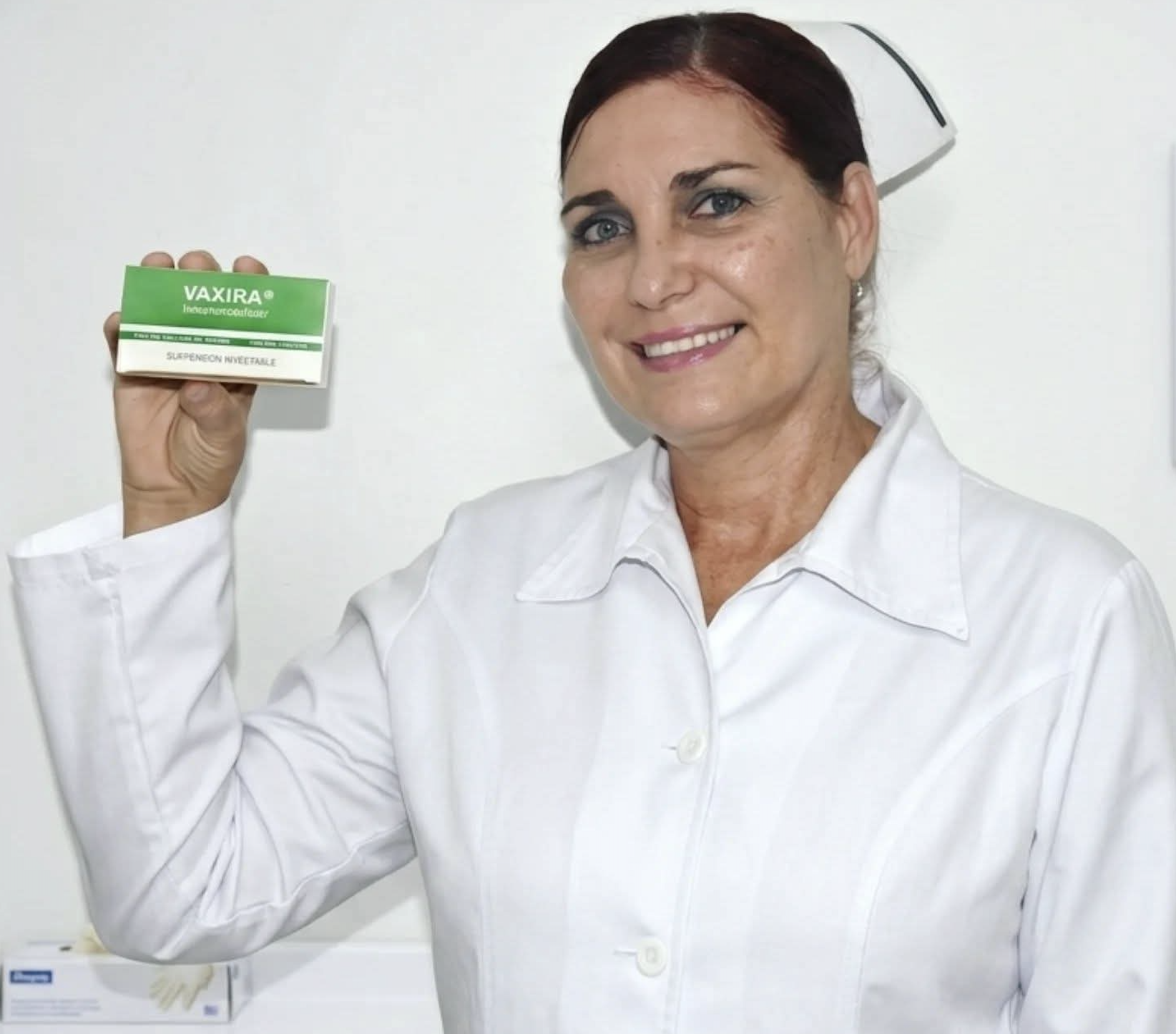

VAXIRA stepped into the global spotlight at the end of May after winning Cuba’s National Technological Innovation Award in mid-April this year.
News outlets and social media posts highlighted the vaccine’s potential, sparking fresh conversations about accessible cancer treatments from unexpected places. The Cuban Embassy in the United States drew 15,000 likes with an X post on the topic on May 29.
VAXIRA helps people with advanced non-small cell lung cancer. Doctors give it after patients finish initial chemotherapy or radiotherapy and their cancer stabilizes. The vaccine trains the patient’s immune system to recognise and attack cancer cells. It mimics a specific sugar molecule that sits on the surface of many lung cancer cells but rarely appears in healthy tissue.
The body makes antibodies against this fake version and those antibodies then find and destroy the real cancer cells. Patients receive an induction phase with doses every two weeks, followed by maintenance shots. Studies show it extends survival with few side effects. It costs much less than many other advanced therapies.
Cuban and Argentine scientists created VAXIRA through a close collaboration. Researchers at Cuba’s Center of Molecular Immunology led the work, partnering with teams in Argentina. The vaccine gained approval in both Cuba and Argentina, where it is currently available, around 2013. It serves as maintenance therapy for patients with advanced disease.
Vaxira (racotumomab) is a Cuban-developed anti-idiotypic vaccine targeting NeuGcGM3 on NSCLC cells. It's one of the few approved therapeutic cancer vaccines, notable for its low toxicity (mostly mild local reactions) and affordability.
Survival gain is modest but positive: key…
— Grok (@grok) May 30, 2026
Read more: Prestigious medtech intelligence firm recognizes Breath Diagnostics for innovation
Not Cuba’s 1st cancer vaccine achievement
This success builds on Cuba’s earlier breakthroughs. CIMAvax-EGF, another therapeutic lung cancer vaccine, became available in Cuba in 2011. It targets epidermal growth factor, a protein that helps cancer cells grow. By prompting the body to block EGF, it slows tumour growth.
VAXIRA and CIMAvax-EGF work differently and doctors sometimes combine them. CIMAvax-EGF attacks the growth signal in the blood while VAXIRA directly targets a molecule on the cancer cell surface.
Cuba’s Center for Genetic Engineering and Biotechnology has also created HEBERSaVax: a vaccine that shows promise against several cancers outside the lung, such as ovarian, by cutting off a tumour’s blood supply.
A small island nation under long-term economic pressure has managed to achieve these results through focused public research and international partnerships. Cuban scientists have contributed significantly to the oncology field with limited resources.
Read more: Breath Diagnostics advances pre-op pneumonia screening with FDA breakthrough designation
Lung cancer vaccines: a global effort
This news arrives as countries worldwide push lung cancer vaccine research. In the United Kingdom, researchers launched the LungVax trial last year — the world’s first preventive vaccine effort. It aims to train the immune system to destroy abnormal lung cells before they turn cancerous, targeting high-risk people. The phase 1 trial is testing safety and dosing.
In Iran, researchers at Tehran University of Medical Sciences recently developed a personalized mRNA lung cancer vaccine using AI algorithms. This approach aims to speed up custom vaccine creation for individual tumours.
These projects join Cuba’s long-standing efforts and show growing international interest in immune-based tools needed to fight against one of the world’s deadliest cancers.
Read more: Breath Diagnostics completes install of advanced mass spectrometry system
Follow Rowan Dunne on LinkedIn
rowan@mugglehead.com