
A record CAD$100 million environmental penalty against ArcelorMittal (NYSE: MT) has renewed scrutiny over how Canada regulates major mining operations as Ottawa pushes to accelerate critical minerals development.
The Luxembourg-based mining giant pleaded guilty to 100 violations of the federal Fisheries Act tied to contamination near its Mont-Wright and Fire Lake mining operations in Quebec’s Côte-Nord region. Court documents stated the company discharged harmful substances into fish-bearing waters between 2014 and 2022.
Federal authorities imposed a CAD$1 million penalty for each count. Additionally, most of the funds will flow into Canada’s Environmental Damages Fund to support restoration projects.
The case represents the largest Fisheries Act penalty ever issued in Canada. However, environmental experts said the settlement also reveals how difficult it remains to monitor large-scale mining operations across remote regions.
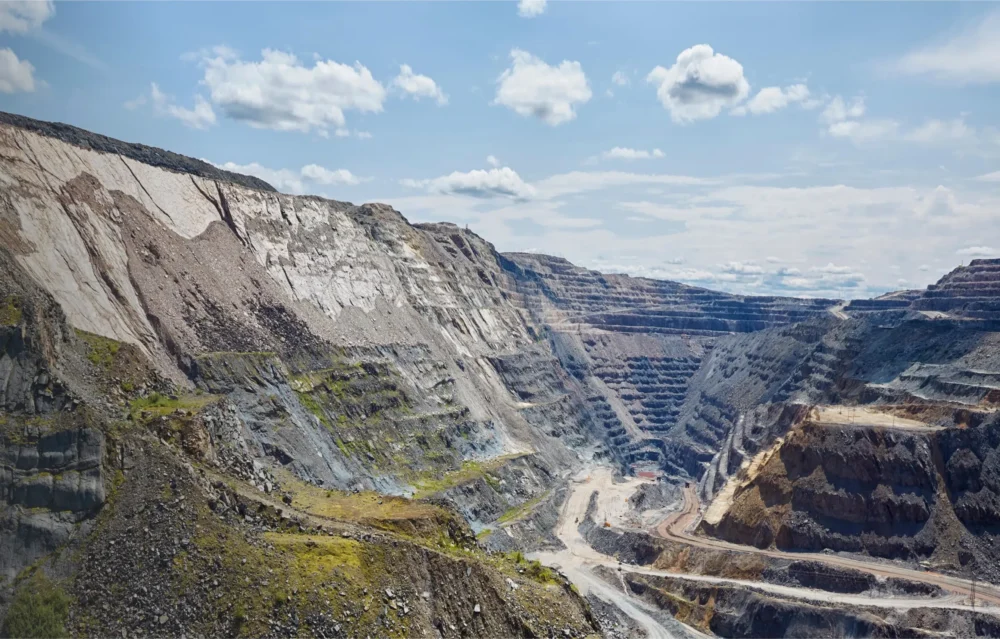
ArcelorMittal operates the Mont-Wright mine near Fermont, Que. The open-pit iron mine spans roughly 24 square kilometres and has operated since the 1970s.
Government records showed the company had previous compliance problems at the site. In 2022, authorities ordered ArcelorMittal to pay CAD$15 million for separate environmental violations tied to activities between 2011 and 2013.
“These types of fines are sort of like reactionary measures,” said Sara Ghebremusse, an assistant professor who specializes in mining governance at the University of British Columbia’s Allard School of Law.
“Presumably, this type of pollution should not have happened in the first place.”
Investigators previously found toxic substances had entered nearby watersheds. Furthermore, officials concluded the company provided false or misleading statements to federal environmental officers during that earlier investigation.
Read more: China reveals lithium battery tech that spots deadly failures before battery activation
Read more: Amnesty International accuses US, lithium miners of violating Indigenous rights in Nevada
Pollution involved deposits of substances released into streams and lakes
Environmental advocates argued the latest penalty remains relatively small compared to the company’s financial scale. ArcelorMittal generated roughly USD$61 billion in revenue during 2025 and earned approximately USD$3.15 billion in profits globally.
Émile Cloutier-Brassard from the Quebec environmental organization Eau Secours said the ruling produced mixed reactions. He said the prosecution demonstrated government enforcement efforts, but he also questioned whether the penalty would significantly affect a corporation of ArcelorMittal’s size.
According to Environment and Climate Change Canada, the pollution involved deposits of deleterious substances released into several streams and lakes surrounding the mining complex. Consequently, concerns expanded beyond the immediate mine site because those waterways eventually connect to the Moisie River system.
The Moisie River serves as a major Atlantic salmon spawning area within the ancestral territory of the Innu Nation. Known in Innu-aimun as Mishta-shipu, or “The Great River,” the watershed has become central to Indigenous-led conservation efforts.
Last year, the Innu Council of Uashat mak Mani-Utenam established the Mishta-shipu Watershed Protected Area. Additionally, the project became Quebec’s first Indigenous Protected and Conserved Area.
Community leaders said the mining case reinforced the need for stronger long-term protections in the region. Chief Jonathan Shetush stated the company must ensure similar discharges never happen again. He also said the Innu community intends to work closely with federal officials overseeing the Environmental Damages Fund so restoration money supports the affected watershed.
The court ordered ArcelorMittal to reimburse nearly CAD$250,000 in investigative costs. Meanwhile, the company must also produce an environmental compliance plan by February 2027.
Read more: Burkina Faso expands state-backed gold ownership as resource nationalism spreads across Africa
Read more: Americas Gold and Silver eliminates USD$45M silver obligation through Sprott equity deal
Prime Minister Carney promoted faster critical mineral development
Legal experts said environmental enforcement cases often take years to reach court. Sarah Seck, an environmental law professor at Dalhousie University, explained that regulators usually attempt to secure voluntary compliance before pursuing criminal prosecution.
She said environmental monitoring requires substantial government resources and sustained oversight. Furthermore, she warned that faster approvals for mining projects could create additional risks if enforcement budgets decline at the same time.
Prime Minister Mark Carney has recently promoted faster development of Canada’s critical minerals sector. Mining companies and provincial governments have argued the country must expand domestic resource production to support electric vehicles, energy infrastructure and artificial intelligence supply chains.
However, environmental groups said the ArcelorMittal case demonstrates the challenges regulators face even under existing rules. Consequently, critics warned that accelerating mine approvals without stronger compliance systems could increase environmental risks in sensitive ecosystems across Canada.
.