Gritt raises US$32M for constructing solar farms with intelligent robots
It aims to eventually expand into multiple critical infrastructure applications
 Rowan Dunne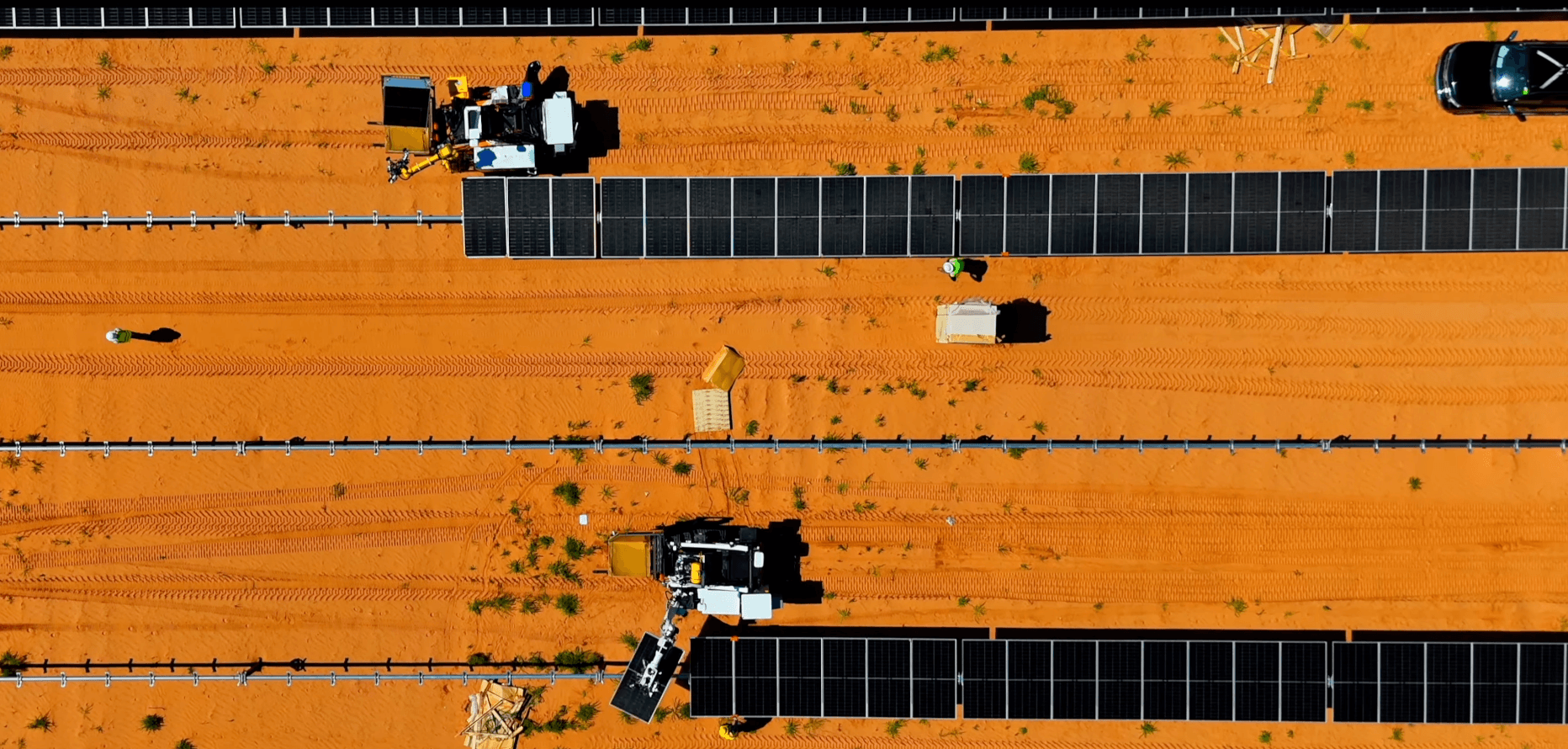
Robots have started assisting with heavy lifting that once strained human backs on building sites across the world. Although construction crews have to tackle demanding outdoor work in all weather, advances in robotics and AI are steadily helping reduce the physical toll while speeding up projects.
In relation, California startup Gritt emerged from stealth this week with US$32 million in total funding, including a US$26 million Series A round led by Obvious Ventures along with Union Square Ventures and Active Impact Investments.
The company, founded by Carnegie Mellon-trained roboticists Puneet Puri and Vishal Dugar, deploys AI-controlled systems that attach to standard construction equipment such as skidders and robotic arms from suppliers like Kawasaki Heavy Industries Ltd OTCMKTSKWHIY (FRA: KHE).
“Gritt runs on off-the-shelf hardware, connecting via quick-attach to proven construction equipment like skid steers to handle labour-intensive tasks,” said chief executive Puri on social media, “pick-and-place, assembly, and transport, all with high precision.”
Two systems already operate in the field. An eight-person crew that installs around 800 solar panels daily without assistance reaches 3,000 to 4,000 panels with Gritt’s help. The firm says it holds contracts to support 2.8 gigawatts of solar installations over the next 18 months with major American power construction companies. Specific names remain undisclosed in public announcements.
Gritt plans to run 48 systems within six months. It has already placed tens of thousands of panels with minimal breakages and operates on more than seven job sites.
Prior to the Series A raise, the company earned recognition as a finalist in the U.S. Department of Energy’s American-Made Solar Prize competition in 2024, where it received US$500,000 for solutions aimed at equitable solar deployment.

Solar installation is becoming a distinct lane for construction robotics. The work is repetitive, high-volume and physically demanding, with several companies already operating on real solar construction sites. The latest is Gritt, which emerged from stealth today.
Read more: Creative son makes off-road quadruped wheelchair for dad with MS
Differentiation from competitors
Gritt stands apart from solar robotics firms such as Luminous Robotics, Built Robotics and Planted Solar mainly through its hardware strategy. While many rivals develop proprietary robots, Gritt mounts its AI software and control systems onto readily available equipment and third-party robotic arms that contractors already rent and maintain. This approach lowers costs and speeds adoption on real sites.
Among broader robotic construction companies, Gritt emphasises a generalisable “physical AI” layer trained on chaotic outdoor data. New tasks, such as rebar tying, transfer quickly from one skill to another because the system builds a shared understanding of construction environments.
It also gathers site data for oversight, such as spotting open trenches before storms or tracking inventory. However, like most players in this space, Gritt remains early-stage with limited deployments and unproven scalability across diverse projects. It does not yet dominate any unique technical moat beyond its focus on adaptability and integration.
Future ambitions
Gritt aims to expand beyond solar farms into fastening panels, drilling posts, assembling racks and eventually tasks such as rebar tying for concrete work or broader infrastructure like data centres, bridges and roads. The founders ideally see their AI evolving into a full decision-support layer for site supervisors.
“Helping our workforce build this infrastructure is one of the most meaningful missions we could be working on,” said co-founder and CTO Dugar, “and so we’re putting robotics and AI to work in places they’ve scarcely been before.”
Realistic timelines point to deeper solar automation in the next one to two years, with meaningful expansion into adjacent construction tasks likely taking three to five years as the company gathers more field data and refines its models. Broader infrastructure applications could stretch beyond that depending on the regulatory, safety and financial situation.

Gritt raised $32 million dollars for AI powered robotic construction machines..,
Read more: Robotic hand maker Tesollo initiates IPO proceedings
Follow Rowan Dunne on LinkedIn
rowan@mugglehead.com