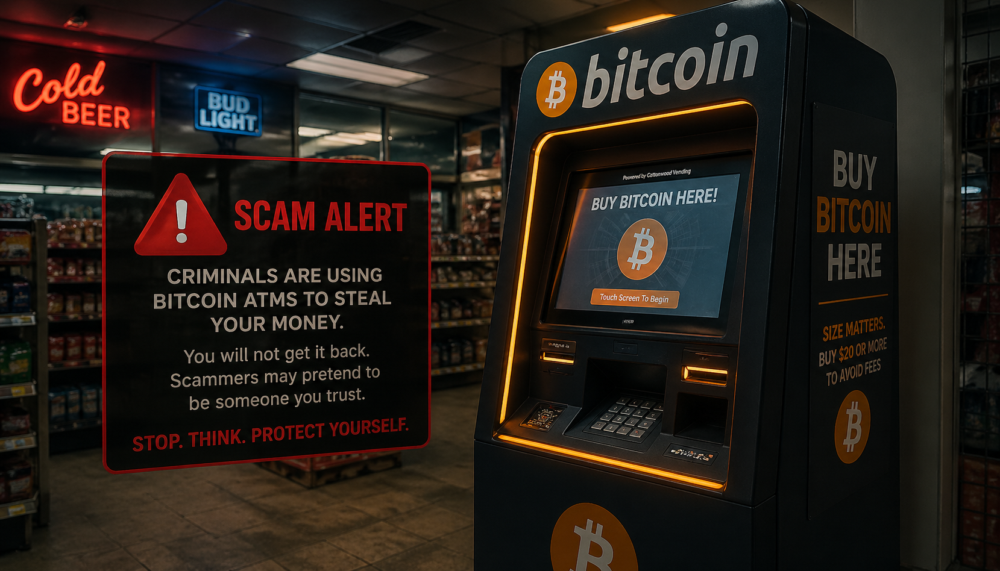

Tennessee has moved to ban Bitcoin ATMs, citing rising fraud that targets older residents.
Governor Bill Lee signed House Bill 2505 on April 13, giving operators until July 1 to shut down machines. The law makes owning or running a crypto ATM a Class A misdemeanor.
Additionally, lawmakers said scammers increasingly use these kiosks to pressure victims into sending cash. Many schemes involve impersonators posing as police or government officials. Republican representatives Cameron Sexton and Jay Reedy backed the bill earlier this year. Sexton argued the machines have become a direct channel for fraud, especially against seniors.
Furthermore, he noted victims rarely recover funds once transactions are completed. Blockchain transfers typically cannot be reversed, leaving little recourse. Around the same time, authorities reported a USD$4 million scam targeting Tennessee residents. In that case, overseas criminals posed as law enforcement officers to extract payments.
Reedy also warned that crypto ATMs give criminals a fast and simple way to exploit fear. He said scammers often pressure people into draining savings under false threats. Meanwhile, Tennessee currently hosts 651 Bitcoin ATMs, according to Coin ATM Radar. Most are concentrated in Nashville, though machines appear in convenience stores, gas stations, and liquor shops.
However, federal data shows the problem extends far beyond one state. The FBI reported that Americans over 60 lost USD$257 million through Bitcoin ATM scams last year. That figure marked a 58 per cent increase compared with the previous year. Conversely, people under 30 lost just USD$6.6 million in similar schemes in 2025.
Read more: Payward targets U.S. crypto derivatives market with USD$550 million Bitnomial deal
Read more: Canaan scales Ethiopia operations past 5 EH/s as global mining network grows
Several states have introduced rules instead of bans
In March, Indiana became the first state to impose a broad ban on Bitcoin ATMs. Law enforcement there said scam reports have doubled annually over the past four years. Additionally, several states have introduced rules instead of outright bans. These measures include transaction caps and mandatory refunds for certain victims.
Meanwhile, Minnesota lawmakers are considering legislation that would prohibit Bitcoin ATMs entirely. The proposal mirrors Tennessee’s approach as concerns continue to grow.
Other states have introduced limitations such as daily transaction caps, licensing requirements, and mandatory fraud warnings. South Dakota, for instance, now requires refunds for fraud victims and caps transactions at USD$1,000 per day.
Meanwhile, Wyoming has taken a regulatory route by folding crypto ATMs into existing money transmitter laws. However, some jurisdictions are considering more aggressive action. Minnesota lawmakers have proposed a full statewide ban, arguing that kiosks have become a primary tool for scammers.
That proposal reflects a broader shift, as regulators weigh whether safeguards are enough to curb rising fraud.
In Canada, authorities have taken a more cautious approach rather than banning the machines outright.
Bitcoin ATMs remain legal, but they fall under anti-money laundering and financial reporting rules enforced by federal regulators. Additionally, concerns about criminal use have surfaced for years, particularly in British Columbia. Vancouver officials even explored a potential ban in 2019 over money laundering risks tied to the kiosks.
Meanwhile, federal agencies such as FINTRAC require operators to register as money services businesses and follow strict compliance standards. Consequently, Canada has leaned toward oversight and enforcement rather than prohibition, even as U.S. states increasingly test full bans.
.