World's oldest surgeons college honours Indian nose job pioneer with gleaming bronze statue
Maharishi Sushruta laid the foundation for modern-day plastic surgery
 Rowan Dunne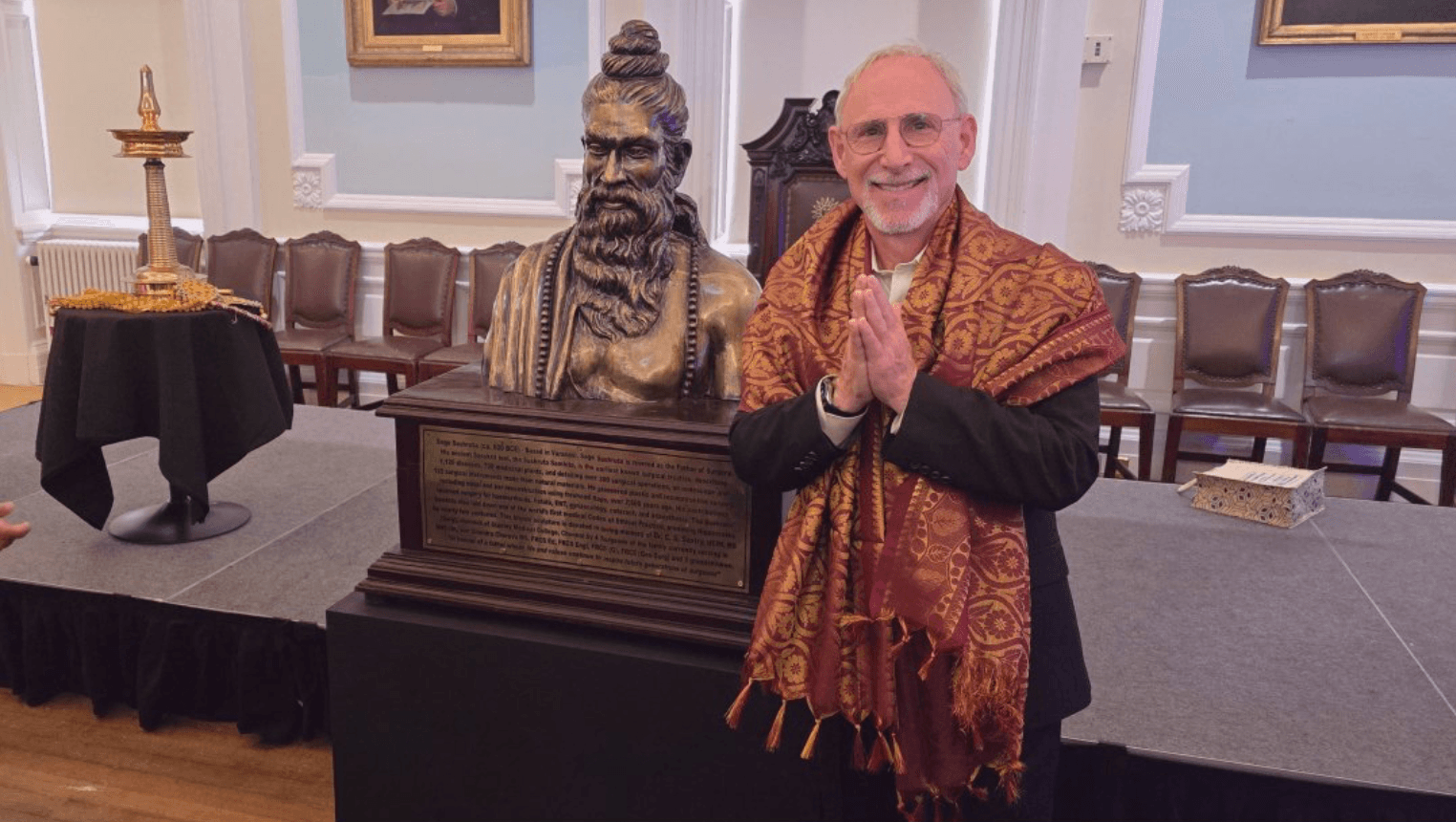
Many people may picture plastic surgery as a modern invention driven by celebrity culture and social media filters, but its deepest roots stretch back more than 2,500 years to ancient India. Surgeons today still draw on techniques first written down long before modern hospitals existed.
Last month, the Royal College of Surgeons of Edinburgh unveiled a bronze statue of Maharishi Sushruta, honouring his huge role in the history of surgery. Sushruta, who lived around 600 BCE in ancient Varanasi, wrote the Sushruta Samhita. This detailed text described hundreds of operations, tools, and treatments, including early forms of nose reconstruction and skin grafting.
His pioneering forehead-flap rhinoplasty, later known as the “Indian method,” would go on to revolutionise reconstructive surgery across the world, with British physicians carrying its principles back to Europe centuries later.
Experts widely regard him as the father of surgery, and his ideas continue to shape medical practice today. Professor Chandra Cheruvu, a surgeon of Indian origin, led the project. His Cheruvu Family Foundation donated the statue, which an artist from the city of Tiruvannamalai in Tamil Nadu created. India’s Consul General in Scotland, Siddharth Malik, unveiled it.
Notable guests included the college’s President Professor Clare McNaught, former President Professor Rowan Parks, and Professor Marc Halpern from the California College of Ayurveda. The event celebrated strong historical ties between India and Scotland in medicine.
The Royal College of Surgeons of Edinburgh, founded in 1505, ranks as the world’s oldest surgical college. It commands respect globally for training surgeons and advancing medical education.
While the Edinburgh ceremony celebrated millennia-old wisdom, the field Sushruta founded is now experiencing unprecedented commercial growth driven by shifting societal attitudes and tech advancements that would have seemed like magic to the ancient surgeon.


Read more: Breath Diagnostics advances pre-op pneumonia screening with FDA breakthrough designation
Plastic surgery sector continues to expand
This ancient legacy lives on in today’s fast-growing plastic surgery sector. Demand rises for both cosmetic procedures, such as nose jobs and breast augmentations, and reconstructive work after injury or illness.
Key drivers include social media influence, an ageing population, higher disposable incomes, medical tourism and safer, more effective techniques that shorten recovery times.
Certain key companies play a major part in meeting this demand. AbbVie Inc NYSEABBV ETR4AB develops leading injectable and implant products used in many cosmetic and reconstructive procedures. Another, Surgery Partners Inc (NASDAQ: SGRY) (FRA: 1SP), owns and operates hundreds of surgical facilities across the United States. These centres handle a wide range of plastic surgery cases.
According to Mordor Intelligence, the global plastic surgery instruments market alone is projected to grow from about US$1.73 billion in 2026 to almost US$2.5 billion by 2031, at a compound annual growth rate of around 7.5 per cent. Broader cosmetic and reconstructive surgery markets show even stronger expansion, driven by rising procedure volumes worldwide.
Firms like these, building on centuries of surgical knowledge that began with pioneers like Sushruta, help make advanced procedures more accessible while potentially appealing to investors.
Read more: Breath Diagnostics completes install of advanced mass spectrometry system
—————————————————————
Follow Rowan Dunne on LinkedIn
rowan@mugglehead.com