Many Peaks Minerals Limited reports 188.9m at 3.58 g/t ahead of Ferké resource update
The estimated true width is 95.3 metres, and the new assays mark the planned data cut-off for an estimate expected in the December quarter.
 Julian Okafor
A deep gold intersection beneath a 1.32-million-ounce resource will feed an estimate expected before the end of 2026. Many Peaks Minerals Limited ASXMPK, an Australian explorer focused on Côte d'Ivoire, reported 188.9 metres at 3.58 grams per tonne gold beneath Ouarigue on Tuesday.
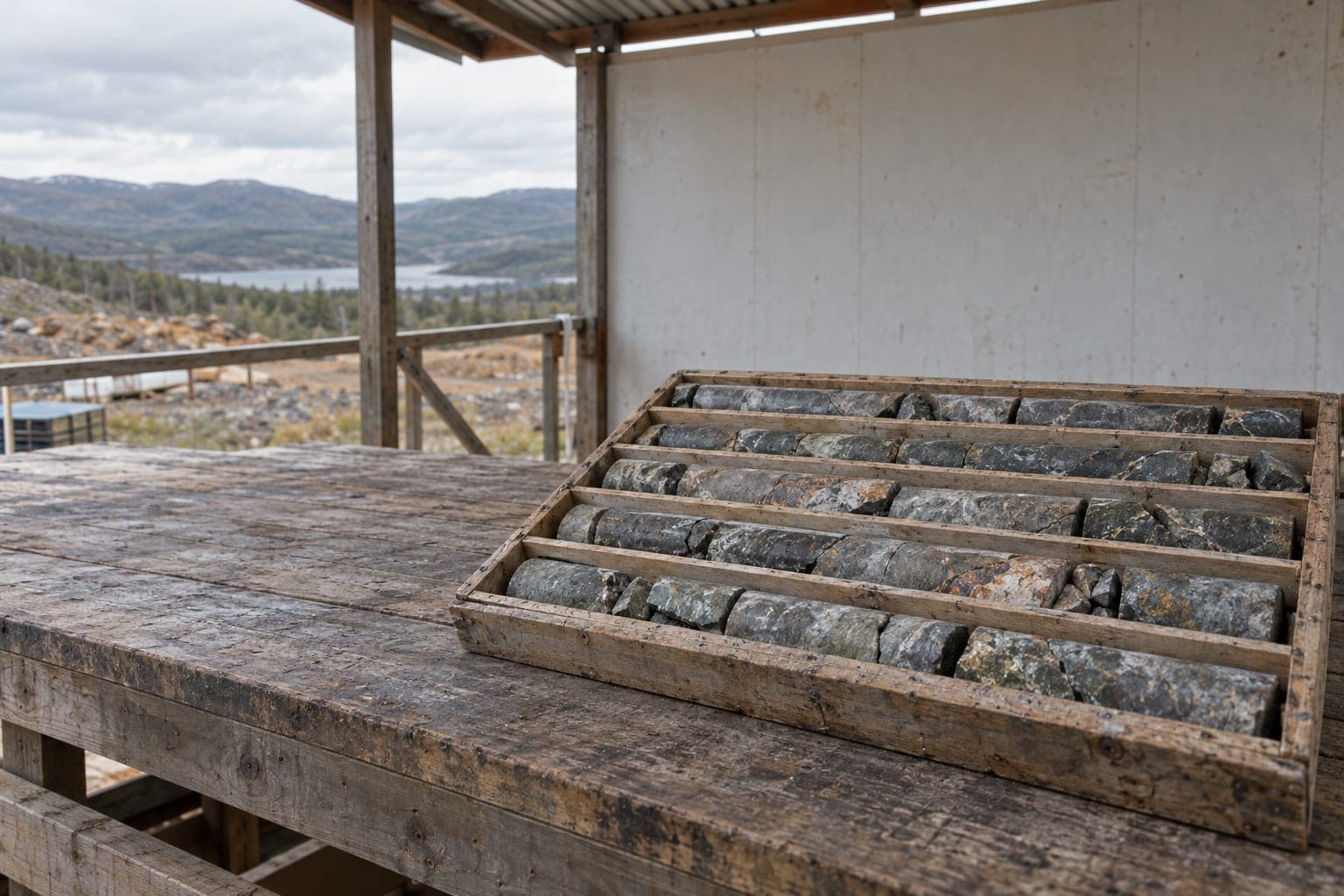
The intersection in hole FNDC166 begins at 633 metres downhole, with an estimated true width of 95.3 metres. It includes 46.75 metres grading 7.02 grams per tonne. The company says the results mark its planned data cut-off for an updated mineral resource estimate at the Ferké Gold Project.
Shares in ASXMPK rose 4.95 per cent to A$1.06 on the ASX at 4:21 p.m. AEDT on Tuesday, according to Google Finance.
Geological modelling and resource estimation are underway for completion in the current quarter, the announcement says. The deeper holes provide information about mineralisation beyond the existing estimate, but the company says economic parameters for any future resource assessment at depth have yet to be determined.
Drilling Tests Width And Grade Continuity
FNDC166 crosses the mineralised intrusion at an oblique angle, which explains why the reported drill length exceeds the estimated true width. Many Peaks chose the alternate orientation to help model grade distribution within an intrusion interpreted to contain both east-dipping and west-dipping mineralised veins.
The broad intersection combines four higher-grade zones separated by lower-grade material. The company says it composited the interval for reference to bulk-tonnage development options, so the overall average incorporates those intervening sections. Its detailed interpretation distinguishes the individual zones within the larger mineralised body.
Within the strongest of those zones, the company reported 1.85 metres at 109.8 grams per tonne gold. That short interval sits inside the broader high-grade section described above. The resource model will assess the distribution of these grades across the intrusion, using the drilling to inform geological and grade continuity.
Wedge hole FN135W01 returned 59.2 metres at 2.30 grams per tonne gold. The intersection starts at 556.8 metres and has an estimated true width of 52.4 metres. It branched from an earlier hole and crossed the mineralised intrusion approximately 24 metres updip of the parent intersection, adding another observation of its geometry.
The announcement contains partial assays for three diamond-core holes. Prioritised intervals from FNDC166 and FN135W01 represent 1,223 metres of drilling. Additional assays from FN135W03 extend mineralisation above an intersection reported on Sept. 22. The results therefore add both a differently oriented hole and closer observations around earlier drilling.
"The results will inform the planned resource update and evaluation of underground development options alongside the ongoing open-pit study work," managing director Travis Schwertfeger said in the announcement.
Resource Update Is Due In The December Quarter
The existing Ouarigue resource, announced on April 20, contains 1,323,000 ounces of gold. It comprises 26.7 million tonnes grading 1.54 grams per tonne. Tuesday's announcement reports new drilling rather than a revised resource total, leaving the estimate to determine how much additional mineralisation qualifies for inclusion.
The shallow extensions are also contributing data. Many Peaks reported assays from seven reverse-circulation holes covering 1,017 metres, with mineralisation intersected north and south of Ouarigue. One returned 30 metres at 0.52 grams per tonne from 18 metres, adding information about a different part of the deposit from the deep core holes.
Regional reconnaissance produced results from 31 holes covering 3,350 metres. About three kilometres south of Ouarigue, FNRC285 intersected 9 metres at 4.33 grams per tonne gold from 30 metres. Schwertfeger identified the regional intercepts as targets for follow-up resource delineation drilling, keeping that exploration work separate from the existing resource total.
Wia Gold Limited ASXWIA, a gold developer advancing Kokoseb in Namibia, reported assays from 33 diamond holes covering 18,476 metres on Tuesday. Its latest underground drilling includes a strong intersection within the existing underground resource envelope, alongside exploration targeting extensions beyond it.
Read more: Wia Gold Limited reports 15.5m at 6.53 g/t in Kokoseb underground drilling
Shares in ASXWIA fell 2.17 per cent to A$0.45 on the ASX at 10:43 a.m. AEDT on Tuesday, according to Google Finance. Its release says further drilling will target grade continuity, illustrating another developer's effort to define underground potential beneath a planned open pit.
Many Peaks is advancing pre-feasibility level open-pit work and reviewing an integrated economic assessment that includes scoping-study evaluation of underground options. The next dated test is its updated resource estimate, expected in the December quarter of 2026.