Snowline Gold reports 1.47 g/t gold over 450.2 metres at Valley
Duke drilling also returned 1.03 grams per tonne over 65.8 metres, while the new Valley assays are excluded from the upcoming study.
 Mara Quinlan
Snowline Gold Corp. TSESGD OTCMKTSSNWGF reported on Wednesday that hole V-26-165 returned 1.47 grams per tonne gold over 450.2 metres from surface at its Valley deposit in Yukon. The interval includes 210.5 metres at 2.07 grams per tonne, strengthening the deposit's near-surface higher-grade zone.
Shares fell 0.96 per cent to C$12.37 on the Toronto Stock Exchange at 4:00 p.m. EST on Tuesday, according to TSESGD. That close preceded Wednesday's announcement.
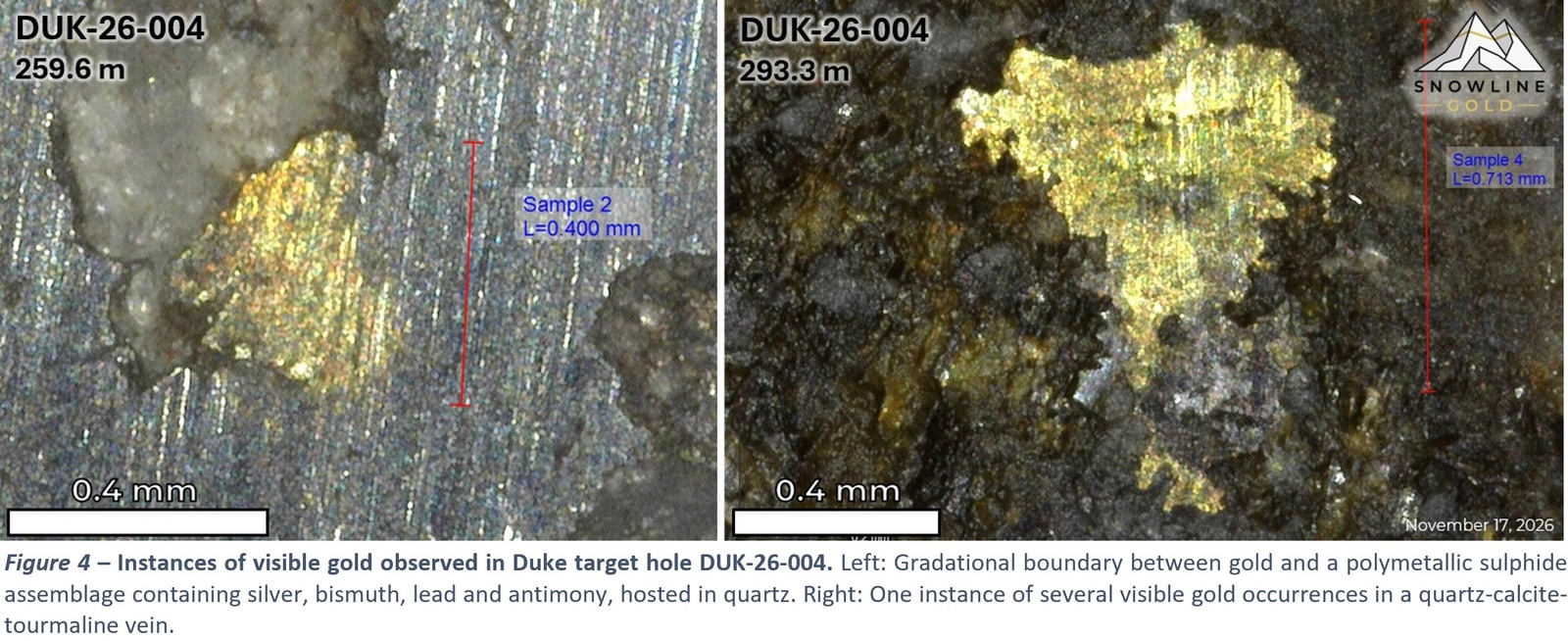
Duke hole DUK-26-004 returned 1.03 grams per tonne gold over 65.8 metres. The Yukon gold explorer's Duke target lies 12 kilometres southeast of Valley on Snowline's wholly owned Rogue project.
The new Valley assays will inform future resource estimates and studies, but will be excluded from the pre-feasibility study due in the first quarter of 2027. Snowline's assay table reports downhole interval lengths, rather than true widths.
"Hole V-26-165 outperformed our current mineral resource estimate at its location within the pit, and the continuously mineralized interval from surface extends beyond the pit wall," chief executive Scott Berdahl said in the release.
The Valley hole also ended in mineralization, with a separate 44.3-metre interval averaging 0.72 grams per tonne northeast of the main deposit at depth. Snowline described that deeper location as an area it has yet to thoroughly explore.
At Valley, capping individual assays at 10 grams per tonne reduces the headline interval's average to 1.36 grams per tonne.
Duke's headline interval begins 230.0 metres downhole and includes 1.0 metre at 32.20 grams per tonne. With individual assays capped at 10 grams per tonne, the interval averages 0.70 grams per tonne.
The Duke drilling targeted breccia zones along the margins of an intrusion, following surface mapping and magnetic surveys. Snowline says the western mineralization is more extensive than surface exposures suggest and remains open at depth.
A second Duke hole, collared 675 metres northeast of the first, returned 9.0 metres at 1.12 grams per tonne within broader mineralization. Snowline says the extent of that breccia body remains unknown because surface exposure is limited.
Snowline drilled five holes totalling roughly 1,600 metres at Duke during its 2026 campaign. Assays from four have been received, while full results for the remaining hole are pending.
Snowline's May 5 exploration plan described its 2026 programs as fully funded, with approximately C$100 million in cash at that time. That plan called for more than 10,000 metres of exploratory drilling across Valley expansion and regional targets.
Read more: TDG Gold estimates C$1.18B after-tax value in first Shasta assessment
Snowline expects to deliver the Valley pre-feasibility study alongside a project description for initial permitting review in the first quarter of 2027.