Heliostar secures Goldstrike project in Utah with USD$70M deal
The company plans to explore the Antimony Ridge area more fully
 Joseph Morton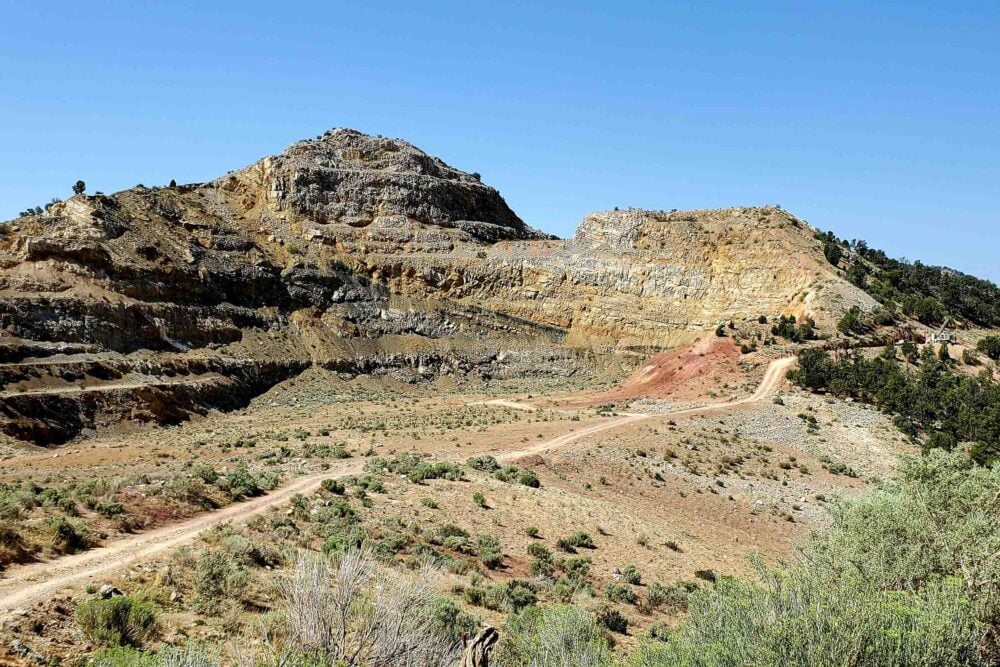
Heliostar Metals Ltd. CVEHSTR OTCMKTSHSTXF has completed its acquisition of the Goldstrike project in Utah, securing a sizeable gold resource and outlining plans for future development.
Announced on Monday, the company paid USD$10.0 million in cash and issued 1,593,213 shares to Liberty Gold Corp. TSELGD OTCMKTSLGDTF. Additionally, it agreed to staged payments totaling USD$60.0 million over five years. The deal gives Heliostar full ownership of the project.
Goldstrike currently hosts 975,000 indicated gold ounces at 0.46 grams per tonne. It also contains 90,000 inferred ounces at 0.31 grams per tonne. Furthermore, Heliostar plans to publish an updated technical report next month to support the estimate.
The company said it will assess strategic options for the asset. Meanwhile, it may sequence development alongside its broader project pipeline. It is also considering special purpose vehicles to separate gold and critical minerals value streams.
Future work will target resource expansion at the site. Additionally, the company plans to explore the Antimony Ridge area more fully. It also intends to confirm processing methods and infrastructure requirements.
Heliostar aims to grow into a mid-tier producer by the end of the decade. Consequently, it is targeting annual production of 500,000 ounces. Cash flow from its La Colorada and San Agustin mines supports that goal.
The company operates those mines in Mexico. In addition, it is advancing projects across Mexico and the United States. These include Ana Paula, Cerro del Gallo, San Antonio, Goldstrike and Unga.
Meanwhile, Utah continues to gain attention as a key U.S. mining jurisdiction, offering established infrastructure, favourable geology and growing interest in both precious and critical mineral development.
Read more: Global gold leaders navigate disruption in 2025: A Mugglehead roundup
Read more: NevGold discovers transformational oxide gold-antimony structure at Limousine Butte
Goldstrike deposit hosts nearly one million gold ounces
Utah continues to emerge as a strong jurisdiction for mineral development, supported by established infrastructure and a long mining history. Additionally, the state hosts a range of commodities, including gold, copper and critical minerals. Producers and developers benefit from road access, power availability and proximity to U.S. refining capacity.
The Goldstrike deposit hosts nearly one million indicated gold ounces, alongside additional inferred resources. Furthermore, its relatively low-grade, bulk-tonnage profile aligns with heap leach processing methods common across the region. Operators continue to evaluate expansion potential and infrastructure plans.
Utah also hosts major operations led by global producers. Rio Tinto Group NYSERIO operates the Bingham Canyon mine, one of the largest open-pit copper mines in the world. Meanwhile, the site produces significant quantities of gold and molybdenum as byproducts. This scale reinforces Utah’s role as a key contributor to U.S. mineral supply.
Exploration activity across the state remains steady as companies target sediment-hosted gold systems and polymetallic deposits. Additionally, interest in antimony and other critical minerals has increased as supply concerns grow. Developers are increasingly assessing projects that can deliver both precious and strategic metals.
Geologically, Utah shares key traits with neighbouring Nevada’s prolific gold belts. Consequently, mineralized trends extend across state boundaries, creating broader exploration opportunities. NevGold Corp CVENAU OTCMKTSNAUFF FRA5E50 is active near the Utah–Nevada border, targeting similar geological systems that extend into Utah.
NevGold Corp is a sponsor of Mugglehead news coverage
.