English school develops vibrating pillow sleeve to warn deaf people of night dangers
This gadget is the university's latest innovation for assisting the hard of hearing
 Rowan Dunne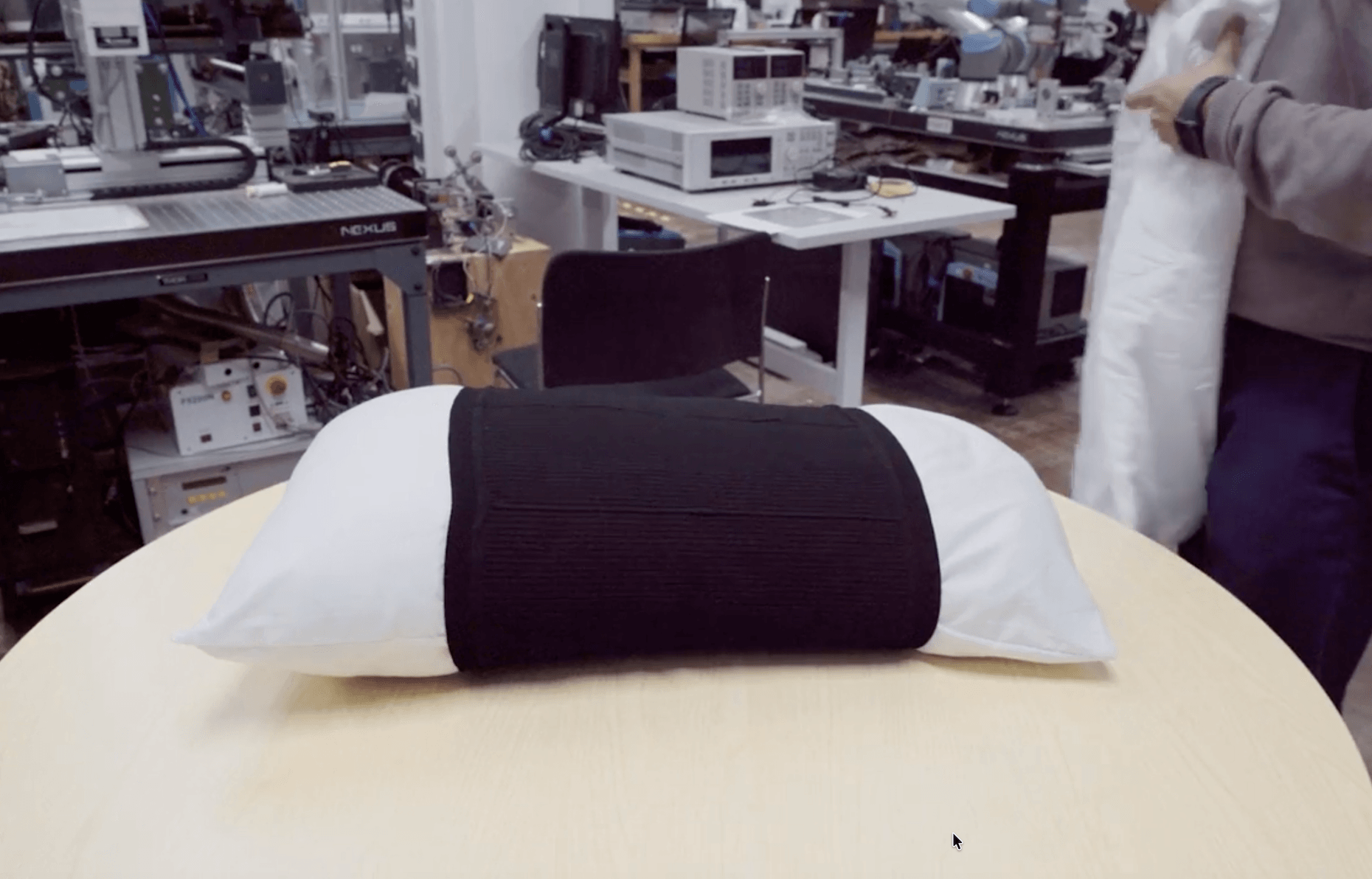
Researchers at Nottingham Trent University in England have created a smart pillow sleeve that vibrates to alert deaf and deaf-blind people to nighttime emergencies.
PhD researcher Malindu Ehelagasthenna developed the device in the university’s Advanced Textiles Research Group under the supervision of Dr. Theo Hughes-Riley. They revealed their creation in a news release on Apr. 21.
The thin, flexible electronic textile sleeve slips easily over any standard pillow and fits inside a normal pillowcase. It employs four tiny haptic actuators, each measuring just 3.4 millimetres by 12.7 millimetres, that sit embedded in a yarn-like structure at the bottom of the pillow. This placement keeps steady contact with the user’s head while remaining completely unnoticeable during normal sleep.
A microcontroller connects the sleeve wirelessly to a smartphone, which links to household fire alarms, burglar alarms or incoming calls. Distinct vibration patterns signal each type of alert, delivering strong pulses that wake even heavy sleepers.
Users in the Deaf community helped shape the design after they explained how bulky devices under pillows disrupted their sleep.
“We feel that this could be a really useful safety device as it could monitor for noises while people are asleep and alert them and wake them up if necessary,” said Hughes-Riley.
The team presented the prototype at the Association for Computing Machinery’s Conference on Human Factors in Computing Systems earlier this month in Spain. They are now seeking an industrial partner to help bring it to market.
Read more: Sleep tech wristband maker ‘Whoop’ hits US$10B valuation on way to IPO
Not the university’s first project for the hard of hearing
This pillow sleeve builds on the institution’s ongoing commitment to developing helpful technology for deaf and deaf-blind people.
The same research team created the Vibrotac-Glove, a haptic electronic glove that converts speech and environmental sounds into distinct vibration patterns on the fingers. It completes this translation via a smartphone-connected control system.
Earlier work also produced Tacsac, a wearable device that combines touch input with vibrotactile feedback to enable two-way tactile communication through a smartphone app. Vibrotactile technology essentially delivers mechanical, vibration-based stimulation to the skin.
These projects focus on comfortable, user-centred wearables made possible through advancements in electronic textiles.
Not the only one pursuing deaf assistive tech
While university innovations like this are pushing the field forward, practical solutions already help many people stay safe at night.
In September, the American Red Cross installed 34 bed-shaker alarms at the Idaho School for the Deaf and the Blind in Gooding. Volunteers placed vibrating pads under mattresses or pillows and paired them with strobe lights that activate alongside the school’s smoke alarms.
Students now wake up reliably during emergencies and also use the devices as alarm clocks for greater independence.
“They provide these kids peace of mind,” said resident life director Jeannie Gallup. “And they’re resources they can learn to use now when they’re young that they then can use in their adult lives when they graduate.”
Other commercial bed shakers for the hard of hearing remain widely available from retailers such as MaxiAids.com, Amazon and Sonic Alert. They pair easily with strobes or smartphone apps that detect sounds and deliver vibrations or flashes.
Tools like these and NTU’s smart sleeve continue to make life safer for those with disabilities.
Read more: Jet lag aid sleep tech app creator ‘Timeshifter’ sets up Denmark hub
Follow Rowan Dunne on LinkedIn
rowan@mugglehead.com