Eclipse Metals Limited reports about 1.3x feed grade in preliminary flotation of Grønnedal core
The hydroxamate rougher tests sent about 30 per cent of the feed mass into the concentrate.
 Theo Marchetti
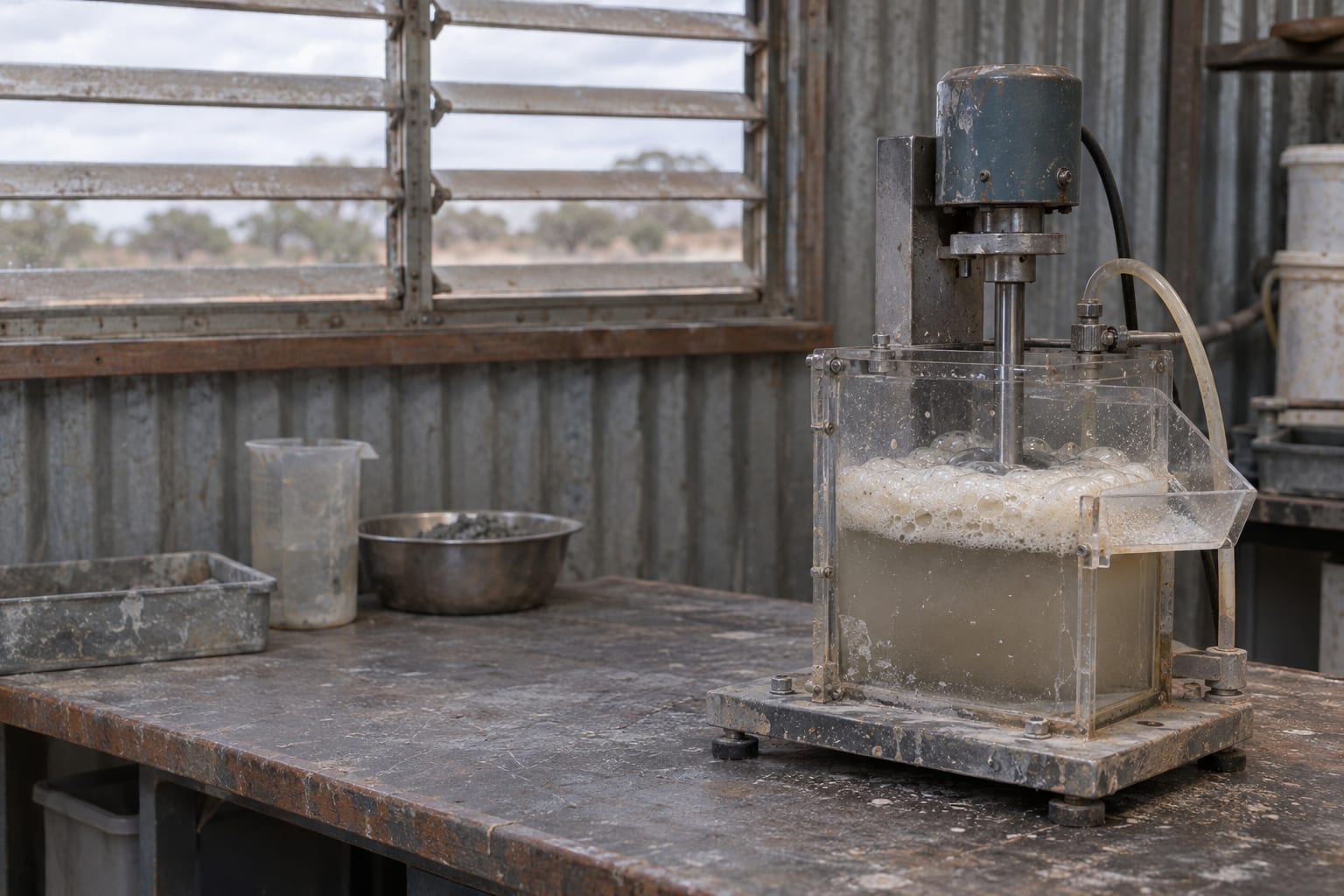
Eclipse Metals Limited ASXEPM OTCMKTSEPMFF FRA9EU said in a Nov. 24 Australian Securities Exchange filing that ALS Metallurgy's hydroxamate rougher flotation tests in Western Australia yielded a concentrate at about 1.3 times the feed's rare earth grade. The preliminary tests used two composites made from core drilled in 2025 at Eclipse's Grønnedal project in southwest Greenland.
Google Finance's ASXEPM page showed Eclipse shares at A$0.0080 at 3:52 p.m. AEDT on Nov. 23, before the filing.
The flotation tests recovered neodymium and praseodymium, the pair of rare earths known as NdPr. Eclipse described the recovery as high but gave no percentage in its summary of the flotation results.
The concentrate accounted for about 30 per cent of the feed mass in the hydroxamate tests. Tests with oleic acid carried a high proportion of the feed mass into the concentrate without increasing its rare earth grade. Eclipse plans to test whether it can recover the rare earths while leaving more iron-bearing minerals, silicates and carbonates behind.
"We've identified the principal NdPr-bearing minerals and demonstrated a preliminary flotation response. Our next priority is to improve selectivity and concentrate quality," executive chairman Carl Popal said in the filing.
Cleaner Tests Will Target Waste Minerals
The two composites graded 8,207 and 4,706 parts per million total rare earth oxides, according to Eclipse's Sept. 3 mineralogy report. For one composite, Eclipse estimated that combined density and magnetic separation could yield a product grading about 12,700 parts per million total rare earth elements while retaining about 70 per cent of the feed's rare earths. Neither estimate measures what flotation recovered or establishes a grade a buyer would accept.
Across the composites evaluated, 60 to 71 per cent of the rare earth fluorocarbonates were in particles larger than 38 micrometres, according to the Nov. 24 filing. Eclipse plans to test whether discarding some unwanted minerals before flotation or regrinding selected material can improve separation.
The filing cited an estimate announced April 29 that put Grønnedal's resource at 208 million tonnes grading 0.72 per cent total rare earth oxides. About 202 million tonnes were inferred and 6 million tonnes were indicated. The resource contains an estimated 456,000 tonnes of neodymium and praseodymium oxides combined, before any processing losses.
In Brazil, Brazilian Rare Earths Limited ASXBRE OTCMKTSBRELY OTCMKTSBRETF said in its September quarterly report that commissioning at Camaçari produced its first concentrate for bulk metallurgical tests. It plans to commission its second-stage chemical processing pilot in the second quarter of 2027.
Read more: Brazilian Rare Earths reports 6 metres at 13.2 per cent rare earth oxides at Pelé
Core from the 2026 drill program will supply the next round of tests. Eclipse will assess whether cleaner flotation and magnetic separation can produce a smaller, higher-grade concentrate while retaining the NdPr recovered in the first stage.