Central banks lift gold buying 42% to 321 tonnes in third quarter
Officially reported purchases totalled 120 tonnes, leaving most of the World Gold Council’s quarterly estimate outside disclosed reserve data.
 Theo Marchetti
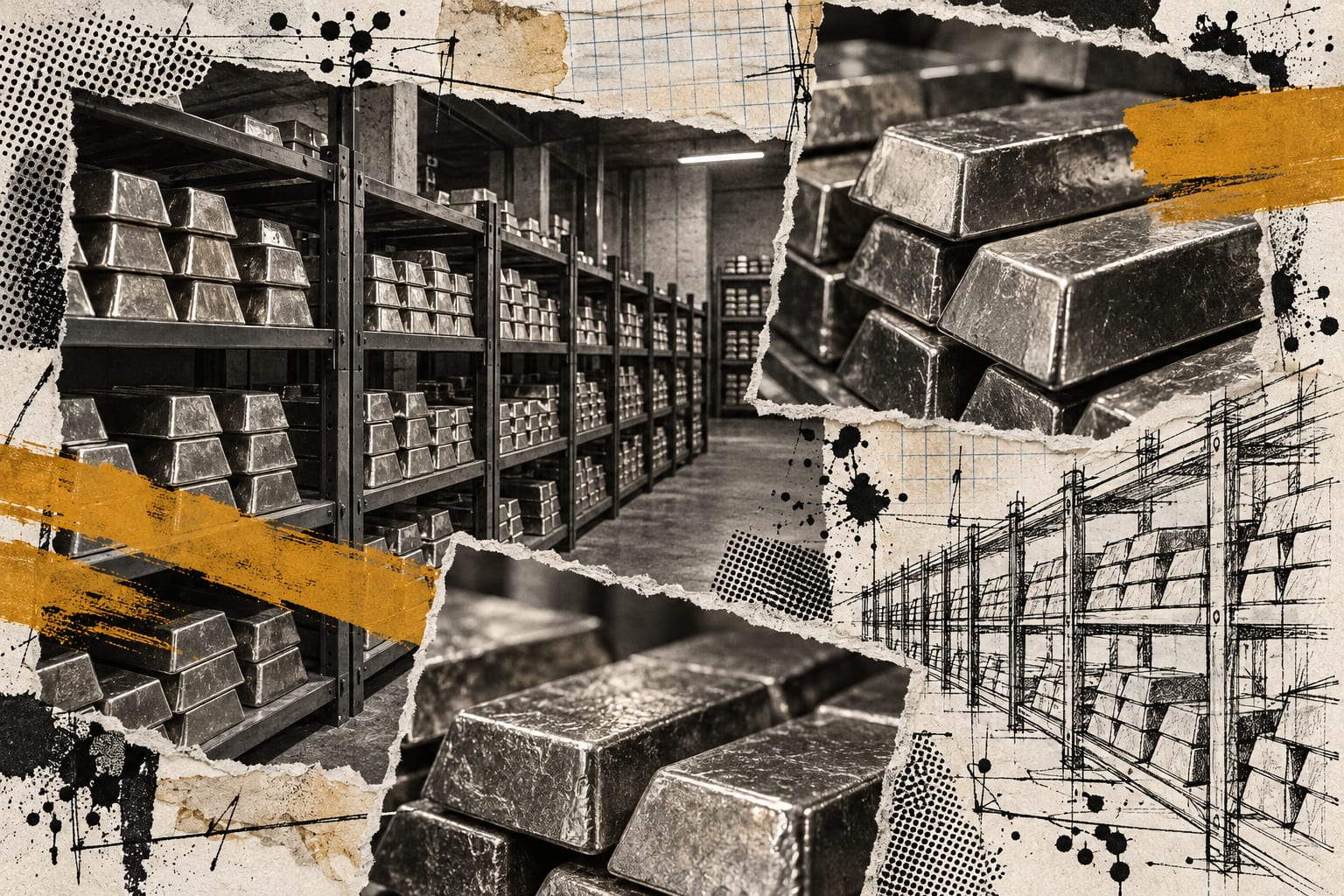
Central banks increased third-quarter gold buying 42 per cent to an estimated 321 tonnes, the World Gold Council said on Tuesday, adding demand for producers listed on the Toronto Stock Exchange. Purchases rose 8 per cent from the second quarter, taking nine-month buying to 675 tonnes.
The headline includes substantial estimated activity. Officially reported net purchases totalled 120 tonnes in the third quarter, while unreported activity accounted for around 63 per cent of the council's estimate.
Stronger official-sector buying offset weakness elsewhere rather than lifting overall consumption. The council's Nov. 3 demand report put total third-quarter demand, including over-the-counter activity, at 1,369 tonnes, down 1 per cent from a year earlier.
Agnico Eagle Mines Limited TSEAEM NYSEAEM closed at C$238.41, up 3.3 per cent, on the Toronto Stock Exchange on Nov. 2 at 4 p.m. EST, according to Google Finance. That session preceded the council's report and does not establish a reaction to it.
China Led Reported Purchases
The council attributed 63 tonnes of third-quarter purchases to the People's Bank of China, making it the largest disclosed buyer. Poland followed with 40 tonnes, while Kazakhstan and Uzbekistan each added 14 tonnes.
China's quarterly additions accounted for more than half of its purchases through September. Poland's buying slowed from the second quarter, showing that the aggregate increase did not reflect an acceleration by every major buyer.
The country figures draw on International Monetary Fund and central-bank statistics. The council captured reported data through Oct. 30 and said delayed reporting could lead to revisions.
Estimated unreported activity includes purchases or sales absent from official statistics because of reporting delays or non-disclosure. The gap therefore cannot be assigned to particular countries from the disclosed totals.
"This means that disclosed country-level purchases provide only a partial picture of the underlying sources of demand," the council said in its Nov. 3 report.
The council linked persistent buying at historically elevated prices primarily to longer-term diversification and risk management. It said lower prices and volatility may also have supported purchases at the margin.
Producers Face A Mixed Demand Picture
Jewellery consumption fell 17 per cent to 313 tonnes in the third quarter, while gold exchange-traded funds added 211 tonnes after second-quarter outflows. The council put the third-quarter LBMA PM gold-price average at US$4,262 an ounce, up 23 per cent annually.
Producer results show how gold prices translate into operating cash. Agnico Eagle reported on Oct. 28 that third-quarter payable gold production reached 814,012 ounces and free cash flow totalled US$852 million. It attributed strong cash generation to operational performance combined with realized gold prices.
Newmont Corporation NYSENEM ASXNEM reported on Oct. 22 approximately 1.3 million attributable gold ounces and US$1.9 billion of third-quarter free cash flow. Neither company's results establish that central-bank purchases caused its realized prices.
Read more: Tectonic Metals drills 41.15m at 5.61 g/t gold at Black Creek
China's next reserve update will provide another disclosed measure of official buying, although it cannot resolve the council's estimated unreported activity. Newmont's next confirmed dividend record date is Nov. 25, ahead of payment on Dec. 21.