Arm CEO sees AI accelerating cancer diagnosis, research and treatment
AI could consequently discover cancer treatments that researchers would not otherwise find during their lifetimes
 Joseph Morton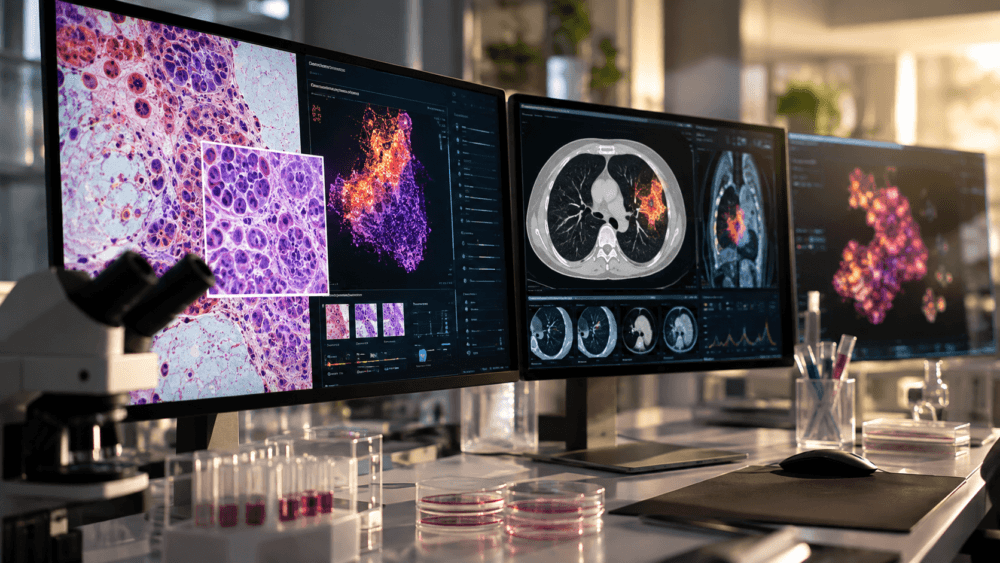
Artificial intelligence could help cure cancer within the current generation as computing power and medical data improve, according to the head of one of the world’s largest chip designers.
Rene Haas, chief executive of Arm Holdings plc (NASDAQ: ARM), said AI could eventually solve biological problems that remain too complex for humans. He pointed specifically to modelling cells and understanding how DNA markers interact with cancer.
Haas said existing computers still lack the capability to model those interactions at the necessary scale. However, he expects increasingly sophisticated computers and larger medical models to overcome those limitations.
Haas said AI could consequently help find cancer cures that researchers might otherwise fail to discover during their lifetimes. He previously served on the board of AstraZeneca plc (NYSE: AZN), a major pharmaceutical company.
The prediction comes as researchers increasingly use AI throughout oncology, from medical imaging to drug development. Additionally, clinicians are deploying specialized systems for documentation, clinical trial matching and treatment planning.
The National Cancer Institute has described AI as an unprecedented opportunity to improve cancer research and patient care. Recent advances in model training, computing hardware and large medical datasets have expanded possible applications.
Those datasets include medical imaging, genomic information and other biological measurements. Meanwhile, researchers are developing models capable of identifying patterns that can be difficult or time-consuming for humans to detect.
Read more: Breath Diagnostics advances pre-op pneumonia screening with FDA breakthrough designation
Read more: Prestigious medtech intelligence firm recognizes Breath Diagnostics for innovation
AI likely to help with diagnosis rather than find a cure
Chris Bakal, a professor at the Institute of Cancer Research in London, said the quality of medical data remains critical. His laboratory trains AI systems using information generated directly from patient samples rather than material scraped from the internet.
Bakal argued that medical AI development will depend more on obtaining the correct measurements than simply building larger computers. Furthermore, accurate predictive systems could potentially remove years from the development of new cancer treatments.
That distinction matters because AI remains far from independently solving cancer. Cancer includes many diseases driven by different genetic, environmental and biological mechanisms rather than a single condition with one potential cure.
Researchers are instead applying AI to specific problems throughout cancer diagnosis and treatment. Additionally, oncologists increasingly view the technology as infrastructure that can accelerate existing clinical and research processes.
Matthew Matasar, chief of the Division of Blood Disorders at Rutgers Cancer Institute, said oncology has reached an inflection point. AI tools have rapidly moved from unreliable novelties toward increasingly serious clinical applications.
Specialized large language models now help clinicians retrieve medical information and process documentation. Meanwhile, AI-enabled charting systems can reduce administrative workloads and potentially give doctors more time with patients.
Some systems also draw from medical journals and clinical guidelines to provide information during clinical decision-making. However, clinicians still need to evaluate the resulting information rather than treating AI output as independent medical judgment.
Arturo Loaiza-Bonilla, systemwide chief of hematology and oncology at St Luke’s University Health Network, described AI as connective tissue. He said the technology can link different parts of oncology workflows and remove routine friction.
AI systems are assisting with mammography and lung cancer screening
Agentic AI systems represent one emerging approach.
These systems combine language models with external tools and other machine-learning systems to perform more complicated sequences of tasks.
For example, clinicians can use the technology to support tumor boards and match patients with clinical trials. Additionally, systems can assist with care coordination, treatment pathways and adherence to clinical guidelines.
Loaiza-Bonilla said the most useful applications may prove less dramatic than autonomous diagnosis or drug discovery. Instead, AI could create immediate value by reducing documentation, accelerating triage and improving trial access.
Medical imaging represents another major area of development. AI systems are already assisting clinicians with mammography and lung cancer screening while researchers investigate applications involving other difficult-to-detect cancers.
Additionally, AI-assisted mammography could reduce the workload associated with reviewing medical images. Researchers are testing those systems across different populations because factors such as breast density can affect their performance.
Researchers have also investigated AI-assisted computed tomography scans for pancreatic cancer. Pancreatic tumors often remain undetected until later disease stages, making earlier identification particularly valuable.
Meanwhile, startups like Breath Diagnostics Inc. are applying artificial intelligence and machine learning to lung cancer detection. Its technology uses a microreactor to analyze volatile organic compounds in exhaled breath, while machine-learning tools help identify patterns associated with disease. The approach could provide another route toward earlier and less invasive cancer detection.
The PANORAMA trial examined AI-assisted CT imaging for detecting early-stage pancreatic cancer. Meanwhile, researchers continue working to move similar radiology models from limited applications into broader clinical practice.
Read more: Breath Diagnostics leader speaks at lung cancer education event in Louisville
Read more: Breath Diagnostics opens Respiratory Innovation Summit with captivating presentation
AI can now assess 3D mammography images
AI has also shown promise in assessing cancer recurrence risk. At the 2025 San Antonio Breast Cancer Symposium, researchers presented a transformer-based model designed to predict recurrence after breast cancer treatment.
The multimodal model combined imaging, clinical information and molecular data. Furthermore, it demonstrated stronger prognostic performance for overall and late recurrence than the Oncotype DX 21-gene recurrence score alone.
Researchers reported statistically significant prognostic separation among patients with both low and high genomic risk. Such systems could eventually help doctors determine which patients require additional screening or closer monitoring.
Patrick Borgen, chair of surgery at Maimonides Medical Center, also sees potential for AI in breast imaging. He said preliminary evidence suggests AI can perform competitively when reading some breast imaging studies.
AI can now assess three-dimensional mammography images, known as tomosynthesis. However, Borgen said the technology still requires additional validation before it can broadly replace existing clinical processes.
Researchers are simultaneously examining whether imaging algorithms can predict how patients will respond to treatments. Additionally, radiomics systems can extract patterns from medical scans that humans may not readily recognize.
Those patterns could potentially indicate whether a patient will benefit from therapies such as endocrine treatment. Researchers have used findings from the phase 3 TAILORx trial as a validation point for emerging models.
Pathology represents another area where AI could expand cancer care. Many low- and middle-income countries lack sufficient numbers of trained pathologists, while some rural American communities face similar shortages.
Foundational pathology models can train on millions of digitized tissue slides. Consequently, researchers believe these systems could provide preliminary assessments where specialist access remains limited.
AI image analysis could replace some genomic profiling studies
Clinicians could photograph or digitize a tissue sample and upload the resulting image for analysis. AI could then identify patterns associated with biomarkers or mutations before a pathologist completes a formal review.
For example, models could potentially identify signs associated with EGFR mutations, hormone receptor status or PD-L1 positivity. However, Loaiza-Bonilla said multidisciplinary oversight remains necessary when deploying these systems.
Borgen has also raised the possibility that AI image analysis could eventually replace some genomic profiling studies. Machine-learning platforms can rapidly learn relationships between tissue appearance and underlying molecular characteristics.
Cardio-oncology offers another potential application. Cancer treatments can create cardiovascular complications, making it important to identify patients at increased risk before serious problems develop.
Researchers are developing foundational models using large collections of labelled electrocardiograms. Additionally, those systems could identify arrhythmias, QT prolongation and other cardiovascular risks associated with some cancer treatments.
Loaiza-Bonilla expects companies to pursue regulatory validation for such models. The widespread availability of electrocardiograms could make them useful tools for integrating AI-based risk assessments into electronic medical records.
Drug discovery could ultimately produce some of AI’s largest effects on cancer care. Pharmaceutical and healthcare companies are increasingly training foundational models using proprietary scientific and clinical datasets.
Loaiza-Bonilla said some discovery cycles have already compressed from years into months and occasionally weeks. Meanwhile, agentic systems can process research publications and organize technical information for scientists and clinicians.
Such systems could help researchers identify promising drug candidates or biological relationships more quickly. They could also help scientists navigate enormous volumes of published research that no individual researcher could realistically process.
Read more: Breath Diagnostics leaders promote their mission at Miami investment conference
Read more: Breath Diagnostics completes install of advanced mass spectrometry system
Computing infrastructure determines how quickly better models emerge
That growing capability resembles the future Haas described. AI would not necessarily discover treatments through human-like intuition but could model relationships across biological systems at an unprecedented scale.
Modern AI systems still face substantial limitations. Additionally, the National Cancer Institute has called for greater clinical validation and development of explainable systems that clinicians can understand and evaluate.
Training data can also introduce bias when datasets fail to represent broader patient populations. Consequently, poorly designed systems could produce less reliable results for groups underrepresented in medical research.
The institute has called for development standards that reduce bias while improving reproducibility. Clinical validation remains particularly important because mistakes in cancer diagnosis or treatment can carry severe consequences.
Loaiza-Bonilla similarly argued that AI systems require clinical governance and evidence-based safeguards. He said medical AI must align with established research rather than simply generating plausible answers from available information.
Those concerns place limits on predictions that AI alone will cure cancer. However, current applications demonstrate how the technology could accelerate numerous steps between basic research, diagnosis and treatment.
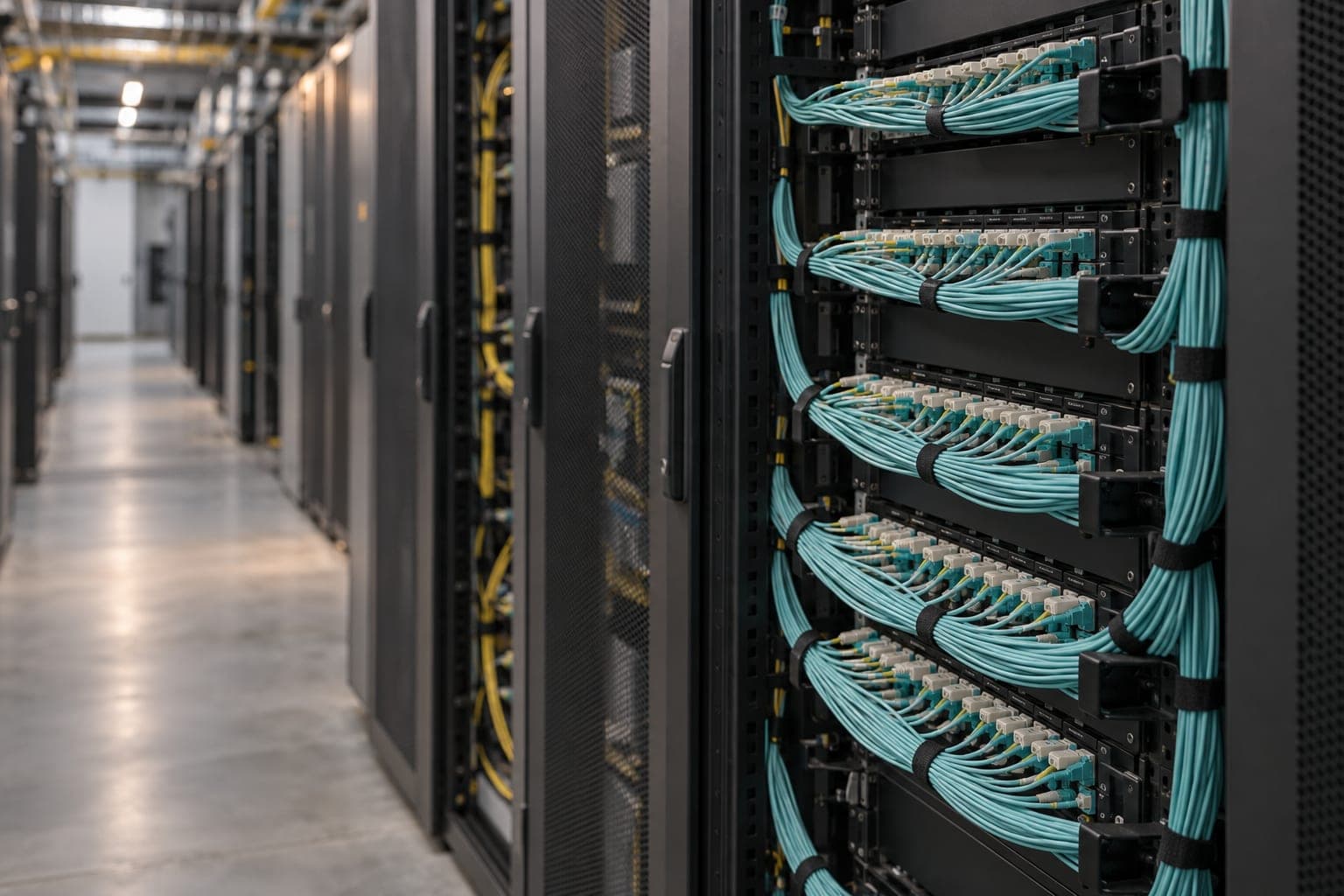
Computing infrastructure will also determine how quickly more sophisticated models emerge. Arm designs central processing units used across phones, vehicles, computers and increasingly data centres supporting AI workloads.
Haas said Arm’s power-efficient technology now operates in about half of AI data centres worldwide. Additionally, he said demand for AI computing remains constrained by the available supply of advanced chips.
Arm has expanded beyond designing processor architectures and into selling its own chips. Haas said demand for its Arm AGI chip has exceeded USD$2 billion since the product launched in March.
Computing expansion could support complicated biological models
However, chip shortages could restrict how rapidly companies build increasingly powerful AI infrastructure. Haas said the industry needs additional semiconductor fabrication plants to meet growing computing demand.
Technology companies are already considering multi-gigawatt data centres in the United States and France. Some companies have also proposed eventually placing computing infrastructure in space.
Haas said those ambitions still depend on manufacturing enough processors. Meanwhile, semiconductor production remains concentrated around specialized manufacturing ecosystems that require enormous capital, skilled workers and natural resources.
The same computing expansion could support increasingly complicated biological models. Researchers currently struggle to model entire cells, human biology and interactions between genetic markers and cancer at sufficient detail.
Haas expects that barrier to diminish as researchers feed more biological information into increasingly sophisticated models. Consequently, AI could identify relationships that remain beyond the practical reach of current researchers and computers.
Medical researchers are already pursuing a narrower version of that approach using patient-derived datasets. Instead of asking a general-purpose model to solve cancer, scientists can train specialized systems on specific biological measurements.
Bakal said that approach could allow AI to predict which experiments or treatments researchers should pursue next. Additionally, better predictions could eliminate unsuccessful research paths before scientists spend years testing them.
The development of specialized systems also differs from consumer-facing generative AI. Clinical models often depend on carefully curated medical information, imaging or laboratory measurements rather than enormous collections of general internet data.
That could make data quality as important as computing power. Furthermore, oncology specialists increasingly argue that successful systems must demonstrate measurable improvements rather than simply adding AI to existing workflows.
Read more: Breath Diagnostics now offering a compelling investment opportunity
Read more: Breath Diagnostics gives the public the chance to join the fight against cancer
Machines find patterns across medical information at increasing rate
Loaiza-Bonilla said useful systems should help therapies reach patients faster and improve access to clinical trials. They should also help medical teams spend more time practising medicine and less time navigating administrative systems.
Those incremental improvements could accumulate across the cancer treatment pipeline. Faster screening, pathology, trial matching and drug discovery could each reduce delays between identifying disease and delivering appropriate treatment.
Haas’s prediction goes considerably further by suggesting AI could ultimately solve biological problems humans cannot. However, current oncology research provides early examples of machines finding patterns across medical information at increasing scale.
Researchers still need to validate those systems, control bias and maintain clinical oversight. Additionally, AI models must demonstrate that faster analysis translates into better outcomes for cancer patients.