AI flags heart disease from routine ECG test within seconds
Artificial intelligence is making it easier to determine who needs a heart ultrasound most
 Rowan Dunne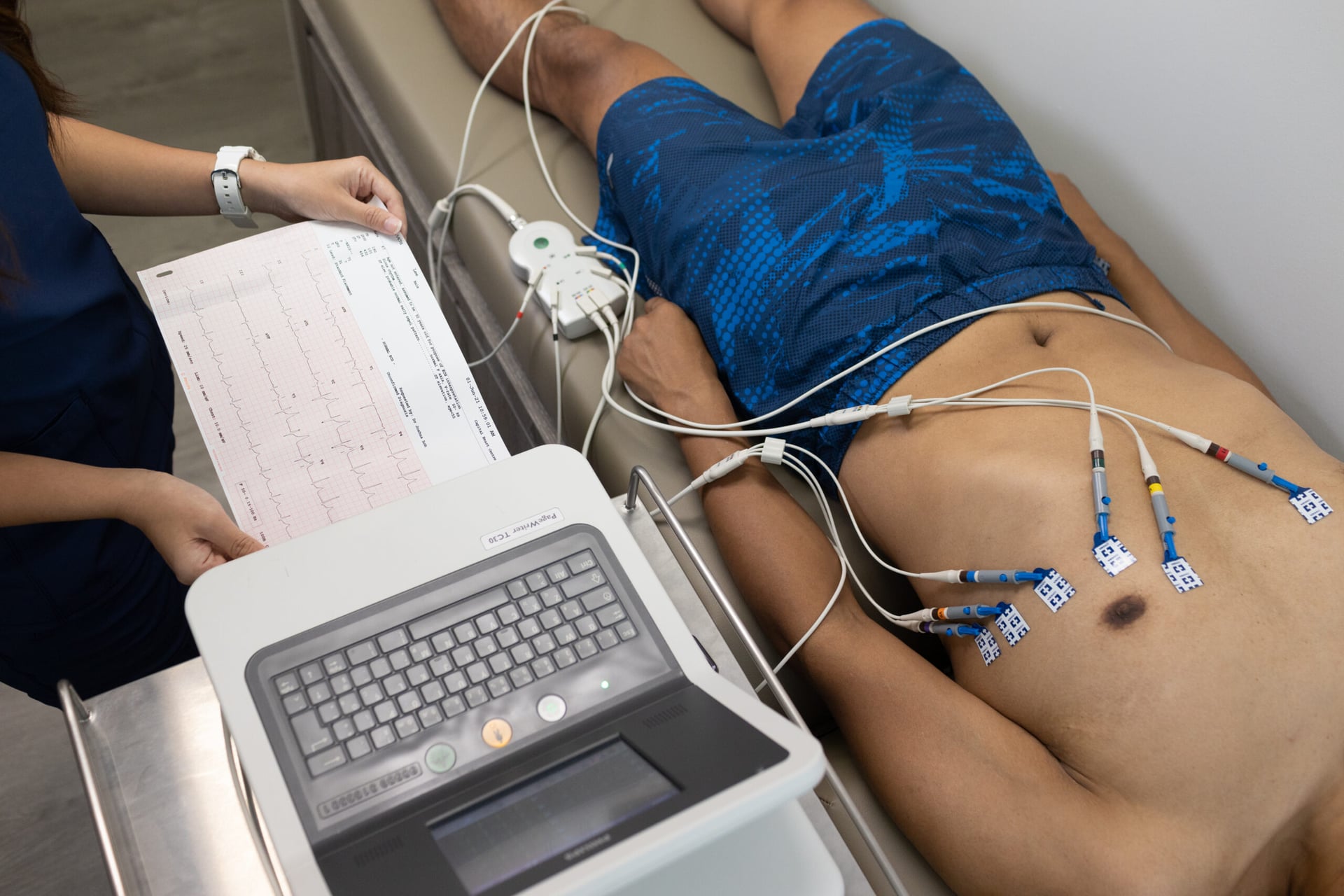
Artificial intelligence is turning one of medicine’s oldest, cheapest, and most common tests into a far more powerful early-warning system for serious heart disease.
An electrocardiogram (ECG) is a quick recording of the heart’s electrical activity, performed roughly a billion times a year worldwide. Doctors already use it to spot rhythm problems and some signs of a heart attack. Until now, however, it could not reliably reveal structural problems such as heart failure (when the heart muscle weakens and struggles to pump) or leaky or narrowed valves. Those conditions normally require an echocardiogram (ultrasound of the heart) which is more expensive, takes longer and often involves waiting lists that span months.
At the European Society of Cardiology’s annual congress in Munich at the end of August, Dr. Ahmed El-Medany, a British Heart Foundation research fellow at Imperial College London, presented work showing that AI can extract those structural signals from a routine ECG. His team trained computer models on millions of hospital ECG recordings and then tested them on tens of thousands of patients in the United States. The AI correctly flagged up to four in five people who had heart failure and up to 90 per cent of those with significant valve disease.
The practical point is not to replace ultrasound. It is to decide who needs one most urgently and to catch disease on ECGs that were ordered for completely different reasons such as chest pain, pre-operative checks, or routine monitoring. Patients judged high-risk by the AI could be moved to the front of the echocardiogram queue instead of waiting months, allowing earlier treatment that can slow progression, reduce hospital admissions and save lives. The same models could also run automatically across every ECG performed in a hospital, quietly identifying people whose heart problems have not yet been suspected.
El-Medany noted that the approach is not limited to large hospital machines. Imperial is already running a smaller prospective NHS study in London and Bristol to test the technology in real-world settings. The next technical step is embedding the AI into compact, portable ECG devices that nurses and doctors can carry, and potentially even into home or community settings.
This is the latest chapter in a longer programme of work at Imperial rather than a sudden breakthrough. The same group has previously shown that AI can read an ECG to estimate the risk of future valve leaks, complete heart block, and early death. That research has been spun out into a company, Cardiovolt.ai, aimed at turning these “superhuman” readings into tools that can be used at scale. Parallel efforts elsewhere show the expanse of these ambitions. A large New York model called EchoNext, evaluated in a Nature study last year, detected multiple forms of structural heart disease from ECG traces and outperformed cardiologists in controlled tests.
The broader context at the ESC Congress itself was the growing centrality of AI, from image analysis to risk scoring. The Imperial ECG work fits a clear strategy — start with tests that are already routine and widely available, extract more clinically useful information from them, and thoroughly check whether the gains hold up outside research settings.
Read more: Breath Diagnostics advances pre-op pneumonia screening with FDA breakthrough designation
Follow Rowan Dunne on LinkedIn
rowan@mugglehead.com