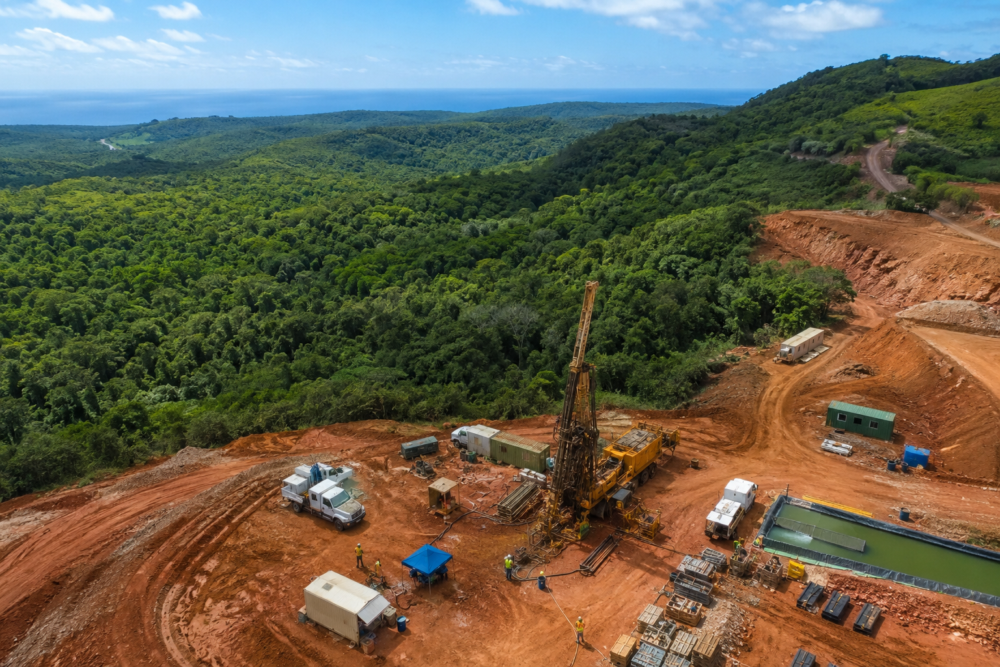

The United States is expanding its effort to secure critical mineral supplies outside China by supporting a rare earth project in Madagascar that could eventually feed Western processing facilities and manufacturers.
The U.S. International Development Finance Corporation announced on Wednesday that it has committed up to USD$4.48 million to help advance the Ampasindava Rare Earths Project, owned by Harena Rare Earths (LSE: HREE).
The funding will support pilot plant operations, laboratory testing and environmental programs during the project’s early development. The investment also lays the foundation for potential future financing for the estimated USD$150 million mine.</p>
Additionally, a U.S. State Department spokesperson said the initiative fits Washington’s broader strategy to expand U.S.-aligned investment across Africa’s mining industry. The spokesperson indicated the United States wants to strengthen supply chains that have long depended on competitors with significant influence in the region.
Furthermore, Africa has become a key source of minerals needed for electric vehicles, renewable energy systems and defence technologies. Chinese companies have established dominant positions in many African copper, cobalt and lithium projects over the past decade.
However, Western governments have accelerated efforts to secure alternative sources of critical minerals as demand continues to grow. Madagascar has attracted increasing attention because it holds substantial deposits of graphite, nickel and rare earth elements.
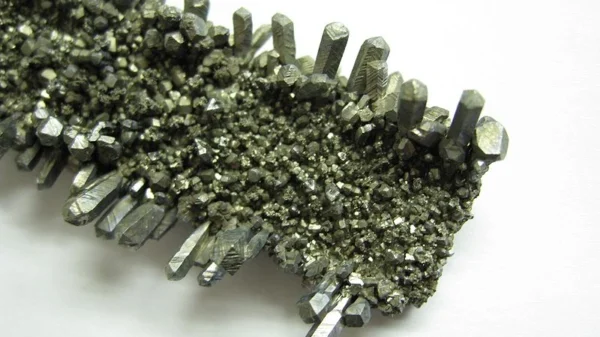
The Ampasindava ionic clay deposit contains neodymium, praseodymium, dysprosium and terbium. Manufacturers use those rare earth elements to produce permanent magnets found in electric vehicles, wind turbines, consumer electronics and advanced military equipment.
Read more: NevGold pushes toward potential 2027 antimony production at Limousine Butte
Read more: NevGold reports more positive drill results as gold-antimony resource estimate nears
The United States has expanded domestic efforts
Harena expects the operation to produce about 4,000 metric tons of rare earth oxides each year. That output would include roughly 1,700 metric tons of higher-value magnet rare earths.
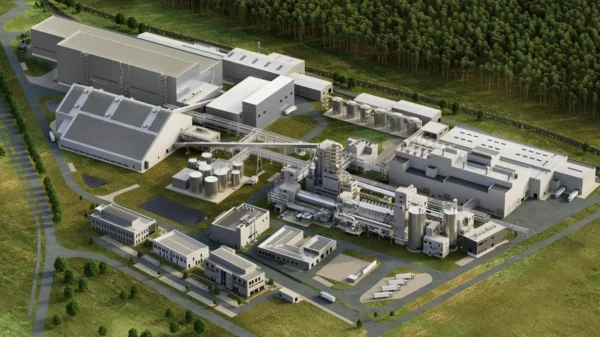
The company is evaluating processing options in the United States and Europe. Potential refining partners include MP Materials Corp. (NYSE: MP), USA Rare Earth (NASDAQ: USAR) and Solvay SA (EBR: SOLB).
Furthermore, the DFC’s current commitment represents only early-stage funding. The support could help attract substantially larger investments as the project advances through development and permitting.
Meanwhile, the United States has also expanded domestic efforts to rebuild its own rare earth supply chain through new mining, processing and refining projects. Washington has increased financial support and policy incentives to reduce reliance on foreign suppliers while strengthening production capacity for industries tied to energy, technology and national security.
The Trump administration has also paired overseas investments with a push to accelerate domestic critical mineral production through the FAST-41 program.
Designed to increase permitting transparency, the program has become a key tool for advancing strategic mining projects. This includes Perpetua Resources Corp (TSE: PPTA) (NASDAQ: PPTA). The company’s Stibnite Gold Project in Idaho completed its federal environmental review under the FAST-41 framework.
Additionally, rising antimony prices and concerns over supply security have prompted several gold explorers to re-evaluate deposits containing both metals.
Companies have increasingly promoted antimony as a strategic by-product that could support North American supply chains. Furthermore, among them is NevGold Corp. (CVE: NAU) (OTCMKTS: NAUFF), which has repositioned its Limo Butte project in Nevada as a gold-antimony asset. It did this by identifying a sizeable antimony resource alongside its oxide gold mineralization.
NevGold Corp is a sponsor of Mugglehead news coverage
.