
SOND, a sleep tech company based in Boston, is formally launching its flagship product.
The company has introduced Dreambuds, a new pair of smart sleep headphones with advanced health monitoring capabilities. The news coincides with US$7 million in seed funding — as reported by TechCrunch this week after an interview with SOND leaders. SOND is also currently engaged with a Kickstarter crowdfunding campaign.
This is a common strategy for hardware startups. The investor money supports early work like design and testing while Kickstarter funds help pay for manufacturing the first units, bringing in customer orders and creating buzz.
Early SOND investors included Boston Scientific co-founder John Abele, the MIT-affiliated E14 Fund, Crosslink Capital, Ubiquity Ventures, Alumni Ventures and Meach Cove Capital.
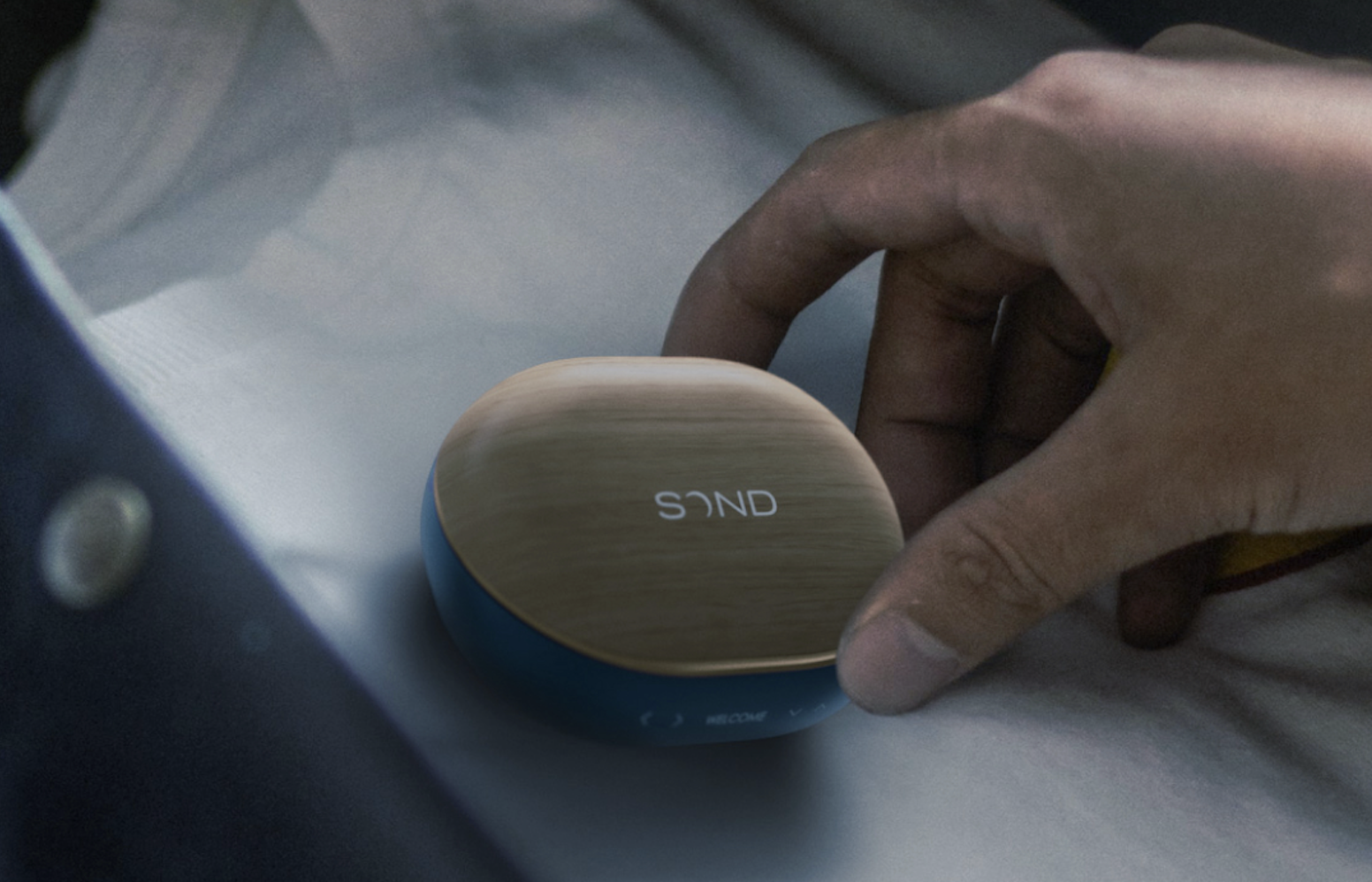
The Dreambuds are small earbuds that people wear throughout the night. They track many body signals in real time, including breathing, heart rate, snoring, body position and heart vibrations. This data then goes to the cloud, where AI chooses the best sleep-inducing sounds to play for the user from SOND’s library of music, stories and soundscapes.
The headphones do more than block noise or show sleep data in the morning like others on the market. They actively work to make sleep better by continually responding to the user’s body.
Co-founders Yadid Ayzenberg and Amir Lazarovich created SOND in 2022. Yadid previously led sleep products at Bose. Amir is a former Google software engineer. Both are MIT graduates who met more than ten years ago. Yadid left Bose after the company stopped working on sleep devices. He wanted to build something more advanced.
Early backers can get the earbuds at a lower price. The company plans to start mass production in the second quarter of 2026.
Read more: Finnish sleep tech ring maker ŌURA prepares to go public
Dreambuds are a novel addition to the family
SOND’s technology stands out because it uses many sensors and gives real-time help with smart sounds. The Dreambuds’ main advantage is active sleep coaching throughout the night.
As a new product, their long-term comfort, battery life and real-user results are not yet proven. The price is also on the high side at US$449 for early birds.
Ozlo Sleepbuds, another top in-ear sleep tech gadget, are good at blocking noise and tracking basic sleep data but do not offer real-time assistance like SOND. Many users like the comfort, but some report pairing or charging problems.
Another brand involved with this tech niche, Soundcore, offers affordable sleep earbuds with strong active noise cancellation. The company’s Sleep A30 Special product uses a triple noise reduction system to block outside sounds and reduce snoring effectively. Many users like them for side sleeping because of their comfortable, low-profile fit. They offer good value, solid battery life and are capable of basic sleep monitoring, but they do not have advanced body sensors or real-time AI coaching.
In addition, NextSense Smartbuds measure brain waves accurately and can boost deep sleep. They excel at brain data, but they work only with iPhones, require a subscription after the trial and come at a high cost.
The sleep earbud market is competitive. Each option has strengths and weaknesses. SOND’s Dreambuds sound as though they may be the most advanced, but user feedback is still needed.
Read more: English school develops vibrating pillow sleeve to warn deaf people of night dangers
Follow Rowan Dunne on LinkedIn
rowan@mugglehead.com