
The race to secure minerals for artificial intelligence infrastructure is pushing governments and companies into the Pacific Ocean. A growing group of firms now wants to harvest metal-rich rocks from the seabed as the United States seeks alternatives to Chinese-controlled supply chains.
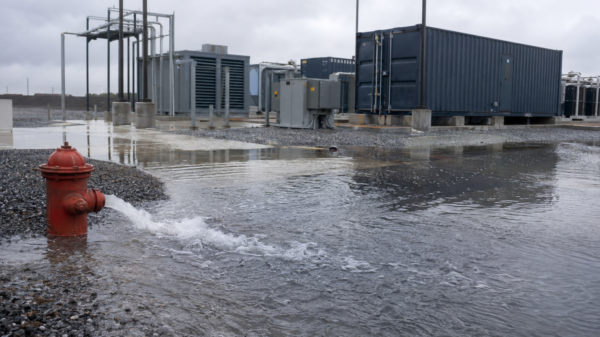
Demand for copper, cobalt, nickel and rare earth elements has surged alongside the global AI expansion. Additionally, major data centres require enormous amounts of raw materials for power systems, cooling equipment and battery storage. Microsoft’s (NASDAQ: MSFT) Chicago AI facility alone reportedly needed about 2,100 tonnes of copper during construction.
China currently dominates much of the global mineral processing market. According to the International Energy Agency, the country leads refining capacity for 19 of the world’s 20 most strategically important minerals and controls an average market share near 70 per cent.
Consequently, U.S. officials increasingly view mineral dependence as both an economic and national security concern. President Donald Trump responded earlier this year by signing an executive order directing federal agencies to pursue deep-sea resource exploration and development.
Several American companies have already started positioning themselves for the emerging industry. Among them is American Ocean Minerals, which is pursuing a USD$1 billion merger with Odyssey Marine Exploration (NASDAQ: OMEX) and recently appointed former Rio Tinto Group (NYSE: RIO) (ASX: RIO) chief executive Tom Albanese to lead the company.
The company recently secured a research licence covering part of the Cook Islands’ exclusive economic zone in the South Pacific. Furthermore, Albanese said the region could contain mineral resources capable of supplying industries for generations.
Read more: NevGold reports more positive drill results as gold-antimony resource estimate nears
Read more: NevGold positions Nevada project for near-term antimony output
Authority estimates 6.7B metric tonnes of polymetallic nodules
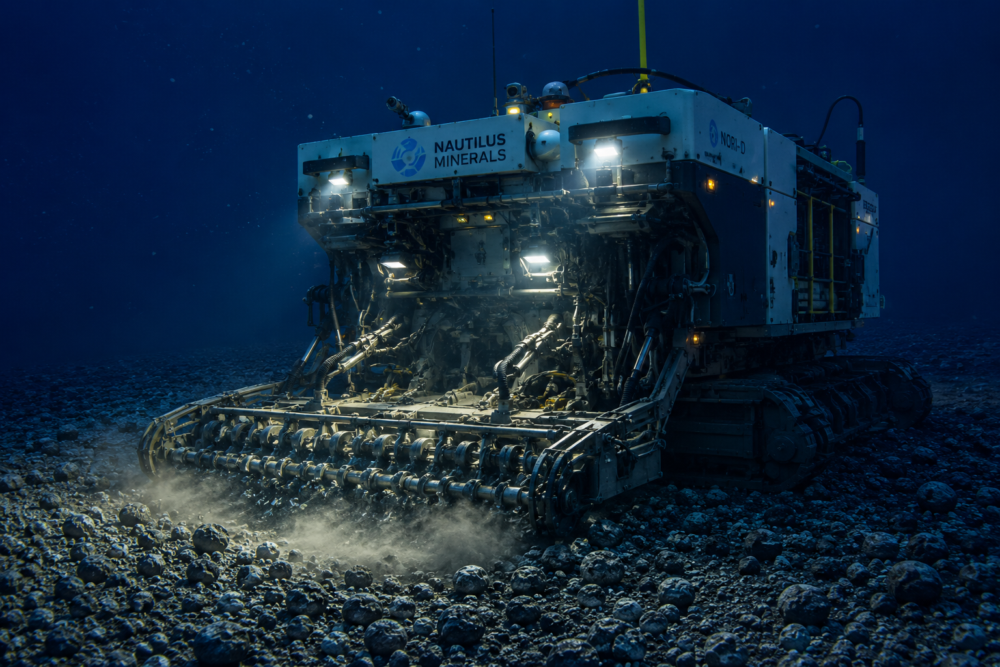
The targeted resources are known as polymetallic nodules, or PMNs. These potato-sized rocks form over millions of years as metallic layers build around objects resting on the ocean floor.
The nodules primarily contain manganese and iron. However, they also carry commercially valuable quantities of nickel, cobalt, copper and rare earth elements.
The Cook Islands’ economic zone spans more than 770,000 square miles across the Pacific Ocean. Albanese said the seabed appears heavily covered with nodules throughout the region.
Meanwhile, the Cook Islands Seabed Mineral Authority estimates the area contains about 6.7 billion metric tonnes of PMNs. The authority also estimates the region holds roughly 20 million metric tonnes of cobalt.
That figure equals roughly 100 times the Democratic Republic of Congo’s annual cobalt production. China currently controls much of the Congo’s cobalt output through mining and processing interests.
Mining companies and policymakers argue these seabed resources could reduce Western dependence on China. Additionally, they believe domestic or allied supply chains could strengthen industrial resilience as AI infrastructure expands globally.
Commercial deep-sea mining operations have not yet started anywhere in the world. The International Seabed Authority, which regulates ocean mineral activities, still has not approved any company for commercial extraction.
A recent authority meeting ended without agreement on mining rules. Consequently, uncertainty continues to slow investment decisions across the emerging industry.
Environmental concerns also continue attracting international attention. A coalition of 40 countries now supports a moratorium on deep-sea mining until scientists better understand the ecological risks.
Some Pacific island nations have pushed for a complete ban instead. Furthermore, researchers continue discovering new species throughout deep ocean ecosystems targeted for future mining activity.
Read more: NevGold raises up to CAD$25M to fast-track Limo Butte development
Read more: NevGold pushes toward potential 2027 antimony production at Limousine Butte
Supporters argue the practice may be less destructive than land mining
Last year, the Ocean Exploration Trust conducted a research expedition around the Cook Islands seabed. Scientists involved with the mission reported finding numerous unknown creatures living in the deep ocean environment.
Researchers warn industrial mining equipment could severely disrupt those habitats. Additionally, sediment plumes and underwater noise may spread far beyond active mining zones.
A separate report from the American Museum of Natural History estimated deep-sea mining machinery could reduce animal abundance by 37 per cent in the Clarion-Clipperton Zone. The Pacific region also contains large concentrations of polymetallic nodules.
Supporters of seabed mining argue the practice may still prove less destructive than conventional land mining. Land-based operations often cause deforestation, toxic runoff and major habitat damage.
Additionally, some mineral operations in the Democratic Republic of Congo have faced accusations involving forced labour and unsafe working conditions. Industry advocates argue alternative supply sources could reduce reliance on those operations.
The International Energy Agency expects mineral demand to continue rising sharply through the next two decades. The organization estimates demand for nickel, cobalt and rare earth elements could more than double by 2040.
Albanese said the United States still benefits from maintaining commercial ties with China. However, he warned that excessive dependence on Chinese-controlled mineral supply chains creates long-term strategic risks for Western economies.
.