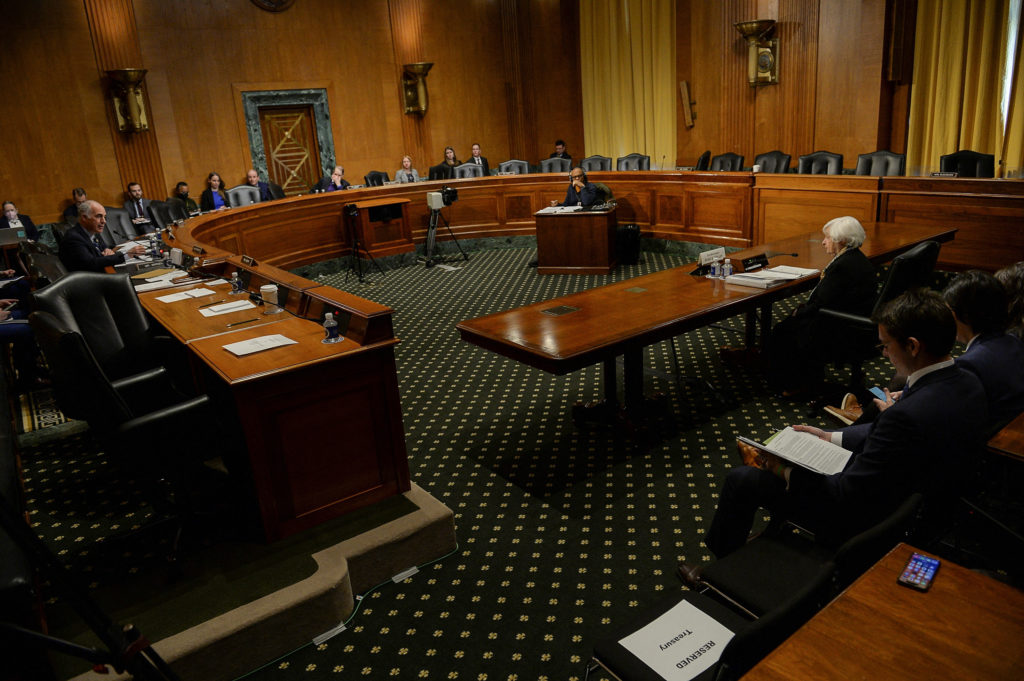

More than 100 proposed amendments to a sweeping U.S. crypto market structure bill have intensified a political fight in Washington ahead of a key Senate committee hearing this week.
Lawmakers from both parties now want changes covering stablecoins, decentralized finance, ethics rules and central bank digital currencies as the Senate Banking Committee prepares to debate the legislation on Thursday.
The bill, known as the Clarity Act, would create the first broad federal regulatory framework for digital assets in the United States. Additionally, lawmakers expect the legislation to shape how crypto companies operate, how stablecoins are regulated and how federal agencies oversee the industry.
Sen. Jack Reed filed nearly 20 amendments before the committee hearing. Furthermore, several of those proposals target language involving stablecoin rewards and banking protections.
One of the biggest disputes involves whether stablecoin issuers should offer rewards or yield-like incentives to users. Banking groups have warned lawmakers that such products could pull deposits away from traditional banks. Consequently, negotiators recently agreed on language that would restrict firms from paying interest-like rewards simply for holding stablecoins.
Sens. Angela Alsobrooks and Thom Tillis introduced compromise wording after discussions with lawmakers, the White House, banking groups and crypto companies. However, Reed wants to revise the language further by tightening how regulators define reward programs that resemble bank interest payments.
The latest draft of the legislation appeared Monday night before Thursday’s planned markup session. During that process, senators can debate amendments and vote on changes before advancing the bill. Additionally, committee markups rarely approve large numbers of amendments, though lawmakers still use them to signal priorities and pressure negotiators.
Read more: MARA doubles down on bitcoin mining while expanding AI infrastructure strategy
Read more: Tennessee bans Bitcoin ATMs as fraud targeting seniors surges
Anti-CBDC language became a major issue
Several Democrats also pushed for stronger crypto enforcement measures. Sen. Andy Kim proposed restoring the National Cryptocurrency Enforcement Team, a Justice Department unit created in 2021 to investigate major crypto crimes.
That enforcement team previously worked on cases involving Tornado Cash and the Mango Markets exploit before officials dissolved it in 2025. Furthermore, supporters of the amendment argue the federal government still needs specialized crypto investigators as digital asset markets expand.
Republican lawmakers introduced amendments focused on limiting federal digital currency initiatives. Sen. Bill Hagerty filed a proposal that would block the Federal Reserve from creating a central bank digital currency, commonly called a CBDC.
The Federal Reserve has repeatedly stated it would not launch a CBDC without congressional approval. However, many Republicans remain skeptical about government-issued digital money and believe it could expand federal financial surveillance.
Anti-CBDC language became a major issue during previous House negotiations over crypto legislation. Additionally, some conservatives argued that any crypto framework bill should explicitly prohibit the Federal Reserve from issuing digital dollars.
Lawmakers also filed amendments connected to decentralized finance, commonly called DeFi. Sen. Mark Warner introduced a proposal directing the Treasury Department to clarify how groups controlling DeFi trading platforms should comply with securities laws.
Warner’s amendment targets situations where individuals or coordinated groups effectively control platforms that claim to operate without centralized management. Furthermore, regulators have increasingly argued that some DeFi projects still function like traditional financial companies despite decentralization claims.
Reed separately proposed removing the Blockchain Regulatory Certainty Act from the broader legislation. That measure would clarify that non-custodial software developers do not qualify as money transmitters under federal law.
Read more: Lawmakers close in on stablecoin rules amid banking sector resistance
Read more: Cipher Digital pushes deeper into AI hosting as bitcoin revenue declines
Ethics concerns have become a central issue during negotiations
DeFi advocates strongly support the provision because they believe developers should not face liability for software users’ activities. However, critics argue the exemption could weaken anti-money laundering enforcement and create loopholes for illicit transactions.
Sen. Elizabeth Warren filed dozens of amendments before the hearing. Additionally, one proposal would block the Federal Reserve from issuing master accounts to certain uninsured institutions involved with digital assets.
Warren has frequently criticized the crypto sector and warned that weak regulation could threaten consumers and financial stability. Meanwhile, crypto industry supporters argue that the legislation would finally provide clear federal rules for businesses operating in the United States.
An unnamed crypto industry source criticized many of the proposed amendments and claimed several lawmakers misunderstand the underlying technology. The source also argued that excessive regulation could drive innovation overseas instead of keeping development within the United States.
Ethics concerns have also become a central issue during negotiations surrounding the bill. Additionally, lawmakers from both parties have focused attention on President Donald Trump’s growing ties to crypto-related ventures.
According to Bloomberg estimates referenced in the debate, Trump and his family have generated at least USD$1.4 billion from crypto-related projects since his inauguration. Several of those ventures reportedly involve projects connected to World Liberty Financial.
Sen. Chris Van Hollen introduced an amendment that would prevent presidents, vice presidents and other federal officials from owning or promoting digital assets while serving in office. Furthermore, ethics language has emerged as one of the most contentious aspects of the negotiations.
Read more: Payward targets U.S. crypto derivatives market with USD$550 million Bitnomial deal
Read more: Canaan scales Ethiopia operations past 5 EH/s as global mining network grows
Democrats attempted to add ethics restrictions earlier
Sen. Kirsten Gillibrand recently warned at the Consensus Miami conference that lawmakers would not support the bill without meaningful ethics provisions. Warren also argued Tuesday that the legislation could intensify conflicts of interest involving Trump’s crypto activities if Congress fails to impose safeguards.
Democrats on the Senate Agriculture Committee previously attempted to add similar ethics restrictions earlier this year. However, negotiators ultimately removed those provisions before the committee advanced its version of the legislation in January.
Senators reportedly met privately Tuesday to negotiate potential ethics compromises before Thursday’s hearing. Additionally, Sen. Cynthia Lummis said discussions were progressing and suggested Trump would ultimately need to support the final language.
Lummis warned that Trump could reject the bill if lawmakers specifically target him through ethics provisions. She nevertheless said the president generally supports the broader concept behind the Clarity Act.
Crypto industry organizations publicly backed the updated bill ahead of the committee hearing. Coinbase Global Inc. (NASDAQ: COIN) chief policy officer Faryar Shirzad described the latest version as a strong compromise resulting from extensive negotiations among stakeholders.
Sen. Tim Scott also defended the legislation and argued it would improve accountability while supporting financial innovation inside the United States. Furthermore, the Blockchain Association and the Crypto Council for Innovation jointly urged lawmakers to advance the bill during the markup session.
Summer Mersinger, chief executive of the Blockchain Association, described the committee vote as a defining moment for American digital asset leadership. She also said lawmakers had spent months negotiating bipartisan compromises reflected in the latest draft.
.