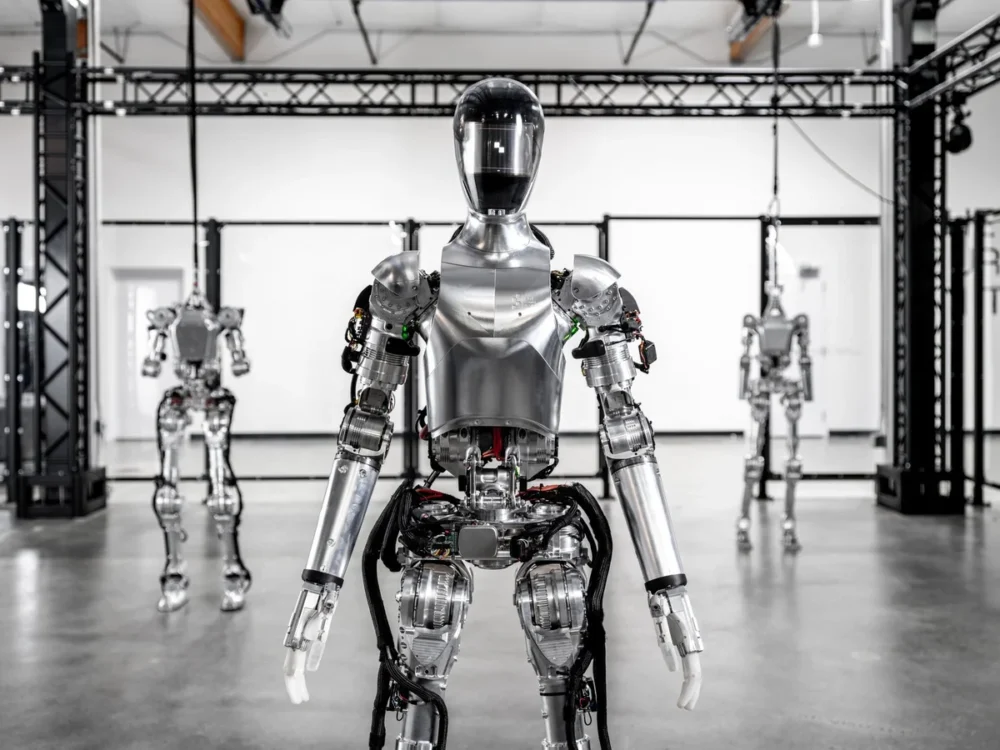

A humanoid robot outran the human half-marathon world record at a Beijing event, signaling rapid gains in robotics performance.
Developed by Chinese robotics firm, Honor, the machine completed the 21 kilometre race in 50 minutes and 26 seconds on Sunday, according to organizers in Beijing E-Town.
Meanwhile, that time beat the roughly 57 minute benchmark set by Ugandan runner Jacob Kiplimo earlier this year in Lisbon.
Additionally, the result marked a dramatic improvement from last year’s inaugural robot race, where the fastest machine took over two hours. Organizers said the event paired human runners with machines to showcase real world endurance and navigation capabilities. However, several robots still struggled during the race, with one falling at the start and another colliding with a barrier.
Engineers from Honor said the company designed the robot with proportions similar to elite human runners. The machine used long legs measuring about 95 centimetres and relied on an advanced liquid cooling system. Furthermore, the team developed much of the cooling technology internally to manage heat during sustained movement.
A company engineer said the team felt satisfied with the outcome and pointed to future industrial applications. Additionally, he suggested that structural reliability and cooling systems could transfer into manufacturing and heavy duty robotics. The robot’s performance also drew strong reactions from spectators attending the event.
One attendee said he noticed major improvements compared with last year’s competition and found the pace surprising. Meanwhile, another spectator said the robots appeared to dominate attention and seemed faster than human runners. He added that the performance could signal a shift toward a new technological era.
Read more: China builds robot training centres to push humanoids into real-world jobs
Read more: New AI model allows farm robots to identify and kill unfamiliar weeds instantly
China continues to position robotics as strategic industry
Organizers reported that about 40 per cent of participating robots navigated the course autonomously. However, the remaining machines relied on remote control for guidance and adjustments during the race. A separate remotely controlled robot from Honor reportedly crossed the finish line even faster, clocking 48 minutes and 19 seconds.
However, officials awarded the title to the autonomous robot under the event’s scoring system. Additionally, runners up robots, also built by Honor, finished the race in about 51 and 53 minutes. State broadcaster CCTV said a robot also acted as a traffic officer, directing runners using gestures and voice commands.
Meanwhile, China continues to position robotics as a strategic industry amid competition with the United States. The country’s latest five year plan calls for accelerated development in advanced technologies, including humanoid robots. Furthermore, policymakers aim to expand practical applications across industrial and commercial sectors between 2026 and 2030.
Research firm Omdia recently ranked several Chinese robotics companies among the global leaders in embodied intelligent machines. Additionally, firms such as AGIBOT, Unitree Robotics and UBTech Robotics shipped more than 1,000 units each last year. The first two companies delivered more than 5,000 units, according to the report.
Consequently, the Beijing race offered a public demonstration of how quickly performance levels are advancing. Engineers continue to refine balance, endurance and autonomy in increasingly realistic environments. Furthermore, the combination of mechanical design and software control remains central to improving outcomes in future competitions and deployments.
Read more: Boston Dynamics turns to AI to make humanoid robots safer around people
Read more: US presses scrutiny of Chinese humanoid robots as competition intensifies
Market reached over $47B in 2024
Additionally, the race serves as more than a spectacle, offering a glimpse into the scale of a rapidly expanding global industry. As humanoid robots move from prototypes into real world deployment, analysts increasingly view them as a cornerstone of future automation and economic competition.
The numbers already point to significant momentum. According to International Data Corporation, global humanoid robot shipments reached roughly 18,000 units in 2025, rising more than 500 per cent year over year. Additionally, China accounted for the bulk of that growth, with domestic manufacturers scaling production far faster than Western competitors, according to industry reporting.
Meanwhile, broader robotics demand continues to expand. A study cited by the Center for Strategic and International Studies estimated China’s overall robotics market reached about USD$47 billion in 2024 and could grow at roughly 23 per cent annually through 2028. Furthermore, humanoid robots represent a smaller but rapidly accelerating segment within that total.
Market forecasts suggest that acceleration will continue. Industry analysis from Stellar Market Research valued the global humanoid robot market at about USD$3.04 billion in 2025 and projects it could reach nearly USD$25.93 billion by 2032, implying annual growth above 35 per cent. Consequently, analysts expect deployment to expand beyond research settings into logistics, manufacturing and service roles.
Additionally, shipment data reinforces that shift toward commercialization. Chinese industry estimates place domestic humanoid robot shipments between roughly 13,000 and 20,000 units in 2025, with a growing share exported globally, according to sector analysts.
.