Artificial Intelligence backlash intensifies as job losses mount and public trust declines
Researchers noted that improving one aspect of AI, such as safety, can weaken another, such as accuracy
 Joseph Morton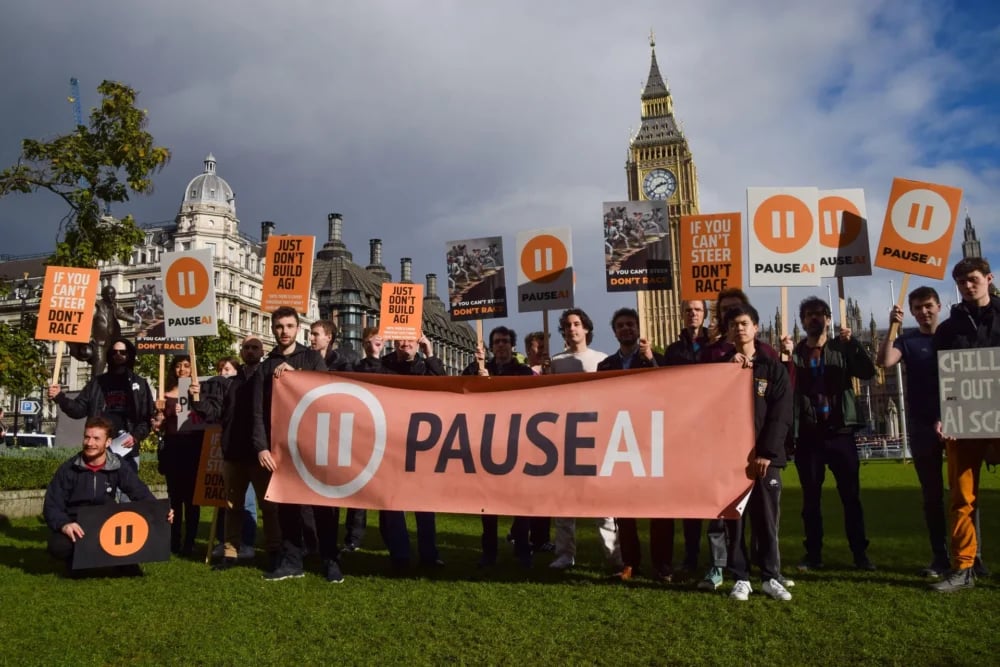
Public anxiety over artificial intelligence is rising as the technology spreads rapidly across workplaces and daily life, according to new research and labour data.
More than half of respondents in Stanford University’s 2026 AI Index Report, released on Monday, said AI products make them feel nervous. Additionally, enthusiasm for the technology has declined in recent years.
The report found a widening gap between public opinion and expert views on artificial intelligence. Furthermore, many people fear AI will disrupt jobs, economies, elections and personal relationships. Concerns about AI safety are also growing as the technology advances. Incidents tied to AI systems have more than tripled since 2022.
Researchers noted that improving one aspect of AI, such as safety, can weaken another, such as accuracy. Consequently, developers face trade-offs that complicate efforts to build reliable systems. Meanwhile, younger people are showing some of the sharpest shifts in sentiment. A recent Gallup poll found Gen Z excitement about AI dropped to 22 per cent from 36 per cent last year.
Anger among that group has also increased, rising to 31 per cent. Additionally, frustration appears tied more to real-world impacts than distant fears about superintelligent machines. A behavioural scientist said many industry leaders misread public concerns about AI. Instead of worrying about science fiction scenarios, people are focused on wages, bills and job security.
Workplace disruption is a major driver of that anxiety. Generative AI tools are changing how companies operate at a rapid pace. A workplace consultant said the speed of change is creating uncertainty for workers. Consequently, many people struggle to predict how their roles may evolve or disappear.
Read more: Artificial intelligence reshapes cancer diagnosis from detection to prediction
Read more: AI movie trailers for ‘Titty Killer’ saga pull millions of views on X
Investors continue to bet heavily on AI
Generative AI differs from earlier systems because it produces content rather than just analyzing data. Additionally, it can replace repetitive tasks once handled by human workers. Data from research firm, Challenger, Gray and Christmas, shows AI contributed to 54,000 job cuts in 2025. Furthermore, about 30 per cent of workers fear losing their jobs to AI systems.
These fears echo earlier periods of technological upheaval. During the Industrial Revolution, workers also faced uncertainty as machines replaced traditional jobs. However, history suggests new industries can emerge from disruption. Over time, earlier technological shifts created economic growth and new forms of employment.
Investors continue to bet heavily on AI despite public unease. U.S. private and venture capital investments reached USD$109 billion in one year and USD$194 billion the next. Additionally, those investments signal strong confidence in AI’s long-term economic potential. Companies are unlikely to commit that level of funding without expecting returns.
Adoption of generative AI is also accelerating across the workforce. About 28.3 per cent of working-age Americans used generative AI in the second half of 2025. That figure is well above the global average of 16.3 per cent. Meanwhile, usage continues to expand as tools become more accessible.
AI has not only displaced jobs but also created new ones. Roughly 280,000 roles tied to generative AI emerged last year.
These jobs include positions in data analysis, AI training and ethics oversight. Additionally, many of these roles did not exist before the technology matured. Workers who use AI tools are also becoming more productive. In many cases, employees complete tasks faster without increasing their workload.
Read more: Creepy robo-dog with Elon Musk’s face scurries around San Francisco
Read more: YouTube bans Iranian channel over Lego-style AI vids critical of Trump
Backlash has escalated into real-life violence
This productivity boost can benefit people without advanced degrees or extensive experience. Consequently, AI may help level certain barriers in the job market. Despite these benefits, backlash against AI development is intensifying. Online communities calling for pauses in development have grown in recent months.
Some of that backlash has escalated into real-world incidents. Authorities reported two alleged attacks targeting the home of OpenAI chief executive Sam Altman. One incident involved a Molotov cocktail, while another involved a firearm. Meanwhile, investigators are still examining the circumstances surrounding those events.
The incidents reflect a broader trend of rising tension around AI development. Additionally, they show how economic fears can spill into public anger. Experts say uncertainty remains the central issue driving concern. Workers, voters and consumers are trying to adapt to a technology that is evolving quickly.
Consequently, the debate over AI is shifting toward practical impacts rather than theoretical risks. People are asking how it will affect their income, careers and daily lives.
.