
NevGold Corp (CVE: NAU) (OTCMKTS: NAUFF) (FRA: 5E50) reported new drill results this week that expand gold and antimony mineralization at its Limousine Butte project in Nevada.
The company said on Thursday that step out drilling delivered high grade oxide antimony and confirmed a new geological model that opens a much larger target area.
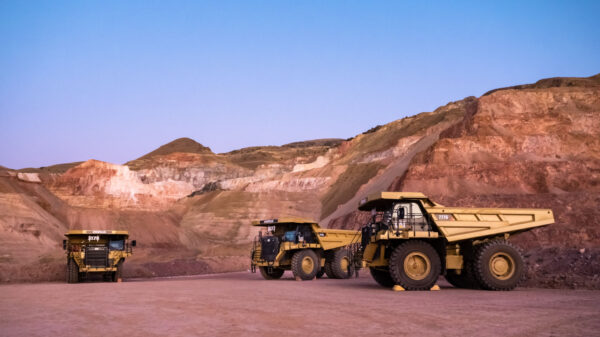
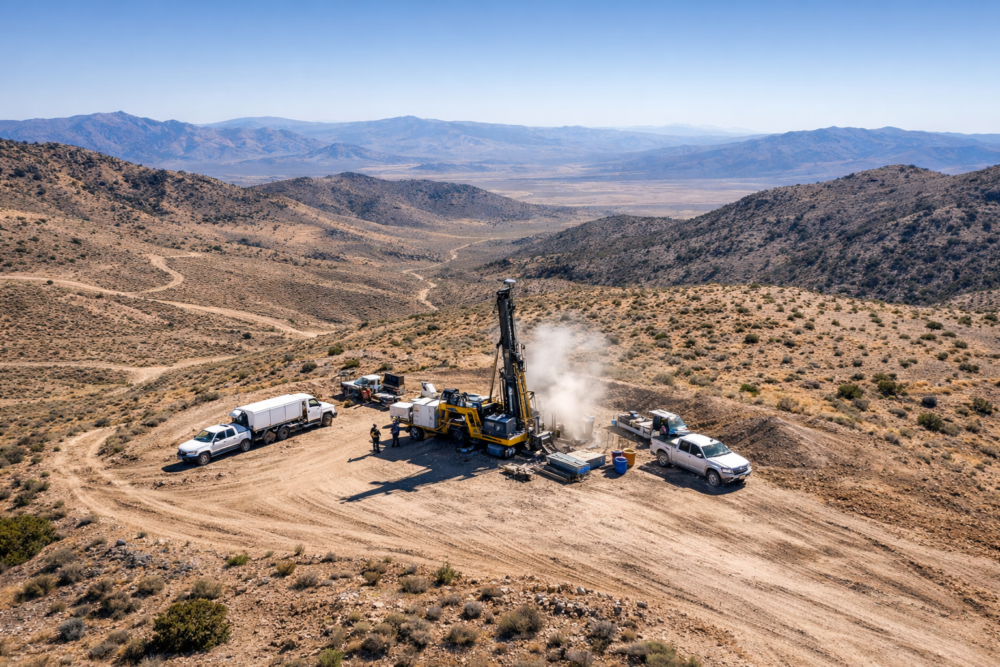
The latest results come from ongoing drilling at the Limousine Butte Project, often called Limo Butte, in northeastern Nevada. Additionally, the program forms part of NevGold’s push toward an initial gold antimony mineral resource estimate. Management said the new data materially increases confidence in both scale and continuity.
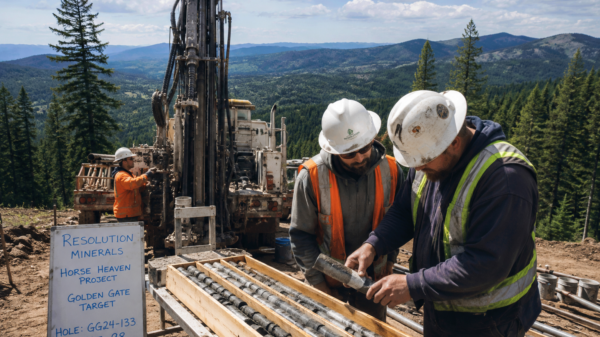
NevGold focused recent drilling on expanding mineralization around the Bullet Zone discovery at Resurrection Ridge. Further, the company tested new ground east of all prior drilling using a revised structural model. The approach aimed to find gold and antimony beneath an older dolomite unit.
One of the strongest intercepts came from hole LB25-018 in the Upper Zone. The hole returned 5.89 per cent antimony over 3.0 metres with 0.13 grams per tonne gold. Consequently, that interval equated to 23.01 grams per tonne gold equivalent over the same length.
The same hole cut a much broader mineralized interval from surface. It averaged 2.67 grams per tonne gold equivalent over 53.3 metres. Additionally, the company drilled the hole from a newly built pad more than 50 metres from the original Bullet Zone discovery.
Another expansion hole, LB25-010, also returned meaningful antimony grades. The Upper Zone delivered 1.00 per cent antimony over 4.5 metres. Further, that interval sat within 2.03 grams per tonne gold equivalent over 24.3 metres.
Read more: NevGold expands high grade antimony discovery at Nevada’s Limousine Butte Project
Read more: NevGold targets U.S. critical mineral supply chain with new antimony gold find
NevGold assumed 80% gold recovery
LB25-010 also intersected a lower mineralized zone. That section graded 1.07 grams per tonne gold equivalent over 7.6 metres. However, the hole ended in mineralization, prompting plans for deeper follow up drilling in 2026.
NevGold calculated gold equivalents using assumed prices of USD$3,000 per ounce for gold and USD$40,000 per tonne for antimony. Additionally, the company assumed recoveries of 80 per cent for gold and 75 per cent for antimony. These assumptions reflect current market conditions and metallurgical work completed to date.
Beyond Bullet Zone, the company reported a new oxide gold discovery at Resurrection Ridge. Step out drilling moved more than 150 metres east of all previous holes. Consequently, the results extended the mineralized footprint into an area earlier explorers left untested.
Hole LB25-012 returned 1.03 grams per tonne gold equivalent over 21.3 metres. That interval included 0.71 grams per tonne gold and 0.08 per cent antimony. Additionally, the hole included 0.80 grams per tonne gold equivalent over 39.6 metres.
A second eastern step out hole, LB25-011, also encountered mineralization. It returned 0.87 grams per tonne gold equivalent over 7.6 metres. Further, that interval sat within a broader zone grading 0.34 grams per tonne gold equivalent over 54.8 metres.
Management said these eastern holes tested a new geological concept developed from recent work. Earlier operators believed erosion removed the prospective Pilot Shale in this area. However, NevGold’s model suggests thrust faulting preserved that unit at depth.
The Pilot Shale represents the main host rock for Carlin type gold systems at Limousine Butte. Additionally, the shale commonly carries antimony when silicification and jasperoid breccias occur. This association guided the company’s targeting strategy.
Read more: NevGold delivers major growth at Idaho gold project
Read more: GoldMining chooses to retain its NevGold shares for next 18 months
Antimony highest priority critical mineral
According to NevGold, all 2025 drill holes with assays intersected gold and antimony below the upper dolomite thrust plate. Consequently, each hole supported the revised geological interpretation. The Pilot Shale now appears to extend more than one kilometre east of prior drilling.
The company completed 30 drill holes so far in its 2025–2026 program. Meanwhile, additional assays remain pending from several holes. Management expects those results to further define high priority zones.
NevGold described antimony as one of the highest priority critical minerals due to strategic and military uses. In addition, the United States lists antimony as a supply constrained material. Limo Butte hosts near surface oxide antimony at a brownfield site, which could support faster development timelines.
Alongside drilling, NevGold advanced several parallel work streams at Limo Butte. The company completed evaluation of historical geological data with a focus on gold and antimony. Additionally, it finished Phase II metallurgical testing during the year.
The company also continues to advance crushed and run of mine leach pads toward potential near term antimony production. Phase I sampling finished earlier. Subsequently, NevGold engaged a sonic drill contractor to test the historical leach pads.
Management said metallurgical testing remains ongoing. Further, the company continues to compile data for an initial gold antimony mineral resource estimate. That work remains in progress.
Chief executive Brandon Bonifacio said the step out drilling materially expanded mineralization around Resurrection Ridge. He noted the results strengthened confidence in the new geological model. Additionally, he said every drilled hole in the Bullet Zone area found meaningful gold antimony mineralization.
Read more: NevGold expands Limo Butte footprint by staking 90 promising antimony gold claims
Read more: GoldMining chooses to retain its NevGold shares for next 18 months
Leach pad sampling adds development flexibility
Bonifacio also said the eastern step outs opened a large new area of oxide gold potential. He described the preserved Pilot Shale as a classic Carlin type structural trap. Consequently, the company sees substantial room for further expansion.
“All of our various work programs have demonstrated the quality of the antimony gold potential at Limo Butte, and we will continue to systematically advance the Project with the objective of playing a key part in the mandate to create a vertically integrated, U.S. antimony supply chain,” said Brandon Bonifacio.
Management believes the “under the upper dolomite” target extends another kilometre beyond current drilling. Further, the company plans follow up drilling in 2026 to test depth extensions and additional corridors.
NevGold said recent results from historical leach pad sampling added development flexibility. The company now sees optionality between exploration growth and potential near term production scenarios. Meanwhile, management continues to balance both pathways.
At a district scale, the revised model outlines multiple gold antimony corridors. These trends track outcrops and projected subsurface positions of the Pilot Shale. Additionally, repeated faulting appears to have focused mineralizing fluids along these horizons.
Historical records within the project area document two small antimony prospects. The Nevada Antimony Mine and the Lage Antimony Prospect both produced limited stibnite from shallow workings. These sites sit within the broader Limousine Butte district.
Rock chip sampling from the Golden Butte pit further supports antimony potential. A Brigham Young University thesis reported numerous samples exceeding 1 per cent antimony. Several samples graded above 5 per cent antimony, including one at 9.6 per cent with visible stibnite.
Read more: NevGold’s latest discovery represents near term antimony production potential
Read more: NevGold surges after closing C$10M financing deal
Company refines property wide controls
NevGold integrated these historical datasets with modern drilling, mapping, and surface sampling from 2021 through 2025. Consequently, the company refined property wide controls on mineralization. The work produced an updated district model now guiding exploration.
At Resurrection Ridge, Devonian–Silurian dolomite crops out immediately east of known mineralization. Earlier explorers assumed erosion removed the Pilot Shale there. However, NevGold’s reinterpretation indicates thrust repetition preserved the shale at depth.
The thrust geometry likely created structural preparation and fluid traps favourable for gold and antimony deposition. Additionally, this architecture matches classic Carlin type systems elsewhere in Nevada. The company continues to test this concept across the property.
NevGold said its 2025–2026 drill program remains active. Further drilling will continue to test high priority targets defined by the updated model. The company plans to release additional results as assays arrive.
.
NevGold Corp is a sponsor of Mugglehead news coverage
.