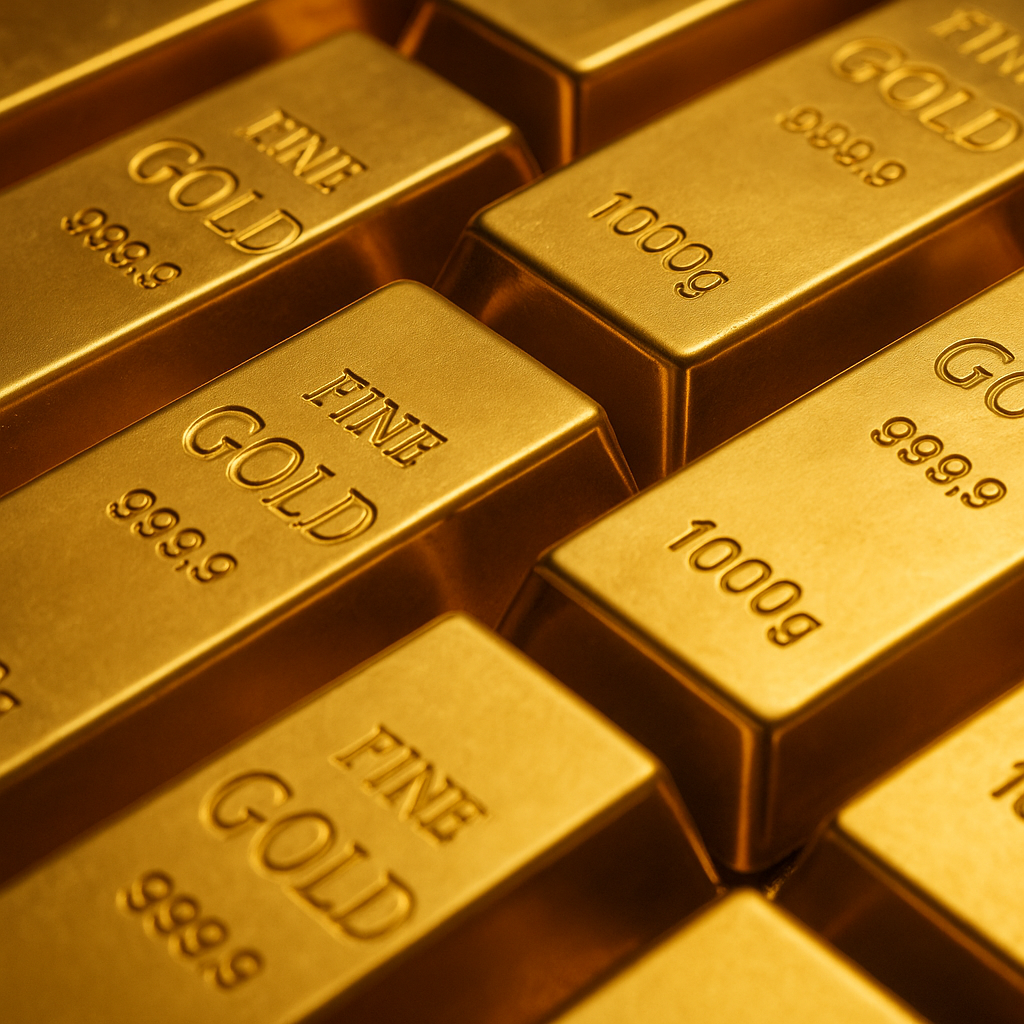

Gold’s record-breaking 2025 run has reshaped investor expectations for 2026 as geopolitical tension, a weaker dollar and heavy central-bank demand continue to steer the market, according to a report from the World Gold Council.
Released last Thursday, the report tracked the movements of the commodity throughout the year. It stated it surged through the year as traders responded to escalating global risks and persistent economic uncertainty.
Analysts say the rally has drawn strength from a rare mix of political tension, softer bond markets, and a flight toward safer assets. Many investors increased their exposure because they wanted stability. Central banks also expanded their gold purchases at a pace that remained well above long-term norms.
Market researchers point to a broad scramble for diversification. They say market conditions have encouraged investors to reduce risk and move toward assets that historically perform well when growth fades.
The World Gold Council’s modelling suggests that geopolitical risk explained roughly 12 percentage points of gold’s year-to-date return, with weaker rates and a softer dollar adding another 10 points. These forces helped produce one of gold’s strongest annual performances since 1971.
Investment demand grew across nearly all major regions. Additionally, steady global buying from central banks added persistent support through the year. Analysts say this dynamic created a balanced set of drivers rather than a single catalyst.
Gold’s positive momentum also played a larger role than usual because rising prices increased investor interest. The metal climbed sharply as traders responded to shifting expectations about economic growth and inflation.
Read more: NevGold’s latest Nevada drill results show exceptional gold mineralization
Read more: Antimony recovery results from NevGold’s Limo Butte project exceed expectations
World Gold Council forecasts point towards stable GDP growth
As markets look to 2026, traders face similar uncertainty and a landscape shaped by what analysts describe as a heavy geoeconomic environment. Economic data continues to send conflicting signals.
Furthermore, concerns about a softening US labour market have started to gain traction. Some analysts argue that inflation could stay elevated, while others warn of renewed pressure if global disruptions worsen. Meanwhile, political frictions remain present in multiple regions.
The World Gold Council says that current gold prices reflect a broad market belief that growth, inflation and monetary policy will follow expected patterns. Forecasts point toward relatively stable GDP growth, roughly 75 basis points of additional rate cuts from the US Federal Reserve, and a modestly stronger dollar.
Yields are projected to remain flat. These expectations create a rangebound scenario for gold, but analysts warn that markets rarely track consensus projections for long.
Experts say investors should consider several possible paths for gold as the year unfolds. These include a moderate slowdown, a deeper global downturn, or a surprisingly strong economic rebound driven by policy shifts from the Trump administration. Each scenario carries price implications.
A shallow economic slip remains a plausible possibility. Mixed US data has raised fears that momentum may be fading. As investors reassess risk, they often turn toward defensive assets.
Analysts say a potential reset in AI-driven equity valuations could amplify volatility, because technology companies hold weight in major indices. Additionally, a weaker labour market could cool consumer spending. These trends may push for rate cuts more quickly.
In this environment, gold could gain between 5 and 15 per cent through 2026. Lower rates and a softer dollar typically support gold.
Read more: NevGold targets U.S. critical mineral supply chain with new antimony-gold find
Read more: NevGold Expands Gold-Antimony Potential at Limousine Butte in Nevada
Businesses pull back on investment as global risk rises
The World Gold Council notes that central bank buying would likely continue in 2026.
In addition, new investors such as Chinese insurance firms or Indian pension funds may enter the market. Analysts note that even a benign environment can produce steady interest in gold because of its traditional role as a defensive asset.
A deeper downturn forms the basis of the more bullish scenario. If geopolitical tensions intensify or trade disputes worsen, confidence could fall sharply.
Businesses tend to pull back on investment when global risk rises. Households often trim spending as uncertainty grows. These reactions can produce a self-reinforcing slowdown. Some economists refer to this as a “doom loop” because weakening demand and rising caution reinforce each other.
In this scenario, the Federal Reserve would respond with rapid rate cuts as inflation drops below target. Long-term yields would likely fall. The US dollar would soften as policy eases. Global trade would feel the strain. Commodity prices would weaken. Global investors would rush toward safer assets.
Gold could surge between 15 and 30 per cent from current levels under these conditions. Analysts expect strong investment flows to return, particularly through gold ETFs. Global ETF holdings have increased by more than 700 tonnes this year, with inflows valued at roughly USD$77 billion.
If measured from mid-2024, holdings rose by nearly 850 tonnes. That remains less than half the inflows seen in previous gold bull markets, suggesting room for further growth. Rising prices have historically encouraged more buying, creating momentum that can extend rallies.
Read more: NevGold edges closer to gold-antimony resource with latest Limousine Butte results
Read more: NevGold expands high-grade antimony discovery at Nevada’s Limousine Butte Project
Several wildcards shape gold’s path
A third scenario reflects a more optimistic economic outlook. If the Trump administration’s policy mix succeeds, fiscal stimulus and corporate incentives could strengthen growth.
As activity expands, the World Gold Council notes that inflation may rise. The federal reserve would then be forced to delay cuts or possibly raise rates. Stronger economic performance often drives yields higher. The US dollar tends to strengthen in such environments. Investors usually move capital toward higher-yielding assets.
Analysts say gold could drop between 5 and 20 per cent under this reflation scenario. Rising opportunity costs would weigh on the metal as investors unwind hedges.
Retail demand would fade. Gold ETF holdings could face sustained outflows because traders shift toward equities and corporate bonds. Price momentum would turn negative. However, some long-term buyers may step in during price corrections, limiting losses in certain markets.
Several important wildcards could shape gold’s path. Central banks remain a major factor. Emerging market banks hold far less gold than developed nations. If geopolitical stress increases, they could accelerate purchases. Policy choices often drive these decisions, making them hard to model. A slowdown in central bank buying toward pre-pandemic levels would remove important support.
Recycling trends also matter. Recycling has stayed relatively muted this year. Analysts believe the rise in gold-backed loans has reduced the amount of jewellery entering the market. In India alone, consumers pledged more than 200 tonnes of gold jewellery through the formal sector. Informal lending channels likely contributed a similar amount.
If economic stress increases, lenders could liquidate collateral, pushing more gold into the market and putting downward pressure on prices.
Read more: NevGold delivers major growth at Idaho gold project
Read more: GoldMining chooses to retain its NevGold shares for next 18 months
Investors face a world where shocks appear more frequent
Gold’s trajectory in 2026 will depend on the direction of global growth, the pace of central bank action, investor risk appetite, and the intensity of geopolitical tension. Analysts say the diversity of possible outcomes reinforces the need for scenario-based planning. Investors face a world where shocks appear more frequent. Gold remains positioned as a stabilizing asset because it offers diversification when other markets stumble. As the new year approaches and uncertainty lingers, investors appear likely to maintain some level of exposure.
This shifting environment also carries major consequences for gold producers, which now face sharply different outlooks depending on scale, balance sheet strength and asset quality. Large producers such as Kinross Gold Corporation (TSE: K) (NYSE: KGC) tend to perform well when gold prices remain strong.
Their diversified mines, lower all-in sustaining costs and deeper liquidity give them operational resilience. Additionally, stronger prices often increase cash flow, which can support higher exploration budgets and potential acquisitions. Analysts say producers in this tier can quickly ramp up development spending because they already operate multiple advanced projects. However, they must still manage rising costs and labour shortages, which create pressure even in bullish cycles.
Smaller producers and advanced explorers experience these cycles differently. Companies such as NevGold Corp (CVE: NAU) (OTCMKTS: NAUFF) (FRA: 5E50) often benefit more rapidly from rising gold prices because higher valuations can unlock financing.
In addition, stronger markets tend to attract larger partners, which can speed up exploration. Furthermore, small caps can revalue sharply when investors rotate toward growth-oriented names. However, sustained weakness in gold prices can strain these firms because they rely more heavily on capital markets.
.
NevGold Corp is a sponsor of Mugglehead news coverage
.