U.S. Senate sets Sept. 15 vote to begin CLARITY Act debate
He argued that lawmakers should move quickly to strengthen consumer protections
 Joseph Morton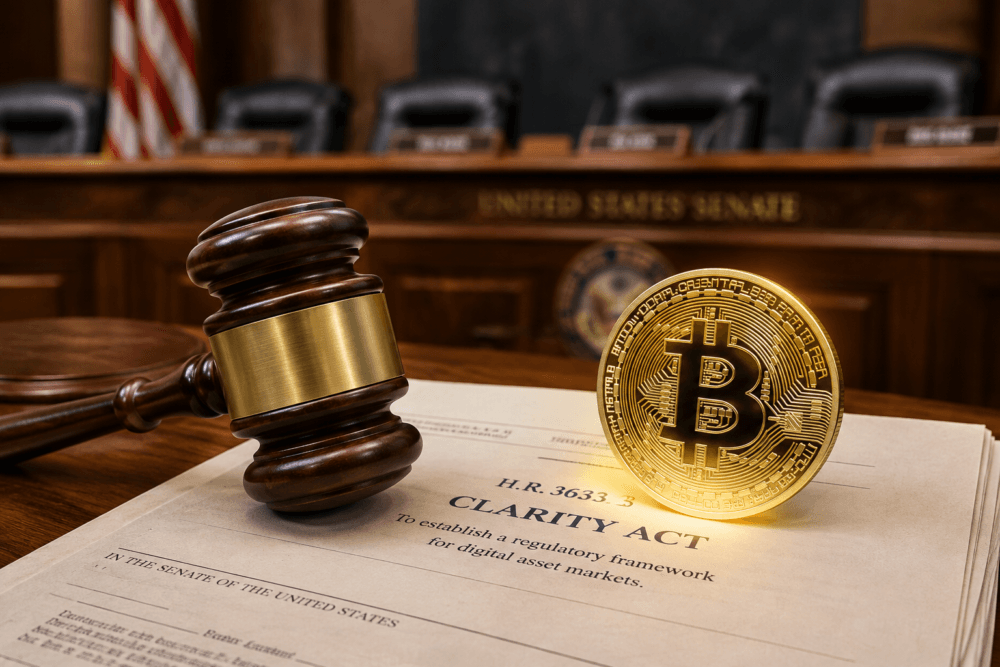
The U.S. Senate will begin formal consideration of the CLARITY Act on Sept. 15 after Republican leaders scheduled a procedural vote that could determine whether Congress advances long-awaited cryptocurrency market structure legislation.
Senate Majority Leader John Thune filed cloture on the motion to proceed to the bill, setting the vote for 2:15 p.m. EDT on Sept. 15. Senators will decide whether to take up the legislation rather than vote on its final passage.
U.S. Senator Jim Risch said the September timetable keeps momentum behind legislation that supporters consider essential for regulating digital asset markets.
Risch announced the schedule on Aug. 8 after the Senate missed an earlier August target for beginning debate.
He argued that lawmakers should move quickly to strengthen consumer protections while preventing investment and financial innovation from shifting overseas.
Risch said the stakes remain exceptionally high because failing to act would leave Americans more vulnerable to scams and fraud. He also warned that continued delays could cost the United States jobs, investment and financial leadership to competing countries.
However, clearing the procedural hurdle will require 60 votes in the Senate.
Republicans hold 53 seats, meaning at least seven Democrats must support the motion before debate can officially begin.
Negotiations continue over ethics rules, anti-money laundering provisions and language developed by the Senate Agriculture Committee.
Consequently, lawmakers still face significant obstacles before they can move the legislation toward final approval.
The new timeline follows a prediction from Bitwise Chief Investment Officer Matt Hougan, who argued that the legislation would likely remain politically alive even if Congress failed to pass it immediately.
Read more: Hackers steal more than USD$100M in Bitcoin after Coinkite wallet flaw exposed
Read more: Circle CEO says AI agents will transform work as company posts mixed quarter
Project Crypto initiative focuses on token classifications
Hougan described that scenario as a “walking dead” state in a memo released before the Senate missed its August window.
He suggested the bill would continue moving through Congress without reaching a final resolution for some time. Meanwhile, that extended uncertainty shifts greater attention toward the U.S. Securities and Exchange Commission under Chair Paul Atkins.
Atkins has repeatedly said regulators can address many crypto policy questions through rulemaking while Congress continues negotiating permanent legislation. He previously told the Senate Banking Committee that the SEC and Commodity Futures Trading Commission planned to create a regulatory bridge while lawmakers worked on market structure reforms.
Their joint Project Crypto initiative focuses on token classifications and potential exemptions that could allow certain blockchain transactions under clearer federal rules. Additionally, the agencies issued joint guidance in March stating that most crypto assets are not securities by themselves.
Atkins described that guidance as an interim measure designed to provide greater certainty for entrepreneurs and investors until Congress establishes a permanent legal framework. The SEC expanded that effort in July through a broader regulatory agenda covering crypto fundraising, custody requirements and tokenized securities.
Furthermore, the commission is developing rules governing how crypto assets can be issued, held and traded under existing federal securities laws. Those actions allow the SEC to clarify how securities laws apply to digital assets without waiting for Congress.
The agency can also create exemptions and establish custody standards within its current legal authority. However, Atkins has consistently distinguished agency rulemaking from congressional legislation.
He has argued that federal legislation provides the strongest long-term foundation because Congress alone can permanently define regulatory authority across the cryptocurrency industry.
Read more: Malaysia crypto raid exposes Southeast Asia’s growing electricity theft problem
Read more: Bitcoin mining difficulty falls below year-ago level for only second time in history
Crypto industry will continue developing
The CLARITY Act would establish those broader jurisdictional boundaries.
The legislation divides oversight responsibilities between the SEC and the Commodity Futures Trading Commission. It also creates statutory rules covering digital commodities, trading platforms, customer asset protections, registration requirements and market infrastructure.
Those responsibilities cannot be created solely through SEC regulations because they require congressional approval. Meanwhile, Hougan argued that the cryptocurrency industry will continue developing regardless of the bill’s legislative timetable.
He wrote that the sector would find a path forward even if Congress delayed passage, although broader regulatory certainty would remain unresolved. His comments suggest businesses may continue investing and launching products while regulators gradually expand guidance through existing authority.
Additionally, U.S. Senator Cynthia Lummis continues advocating comprehensive federal legislation establishing clearer rules for companies, investors and regulators participating in digital asset markets.
Supporters argue statutory certainty could encourage additional investment while reducing confusion over which federal agency regulates specific cryptocurrency activities. The Sept. 15 vote represents the next formal test for legislation that already cleared the House of Representatives by a 294-134 margin.
The Senate Banking Committee also advanced the measure on a 15-9 vote before leadership scheduled floor action. Consequently, senators will first determine whether the chamber formally begins debating H.R. 3633 while federal regulators continue advancing cryptocurrency policy through existing legal authority.