Only 28% of world's citizens oppose nuclear power, new survey says
Sixty-six per cent said nuclear power was reliable but over half seemed to think it generated greenhouse gas emissions
 Rowan Dunne
A survey conducted late last year throughout 20 countries, with data from more than 20,000 people, found that most support nuclear power.
Savanta, a market researcher contracted by the energy consultancy company Radiant Energy Group, completed the survey. Radiant described it as being the world’s largest publicly-released international study on what people think about nuclear energy.
The study found that 46 per cent of respondents supported the use of nuclear power while only 28 per cent opposed it. Right-wing voters favoured it more than left-wing, Radiant says.
In China and India, two heavily populated countries, support for nuclear was three times higher than opposition. There are more nuclear reactors operating and under construction in China than any other nation. Russia is also a key supporter.
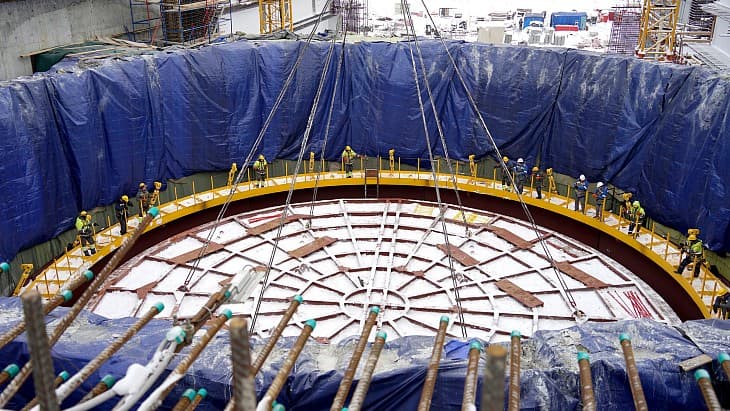
“The COP28 pledge to triple global nuclear capacity by 2050 meets the public’s overwhelming demand for new nuclear to be built,” Radiant Partner Richard Ollington said.
The majority of those surveyed, 66 per cent, said that nuclear power was reliable. Radiant says those who believe it is reliable are four times more likely to support its use.
Despite nuclear power being carbon-free, 53 per cent of respondents believed it created either a “fair amount or great deal” of greenhouse gas emissions.
“But here’s what has surprised me most so far: most people still think nuclear is high carbon, yet in many cases they still want it!” Mark Nelson, Founder and CEO of Radiant, said.

We just ran the biggest poll ever on what the public thinks about nuclear energy and we're sharing the results. 20 countries, 20,122 people surveyed, 55 questions: over a million data points. Countries surveyed in 2023: G7 - 🇨🇦🇫🇷🇩🇪🇯🇵🇰🇷🇬🇧🇺🇸 BRICS - 🇧🇷🇷🇺🇮🇳🇨🇳🇿🇦 Other - Show more


Read more: ATHA Energy discovers strong uranium mineralization at North Valour-East
Read more: ATHA Energy closes C$23.5M financing, continues exploration with stronger balance sheet
High rate of concern despite majority support
Although more respondents supported nuclear power than opposed it, 79 per cent said they had concerns about radioactive waste and the safety of atomic energy. Memorable incidents such as the accident at Three Mile Island in 1979, the Chernobyl catastrophe in 1986 and the events at Japan’s Fukushima power plant in 2011 may have contributed to those concerns.
However, within that concerned group, 40 per cent still said they supported nuclear energy while a slimmer 33 per cent opposed it.
“The health effects from what ‘could’ happen in a nuclear disaster are not as bad as counting on the Middle East for oil or destroying our country with oil drilling,” a 68-year-old American man said.
Among those who said they tend to oppose nuclear power, 54 per cent still say they support government policies that keep existing power plants in operation.
Read more: Stallion Uranium adds over 13,000 hectares to its Athabasca Basin exploration package
Read more: China’s Betavolt creates nuclear-powered battery with 50-year lifespan
Norwegians favor nuclear power
In Norway, a country with no nuclear power, 48 per cent of participants said their country should focus on nuclear while 20 per cent voted for solar and 18 per cent favoured wind. The others wanted either biomass from trees or gas with carbon capture storage.
“I support the use of wind, solar and nuclear but think we should focus on nuclear as it’s the best solution for self-sufficiency,” a 52-year-old woman in Norway said.
“The issue of waste and the risk of accidents are weighty arguments against the use of nuclear power,” another Norwegian said. “But in a situation where the climate crisis is acute, nuclear power may be better than fossil fuels during a transitional phase.”
Despite Norway’s enthusiasm, three times as many respondents in countries with nuclear power support it than in nations without established atomic energy infrastructure.
“Our report suggests that financial institutions wishing to align themselves with the public’s new attitudes towards nuclear may need to update their standards to include nuclear in the future,” Nelson said.
ATHA Energy is a sponsor of Mugglehead news coverage
rowan@mugglehead.com