New lawsuit over ŌURA's AI sleep tracking could complicate IPO plans
Law firm filing the suit has a track record of multi-million-dollar settlements in false advertising cases
 Rowan Dunne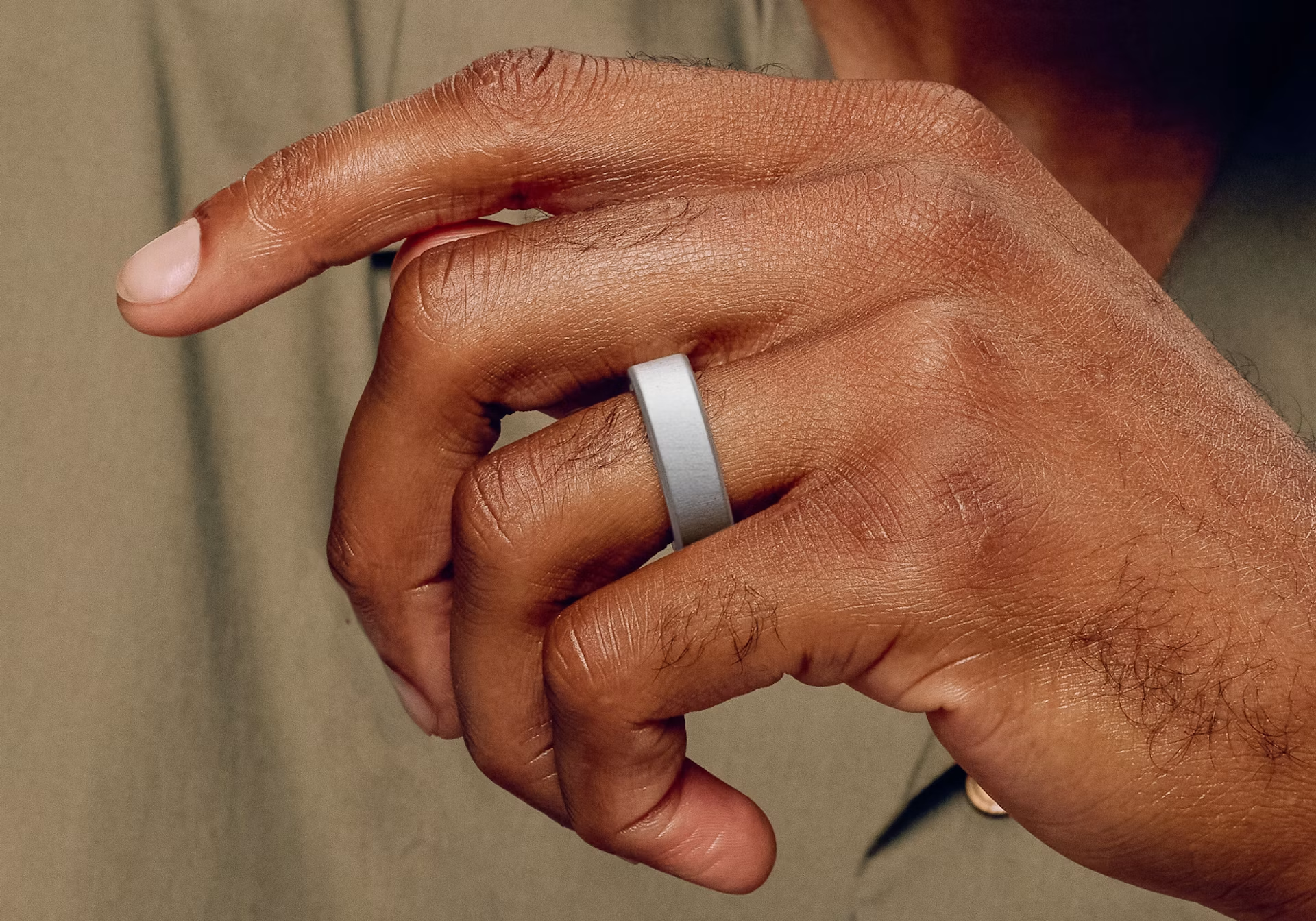
“Sleep happens in the brain, not on one’s finger,” is one of the criticisms being levelled at renowned sleep ring maker Oura in a new lawsuit.
On Aug. 20, California’s Clarkson Law Firm filed a suit seeking class action status alleging that the Finnish wearable maker’s claims about its sleep tracking capabilities are complete nonsense.
The firm is acting for one Madison Surber, who bought an Oura Ring 4 Gold for about US$514 in May of 2025. The complaint says Oura told buyers its rings deliver up to 95 per cent sleep staging accuracy compared with a clinical sleep lab. These rings sit on a finger and rely on artificial intelligence to estimate sleep stages from signals such as heart rate, movement and temperature. They cannot measure brain activity directly. Some independent studies have found overall stage classification accuracy around 53 per cent in certain real-world settings.
Oura built an US$11 billion business on trust that its expensive rings, priced from US$300 upwards, reveal deep sleep, REM and light sleep in detail. Buyers structure their days around these scores. The suit argues the company knew the limits yet kept promoting clinical-level insight.
“Oura did not just claim to measure a heartbeat or a temperature, but the exact stage of sleep the wearer is in,” Clarkson stated, “which in reality requires electrodes in the scalp and sensors on the eyes, as only a hospital or other clinical setting can do.”

New false advertising class action filed today alleges "Oura rings cannot measure one's sleep or cycles." "That's because sleep happens in the brain, not one one's finger." "Oura's AI models are doing guess work as to what may be happening ... thus taking advantage of desperate Show more


Read more: Hatch Sleep Clock tracks rest metrics from your night table
Clarkson’s record and IPO implications
Clarkson Law Firm specialises in cases about misleading product claims. It recently helped secure a US$250 million settlement with Apple Inc NASDAQAAPL over promised artificial intelligence features on new iPhones that did not arrive as advertised.
Earlier, it won a US$9.2 million deal against Dr Dennis Gross Skincare for labelling products with collagen they did not contain, and a US$7.8 million settlement with Celsius over “no preservatives” labels on drinks that included citric acid. These results show the firm knows how to push companies into costly resolutions.
Oura confidentially filed papers for a stock market listing in May. Reports point to a possible debut by year-end. A high-profile challenge to its core sleep tech therefore arrives at an awkward moment. Investors dislike uncertainty, and the case could force the company to revise its marketing or set aside money for potential payouts just as it prepares to go public.
“When people rely on a device to guide decisions about their health, misinformation cannot be tolerated,” said law firm co-founder and managing partner Ryan Clarkson.
Oura has not yet commented on this matter, and this is not the only action it currently faces. An earlier claim is ongoing over the alleged collection of sensitive personal health data without proper consent.
Read more: Bedding and sleep tech giant Somnigroup added to Russell indices
Follow Rowan Dunne on LinkedIn
rowan@mugglehead.com