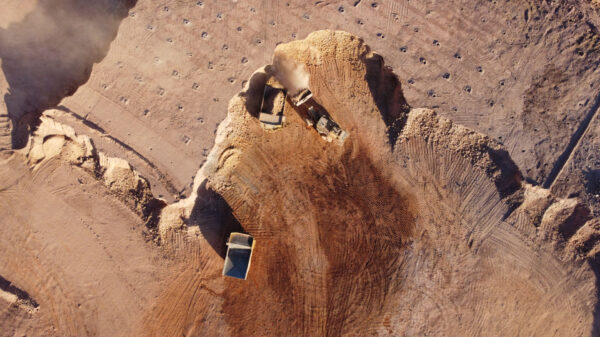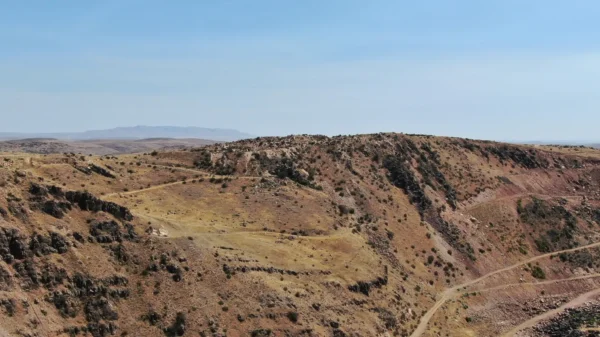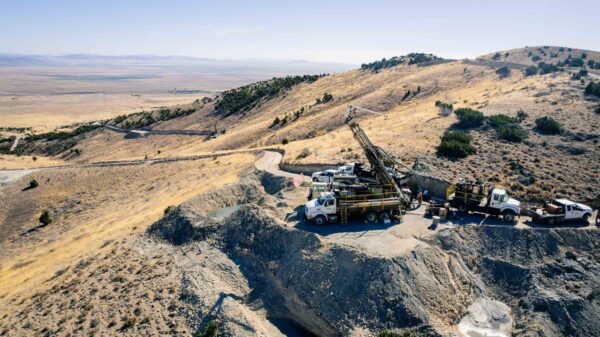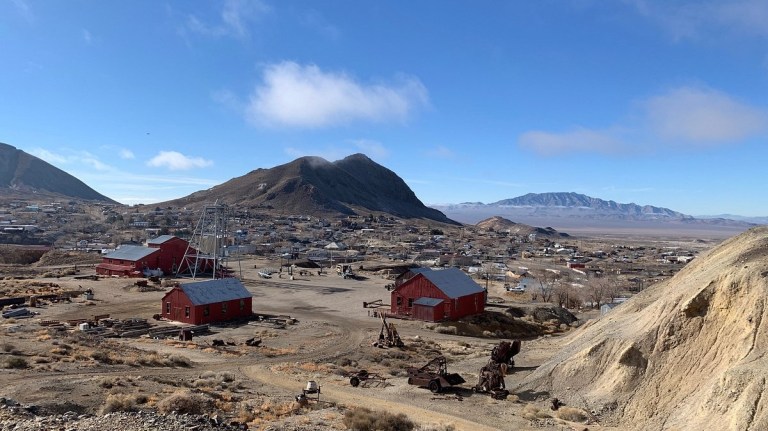

K2 Gold Corporation (CVE: KTO) (OTCMKTS: KTGDF) plans to begin drilling later this month at its Si2 Project near Tonopah, Nevada, as the company intensifies its search for a concealed gold system at depth.
The company said on Monday that drilling should start on or about January 21, 2026, targeting structures believed to sit above a key gold-forming zone.
The program follows a year of detailed geological work that reshaped management’s understanding of the property. Additionally, K2 said those studies point to Si2 as the upper portion of a large, intact epithermal gold system that remains largely untested. The company believes higher-grade mineralization may sit below previous drilling.
K2 designed the fully funded program to include up to 2,000 metres of drilling across four to six reverse circulation holes. Meanwhile, the holes will test deeper structural corridors identified through integrated geological and geophysical analysis. The work builds directly on drilling completed at the project in 2023.
In that earlier campaign, K2 drilled four holes into the Si2 target area. Those holes returned increasing gold values with depth, however they ended in anomalous but sub-economic mineralization. Consequently, the results left open the question of whether stronger gold grades might lie deeper.
Subsequent studies helped clarify that picture. Additionally, fluid-inclusion and alteration work suggested the 2023 holes stopped within roughly 50 to 100 metres of the system’s interpreted boiling zone. That zone is considered the primary level where gold typically precipitates in low-sulphidation epithermal systems.
Read more: Antimony recovery results from NevGold’s Limo Butte project exceed expectations
Read more: NevGold’s latest Nevada drill results show exceptional gold mineralization
System shows similarities to Arthur Gold Project
K2 now plans to drill beyond those depths. Furthermore, the 2026 program will specifically target the projected boiling-zone horizon along priority faults and structures. Management believes this approach addresses the main limitation of the earlier drilling.
The company said the Si2 system shows strong similarities to AngloGold Ashanti‘s (NYSE: AU) nearby Silicon Project, now called the Arthur Gold Project. That discovery, located within the Walker Lane Trend, hosts an estimated 16.3 million ounces of gold and ranks among Nevada’s most significant recent finds.
Both projects sit within the same regional gold belt. Additionally, each occurs in volcanic rocks typical of low-sulphidation epithermal deposits. These systems often rely on fault-controlled fluid pathways to concentrate gold at specific depths.
At Si2, surface mapping identified a steam-heated alteration cap. However, such caps can mask stronger mineralization below when epithermal systems remain preserved. Consequently, surface geochemistry alone may understate a project’s true potential.
K2 said structural studies show that mineralizing fluids at Si2 likely moved along major faults. Furthermore, these structures resemble the plumbing system interpreted at AngloGold’s Arthur discovery. The company believes that analogy strengthens the case for deeper drilling.
Alteration patterns also support that view. In addition, spectral analysis shows a vertical transition from low-temperature minerals near surface to higher-temperature assemblages at depth. Such zoning commonly indicates proximity to productive gold horizons below.
Anthony Margarit, K2’s president and chief executive, said the new interpretation marked a turning point for the project. He explained that fluid-inclusion data confirmed the system remains intact and was not eroded away. Meanwhile, those results suggested the company simply failed to drill deep enough in 2023.
Read more: NevGold targets U.S. critical mineral supply chain with new antimony-gold find
Read more: NevGold Expands Gold-Antimony Potential at Limousine Butte in Nevada
Epithermal gold systems form when hot
Margarit said the fluid-inclusion work provided clear evidence of system preservation. Additionally, he said it showed the previous drilling narrowly missed the boiling zone. As a result, the company now views Si2 as one of its most compelling technical targets.
The 2025 study program combined several datasets. Furthermore, it included alteration mineralogy, age dating, an integrated structural interpretation, and an induced polarization survey. K2 said each layer of data reinforced the same geological story.
Epithermal gold systems form when hot, metal-rich fluids rise toward the surface. However, gold typically drops out of solution only when pressure decreases enough to cause boiling. This process usually occurs within a narrow depth range.
In low-sulphidation systems, boiling often happens between temperatures of 230 and 240 degrees Celsius. Consequently, identifying that temperature window helps geologists estimate where gold may concentrate. Fluid inclusions provide one of the most reliable tools for that work.
K2 examined fluid inclusions trapped within quartz veins from six drill core samples. Additionally, those inclusions revealed low salinity fluids with temperatures ranging from about 130 to 200 degrees Celsius. The temperatures increased with depth across the drilled interval.
Those measurements indicated that the earlier holes intersected only the shallow part of the system. Furthermore, microscopic vein textures supported that interpretation. Importantly, the study found no evidence of significant boiling in the sampled interval.
As a result, K2 concluded that the main gold bearing zone lies deeper than the 2023 drilling reached. Consequently, the company adjusted its targeting strategy for the upcoming program. The new holes will aim directly at the projected boiling horizon.
Read more: NevGold closes its Nutmeg Mountain acquisition with Goldmining for $3 million
Read more: GoldMining chooses to retain its NevGold shares for next 18 months
K2 views fault as strong follow up target
Alteration mineralogy further refined those targets. Additionally, the company analyzed 108 spectral measurements from 95 drill core samples. The results outlined a classic vertical zonation pattern expected in intact epithermal systems.
Near surface, the rocks show steam heated alteration minerals such as alunite and kaolinite. Meanwhile, deeper levels transition into smectite, illite smectite, illite, and finally illite chlorite assemblages. Each step reflects progressively higher formation temperatures.
Variations in illite abundance proved especially informative. Furthermore, zones with quartz illite and adularia alteration often mark proximity to main fluid pathways. These areas commonly host higher gold grades in similar deposits.
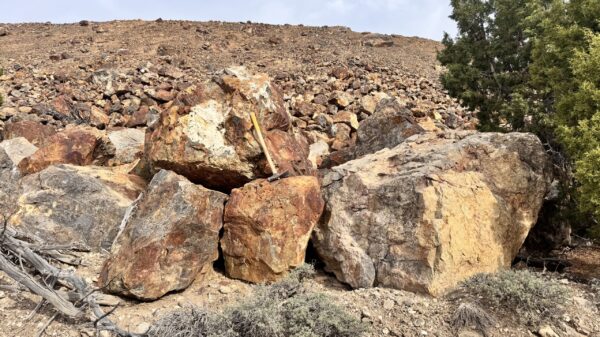
One structure stands out as a priority. The AOI1.5 fault contains a roughly six metre thick silicified and quartz veined interval at about 200 metres depth. Additionally, that interval sits alongside anomalous gold values.
K2 views that fault as a strong follow up target. Consequently, the 2026 drilling will test the structure down dip and along strike. The company believes it may link directly to deeper mineralized zones.
The Walker Lane Trend provides a favorable regional context. Furthermore, the belt hosts numerous epithermal gold and silver deposits across Nevada and eastern California. Many of these systems remained undiscovered for decades because mineralization did not reach surface.
When preserved, epithermal systems can host blind deposits. Additionally, these deposits often show vertical zoning that only becomes apparent through drilling. Understanding that architecture can unlock overlooked targets.
K2 said its integrated model now captures that architecture at Si2. Meanwhile, the company emphasized that depth represents the primary opportunity at the project. Surface alteration, while extensive, may only mark the top of the system.
Read more: NevGold delivers major growth at Idaho gold project
Read more: NevGold expands high-grade antimony discovery at Nevada’s Limousine Butte Project
Drilling scheduled to begin in late January
The upcoming drill program will test that thesis directly. Furthermore, reverse circulation drilling will allow rapid evaluation of multiple targets along key structures. Results will determine whether gold grades improve at the projected boiling zone.
K2 has not disclosed assay expectations. However, management said the goal is to intersect geological conditions consistent with high grade deposition. Success would confirm the system’s scale and preservation.
The company emphasized that the program remains fully funded. Additionally, K2 said it can complete the planned metres without additional financing. That position allows the company to focus solely on execution.
Drilling is scheduled to begin in late January, weather permitting. Meanwhile, results are expected to follow as samples are processed and analyzed. The company plans to release updates as data becomes available.
K2 continues to frame Si2 as an early stage exploration play. However, the revised model elevates its technical appeal. Consequently, the upcoming drilling represents a critical test of the company’s reinterpretation.
The outcome will determine whether Si2 joins a growing list of deep epithermal discoveries in the Walker Lane. Additionally, it may validate the use of fluid inclusion and alteration studies as decisive exploration tools.
The Walker Lane Trend is one of the most geologically significant gold belts in the western United States, stretching roughly 700 kilometres along the Nevada–California border. The region differs from Nevada’s better known Carlin Trend by hosting structurally controlled, often high grade gold and silver systems rather than large, disseminated deposits. Its complex network of strike slip and oblique faults has created ideal plumbing for epithermal and mesothermal mineralization.
Read more: NevGold expands Limo Butte footprint by staking 90 promising antimony-gold claims
Read more: NevGold’s latest discovery represents near-term antimony production potential
Several producers shape modern gold landscape
However, the resurgence of interest in Walker Lane also forms part of a broader reassessment of Nevada’s gold potential as a whole.
Across the state, explorers are revisiting districts long viewed as mature, applying modern structural models, geophysics, and geochemistry to systems once considered exhausted. Additionally, this shift reflects a growing belief that historical mining often stopped above the most prospective horizons, leaving deeper or blind mineralization untested.
As a result, attention has expanded beyond individual belts toward a statewide reevaluation of overlooked gold systems and exploration strategies.
NevGold Corp (CVE: NAU) (OTCMKTS: NAUFF) (FRA: 5E50) continues to advance Nevada based gold assets, as explorers across multiple belts in the state push to reevaluate overlooked systems.
Several established producers and advanced explorers continue to shape Nevada’s modern gold landscape.
Coeur Mining (NYSE: CDE) operates the Rochester mine in northwestern Nevada, where ongoing expansions have extended mine life and increased throughput. Additionally, the company has emphasized large scale, open pit development supported by improved processing infrastructure, reflecting confidence in long term Nevada production.
Kinross Gold (NYSE: KGC) (TSE: K) also maintains a significant presence in the state through the Round Mountain and Bald Mountain mines. Meanwhile, Kinross has focused on incremental resource growth, operational efficiency, and near mine exploration to sustain output.
Together, these companies illustrate how Nevada continues to support both large, mature mining operations and continued geological refinement, reinforcing the state’s position as a cornerstone jurisdiction for North American gold production.
.
NevGold Corp is a sponsor of Mugglehead news coverage
.