IsoEnergy intersects strongest radioactivity to date along Hurricane South Trend
Radioactivity readings provide exploration teams with an early indication of where uranium mineralization may occur
 Joseph Morton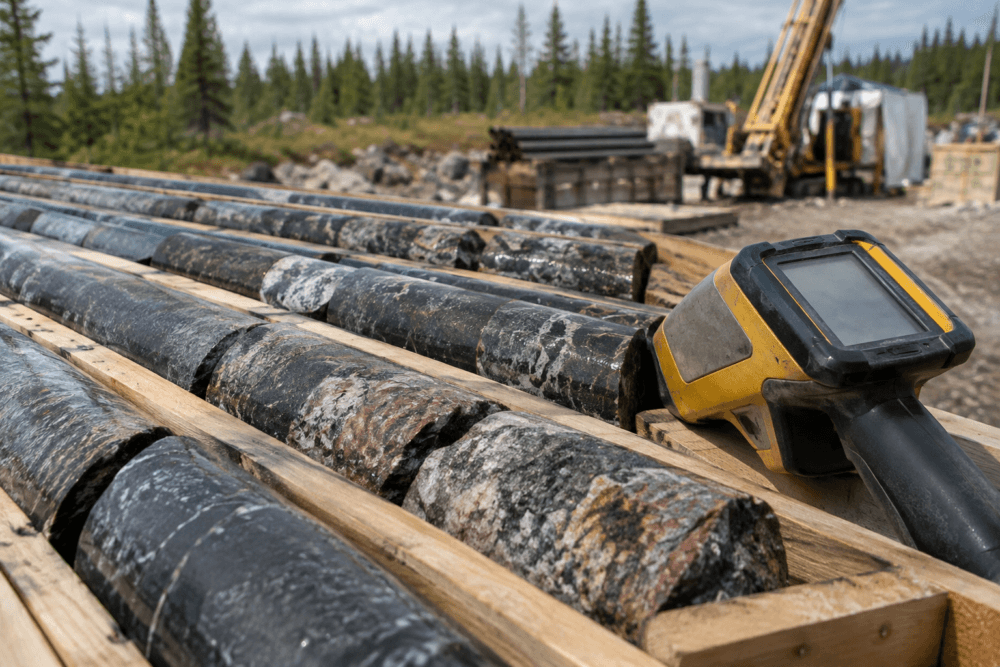
IsoEnergy Ltd. (NYSE American: ISOU) (TSE: ISO) has completed an expanded summer drilling program at its Larocque East uranium project in Saskatchewan’s Athabasca Basin.
The company said Thursday that it recorded widespread elevated radioactivity across a 600-metre strike length along the Hurricane South Trend. IsoEnergy drilled 10,159 metres across 26 holes during the summer program, bringing its 2026 total to 16,963 metres across 43 holes.
Additionally, the company expanded its summer campaign from an originally planned 8,000 metres and 20 holes. Early results from winter and initial summer drilling prompted the larger program.
IsoEnergy said 18 of the 26 summer holes returned intervals measuring at least 350 counts per second over 0.5 metres. Thirteen holes produced readings of at least 1,000 counts per second. Three holes exceeded 35,000 counts per second.
Radioactivity readings provide exploration teams with an early indication of where uranium mineralization may occur. However, they do not directly measure uranium grades. IsoEnergy has submitted samples from the summer program to SRC Geoanalytical Laboratories for chemical analysis.
Dan Brisbin, IsoEnergy’s vice-president of exploration, said the company completed the expanded program despite temporarily demobilizing in June because of a nearby wildfire. Nearly half of the holes drilled during 2026 encountered elevated radioactivity.
Meanwhile, the Hurricane deposit contains an indicated mineral resource of 48.6 million pounds of uranium oxide at an average grade of 34.5 per cent. It also contains 2.7 million pounds at 2.2 per cent in the inferred category.
The deposit sits approximately 325 metres below surface and about 40 kilometres northwest of the McClean Lake uranium mill. Hurricane lies along the Larocque Trend, which also hosts high-grade uranium occurrences on the Dawn Lake joint venture.
Read more: ABB, Rolls-Royce SMR partner on factory-built nuclear reactors
Read more: NuScale manufactures first-of-a-kind safety pellets for SMR technology
Several holes follow up on mineralization found during winter campaign
Summer drilling primarily targeted potential expansion of Hurricane’s mineral resource. IsoEnergy concentrated nearly all its work on the South Trend, which contains the J, K and L fault structures. Seventeen holes tested the L fault while six targeted the J and K faults.
Additionally, several holes followed up on mineralization encountered during IsoEnergy’s winter campaign. Winter hole LE26-248 previously returned 4.21 per cent uranium oxide over 3.5 metres. That interval included up to 11.6 per cent uranium oxide over one metre.
Summer hole LE26-250 tested the L fault 75 metres east of LE26-248 and outside Hurricane’s existing footprint. It returned 11,075 counts per second over 3.5 metres, including 43,160 counts per second over 0.5 metres.
Further, hole LE26-273 tested an area 11 metres west of LE26-248 within the southern portion of the existing deposit footprint. The hole averaged 14,135 counts per second over three metres, including 36,292 counts per second over one metre.
IsoEnergy had previously interpreted that portion of Hurricane as part of a lower-grade shell. However, the company plans to revisit that interpretation after receiving laboratory results from the summer drilling.
The company also tested the western L fault extensively during the summer campaign. Several holes encountered elevated radioactivity alongside geological alteration that exploration teams use to identify areas favourable for uranium mineralization.
For example, LE26-261 averaged 1,094 counts per second over three metres. LE26-268 returned 1,115 counts per second over one metre. Meanwhile, LE26-272 encountered elevated radioactivity across three metres and reached 1,893 counts per second over a 0.5-metre interval.
The hole encountered radioactivity in basement rock
IsoEnergy also drilled the J and K faults along the Hurricane South Trend. Hole LE26-260 returned 1,971 counts per second over 4.5 metres, including 6,430 counts per second over 0.5 metres.
Several nearby holes encountered geological alteration but little or no significant radioactivity. Consequently, the results provide IsoEnergy with additional information about where uranium-bearing structures may extend and where future drilling could focus.
The company also tested the central portion of the L fault with holes LE26-256 and LE26-263. LE26-256 averaged 633 counts per second over two metres, while LE26-263 returned 2,023 counts per second over one metre.
Additionally, IsoEnergy said potential remains open for approximately 150 metres east of the central L fault target. The company continues to integrate drilling results into its geological interpretation of the Hurricane area.
Exploration also extended farther southeast along the L fault. Hole LE26-254, drilled 27 metres west of previously mineralized hole LE26-234, averaged 10,110 counts per second over two metres.
That result included 35,900 counts per second over 0.5 metres. The hole encountered the radioactivity in basement rock immediately below the boundary between the overlying sandstone and older basement rocks.
Meanwhile, LE26-264 returned 849 counts per second over five metres, including 2,490 counts per second over one metre. IsoEnergy said the hole reached its intended target and encountered elevated radioactivity at the geological boundary.
Hole LE26-266A tested the alteration system farther east. It encountered an 80-metre-wide zone of strongly altered rock above the geological boundary, although the hole crossed about 20 metres south of IsoEnergy’s interpreted optimal target.
Read more: US Energy Department selects five states for nuclear fuel campuses
Read more: Cameco backs USD$17.5B U.S. reactor financing plan
IsoEnergy evaluates 2027 drilling targets
The company said exploration potential remains open along strike in that area. In addition, the extensive alteration provides another geological feature IsoEnergy can incorporate when selecting future drill locations.
Only one summer hole targeted the Hurricane Main Trend rather than the South Trend. LE26-269 tested an area 40 metres east of the existing deposit footprint and returned a maximum reading of 476 counts per second over 0.5 metres.
IsoEnergy is now updating its geological interpretation using information from all 43 holes drilled during 2026. Subsequently, the company will incorporate pending uranium assays as it evaluates possible drilling targets for its 2027 exploration program.